 Back
Cell Structure and Function: Prokaryotic vs. Eukaryotic Cells, Membranes, and Cellular Processes
Study Guide - Smart Notes
 Tailored notes based on your materials, expanded with key definitions, examples, and context.
Cell Structure and Function
Cell Theory and Domains of Life
The cell theory is a foundational concept in biology, stating that all living things are composed of cells and that all cells arise from pre-existing cells. Organisms are classified into three major domains: Bacteria, Archaea, and Eukarya. Bacteria and Archaea are composed of prokaryotic cells, while Eukarya (including protists, plants, fungi, and animals) are composed of eukaryotic cells.
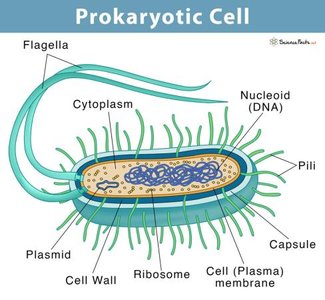
Prokaryotic cells: No nucleus; DNA floats freely in the nucleoid region.
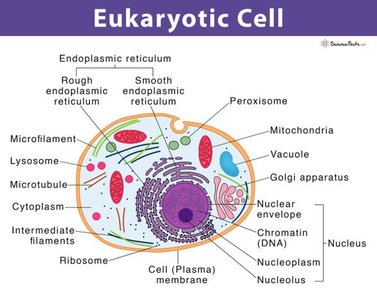
Eukaryotic cells: DNA is stored inside a protected nucleus.
All cells have a plasma membrane, cytosol, chromosomes, and ribosomes.
Comparison of Prokaryotic and Eukaryotic Cells
Prokaryotic and eukaryotic cells differ in structure, complexity, and the presence of organelles. The following table summarizes their main differences:
Feature | Prokaryotic Cells | Eukaryotic Cells |
|---|---|---|
Evolution | ~3.5 billion years ago | ~2.1 billion years ago |
Domains | Bacteria, Archaea | Protists, Plants, Fungi, Animals |
Size | Smaller, simpler | Larger, more complex |
Cell Wall | Most have cell walls; some have capsules, fimbriae, flagella | Plant cells have cell walls; animal cells have extracellular matrix |
Membrane-bound Organelles | Absent | Present (e.g., nucleus, ER) |
DNA Location | Nucleoid region (single circular chromosome) | Nucleus (one or more linear chromosomes) |
Ribosomes | Present | Present |
All cells must have ribosomes to make proteins. The plasma membrane separates the living cell from its surroundings and is composed mostly of phospholipids arranged in a bilayer.
Cell Membranes and the Fluid Mosaic Model
The plasma membrane is a fluid mosaic, meaning molecules can move freely past one another and the membrane contains a diversity of proteins. Each phospholipid has a hydrophilic "head" and two hydrophobic "tails." Proteins embedded in the membrane regulate traffic and perform other functions.
Phospholipid bilayer: Provides selective permeability.
Proteins: Regulate transport, act as receptors, and catalyze reactions.
Cell Walls and Extracellular Structures
Plant cells have a cell wall made from cellulose fibers, which protects the cell, maintains its shape, and prevents excessive water uptake. Animal cells lack cell walls but secrete an extracellular matrix and have cell junctions for tissue formation.
Nucleus and Genetic Information
The nucleus is the control center of the cell, housing most of the cell's DNA. The nuclear envelope is a double membrane with pores for material exchange. DNA and proteins form chromatin, which constitutes chromosomes. The nucleolus is the site of ribosome component synthesis.
Messenger RNA (mRNA): Transfers genetic information from DNA to ribosomes for protein synthesis.
Ribosomes and Protein Synthesis
Ribosomes are responsible for protein synthesis. In eukaryotic cells, ribosome components are made in the nucleus and transported to the cytoplasm. Ribosomes can be free in the cytosol or attached to the rough ER.
Endomembrane System
The endomembrane system includes the nuclear envelope, endoplasmic reticulum (ER), Golgi apparatus, lysosomes, and vacuoles. These organelles are connected physically or by vesicles.
Rough ER: Studded with ribosomes; synthesizes proteins for membranes or export.
Smooth ER: Lacks ribosomes; synthesizes lipids and detoxifies drugs.
Golgi apparatus: Modifies, stores, and distributes cell products.
Lysosomes: Membrane-enclosed sacs of digestive enzymes (found in animal cells).
Vacuoles: Large vesicles with storage and regulatory functions.
Energy Transformation: Chloroplasts and Mitochondria
Chloroplasts and mitochondria are organelles involved in energy transformation. Chloroplasts perform photosynthesis, converting light energy to chemical energy. Mitochondria carry out cellular respiration, producing ATP from food molecules.
ATP (adenosine triphosphate): The cell's energy currency.
Both organelles contain their own DNA and ribosomes, supporting the endosymbiotic theory.
Cytoskeleton and Cellular Movement
The cytoskeleton is a network of protein fibers that provides mechanical support, maintains cell shape, and enables movement. It consists of microtubules, intermediate filaments, and microfilaments. Flagella and cilia are extensions that aid in cell movement.
Flagella: Long, whip-like structures for movement.
Cilia: Short, numerous structures for coordinated movement.
Cellular Processes and Membrane Transport
Energy and Metabolism
Cells control their chemical environment using energy, enzymes, and the plasma membrane. Energy is the capacity to cause change and exists as kinetic or potential energy. The conservation of energy principle states that energy cannot be created or destroyed, only converted.
Entropy: Measure of disorder; increases with energy conversions.
Chemical energy: Stored in molecules; released during cellular respiration.
ATP: Stores and releases energy for cellular work.
Enzymes and Metabolic Reactions
Enzymes are proteins that speed up chemical reactions by lowering activation energy. Each enzyme is specific to its substrate, fitting into the active site. Enzyme inhibitors can disrupt function by blocking the active site or altering enzyme shape.
Membrane Transport
The plasma membrane regulates the flow of materials. Transport occurs via diffusion, facilitated diffusion, osmosis, active transport, exocytosis, and endocytosis.
Diffusion: Movement of molecules from high to low concentration.
Passive transport: Diffusion without energy input.
Facilitated diffusion: Assisted by membrane proteins.
Osmosis: Diffusion of water across a membrane.
Active transport: Requires energy to move molecules against the concentration gradient.
Exocytosis: Movement of materials out of the cell via vesicles.
Endocytosis: Movement of materials into the cell via vesicles.
Solution Type | Solute Concentration | Effect on Cell |
|---|---|---|
Hypertonic | Higher | Cell loses water |
Hypotonic | Lower | Cell gains water |
Isotonic | Equal | No net water movement |
Osmoregulation is the control of water balance, essential for cell survival.
Evolutionary Significance of Membranes
Phospholipids are key ingredients of membranes and likely among the first organic compounds formed on early Earth. Membrane-enclosed collections of molecules were critical in the evolution of the first cells, allowing regulation of chemical exchanges and supporting the unity of life.
