 Back
Cell Structure and Function: Study Notes for General Biology
Study Guide - Smart Notes
 Tailored notes based on your materials, expanded with key definitions, examples, and context.
Cell Structure and Function
Overview of Cell Types
Cells are the basic units of life, and their structure determines their function. There are two main types of cells: prokaryotic and eukaryotic. Eukaryotic cells are further divided into plant and animal cells, each with unique features.
Prokaryotic cells: Lack a nucleus and membrane-bound organelles.
Eukaryotic cells: Have a nucleus and various organelles; include plant and animal cells.
Comparison of Cell Structures
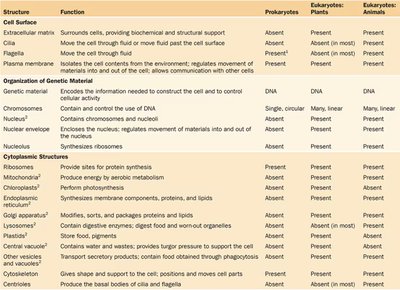
The table below summarizes the presence and function of key cellular structures in prokaryotes, eukaryotic plant cells, and eukaryotic animal cells.
Eukaryotic Cell Anatomy
Plant Cell Structure
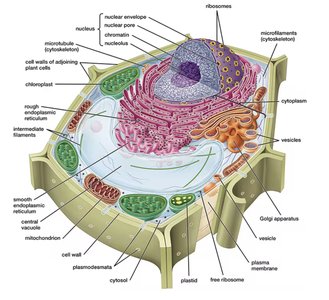
Plant cells have specialized structures that distinguish them from animal cells, such as a cell wall, chloroplasts, and large central vacuoles. These features support photosynthesis, structural integrity, and storage.
Cell wall: Provides structural support and protection.
Chloroplast: Site of photosynthesis.
Central vacuole: Stores water, nutrients, and waste products.
Plasmodesmata: Channels for communication between cells.
Animal Cell Structure
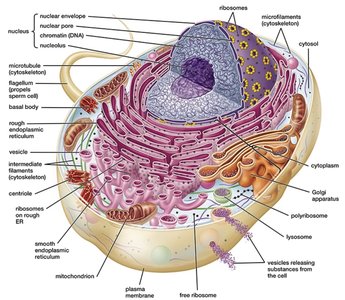
Animal cells lack cell walls and chloroplasts but have other specialized organelles such as lysosomes and centrioles. These organelles are involved in digestion, cell division, and intracellular transport.
Lysosome: Contains digestive enzymes for breaking down waste.
Centrioles: Important for cell division.
Flagella and cilia: Used for movement.
Key Organelles and Their Functions
Nucleus
The nucleus is the control center of the cell, containing genetic material (DNA) and coordinating activities such as growth, metabolism, and reproduction.
Nuclear envelope: Double membrane surrounding the nucleus.
Nucleolus: Site of ribosome synthesis.
Chromatin: DNA and associated proteins.
Ribosomes and Protein Synthesis
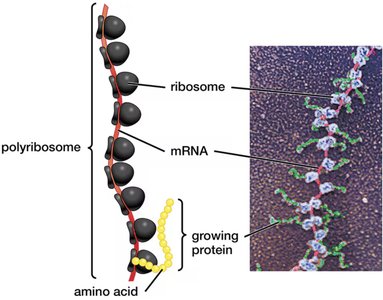
Ribosomes are the sites of protein synthesis. They can be free in the cytoplasm or attached to the endoplasmic reticulum. Polyribosomes are clusters of ribosomes translating a single mRNA molecule.
Ribosome: Composed of RNA and protein; synthesizes polypeptides.
Polyribosome: Multiple ribosomes working on the same mRNA.
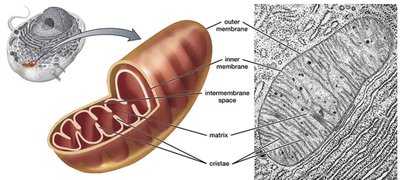
Mitochondria
Mitochondria are the powerhouses of the cell, generating ATP through cellular respiration. They have a double membrane and their own DNA.
Outer and inner membranes: Compartmentalize the organelle.
Matrix: Contains enzymes for the Krebs cycle.
Cristae: Folds of the inner membrane that increase surface area for ATP production.
Chloroplasts
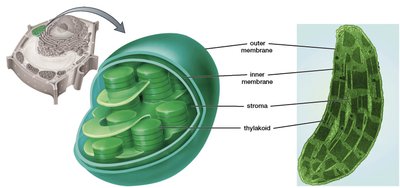
Chloroplasts are found in plant cells and are responsible for photosynthesis. They contain the pigment chlorophyll and have a complex internal structure.
Thylakoid: Membrane-bound compartments where light reactions occur.
Stroma: Fluid surrounding thylakoids; site of the Calvin cycle.
Endoplasmic Reticulum (ER)
The ER is a network of membranes involved in protein and lipid synthesis. It is divided into rough ER (with ribosomes) and smooth ER (without ribosomes).
Rough ER: Synthesizes proteins for export or membrane insertion.
Smooth ER: Synthesizes lipids and detoxifies chemicals.
Golgi Apparatus
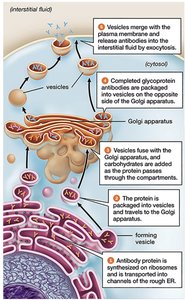
The Golgi apparatus modifies, sorts, and packages proteins and lipids for secretion or delivery to other organelles.
Vesicles: Transport materials between the Golgi and other cellular locations.
Lysosomes
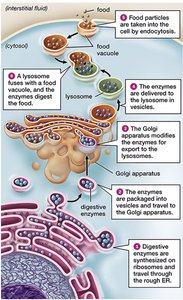
Lysosomes are membrane-bound organelles containing digestive enzymes. They break down macromolecules, old cell parts, and foreign substances.
Digestive enzymes: Hydrolyze proteins, lipids, carbohydrates, and nucleic acids.
Cell Surface and Membrane Structure
Extracellular Matrix
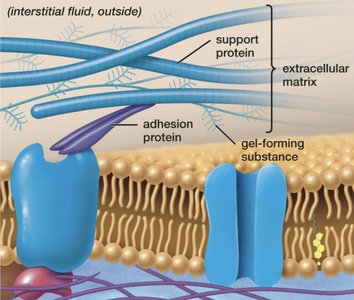
The extracellular matrix (ECM) is a network of proteins and carbohydrates outside the cell membrane that provides structural support and mediates cell signaling.
Support protein: Collagen, elastin, etc.
Adhesion protein: Integrins, cadherins.
Plasma Membrane Structure
The plasma membrane is a phospholipid bilayer with embedded proteins, carbohydrates, and cholesterol. It regulates the movement of substances into and out of the cell.
Phospholipid bilayer: Provides a semi-permeable barrier.
Proteins: Include transport, receptor, and connection proteins.
Carbohydrates: Glycoproteins and glycolipids for cell recognition.
Membrane Transport Mechanisms
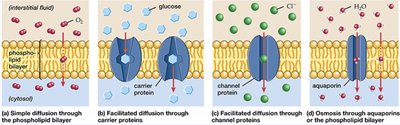
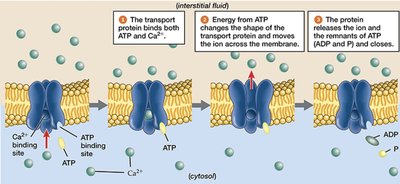
Cells use various mechanisms to transport substances across the membrane, including diffusion, facilitated diffusion, osmosis, and active transport.
Simple diffusion: Movement of small, nonpolar molecules.
Facilitated diffusion: Uses carrier or channel proteins for larger or polar molecules.
Osmosis: Diffusion of water through aquaporins.
Active transport: Requires energy (ATP) to move substances against their concentration gradient.
Endocytosis and Exocytosis
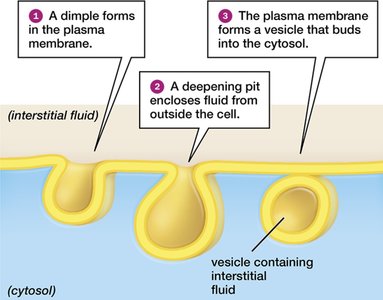
Endocytosis and exocytosis are processes by which cells take in or release large particles or volumes of fluid.
Endocytosis: Cell engulfs material by forming a vesicle.
Exocytosis: Vesicles fuse with the membrane to release contents outside the cell.
Cell Movement Structures
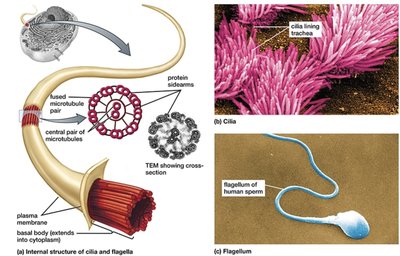
Cilia and Flagella
Cilia and flagella are extensions of the cell membrane used for movement. They are composed of microtubules arranged in a characteristic pattern.
Cilia: Short, numerous, move fluid over cell surface.
Flagella: Longer, fewer, propel cells (e.g., sperm).
Summary Table: Cell Structure Comparison
The following table summarizes the presence and function of key cell structures in prokaryotes, eukaryotic plants, and eukaryotic animals.
Additional info:
Only 2-3% of DNA is used for genetic coding; the rest may have regulatory or unknown functions.
Some cellular structures are targets for antibiotics, especially in prokaryotes.
Cells replicate and repair DNA, synthesize proteins and lipids, and break down substances (lysis).
