 Back
Cell Structure, Function, and Membrane Transport: General Biology Study Notes
Study Guide - Smart Notes
 Tailored notes based on your materials, expanded with key definitions, examples, and context.
Unit 2: Cell Structure and Function and Cell Transport
Background Information: Cells in General
Cells are the fundamental units of life, forming the basis of all living organisms. Their structure is closely linked to their function, and all cells share common ancestry.
All organisms are made of cells
Cell structure is correlated to cellular function
All cells are related by descent from earlier cells
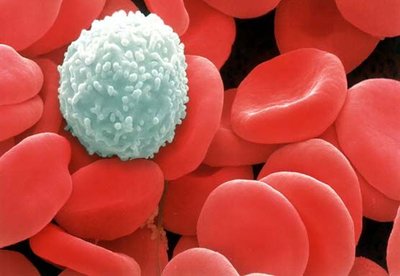
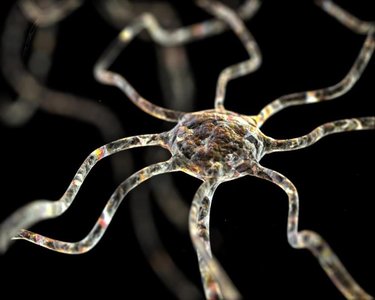
Major Cell Types
Cells are classified as prokaryotic or eukaryotic based on their structural features.
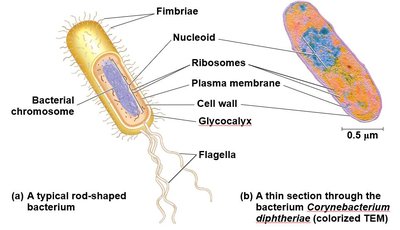
Prokaryotic Cells: No nucleus, DNA in nucleoid, no membrane-bound organelles, includes bacteria and Archaea.
Eukaryotic Cells: Have nucleus with DNA, membrane-bound organelles, usually larger, includes plants, animals, fungi.
Microscopes and Cell Visualization
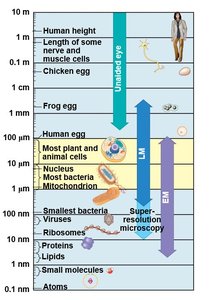
Microscopes are essential tools for studying cells, as most are too small to be seen unaided.
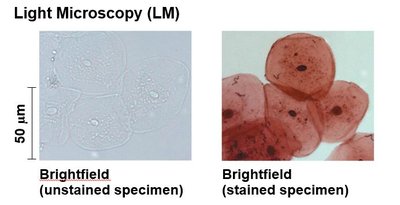
Light Microscopes (LM): Use visible light and glass lenses to magnify specimens.
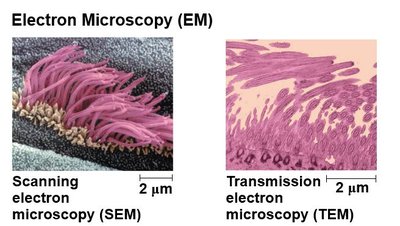
Electron Microscopes (EM): Use electron beams for higher resolution. SEM provides 3-D surface images; TEM reveals internal structures.
Topic 2.1: Cell Structure - Subcellular Components
Overview of Cell Structures
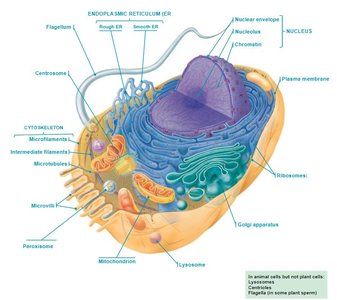
Eukaryotic cells contain internal membranes and organelles that compartmentalize functions. All cells share basic features:
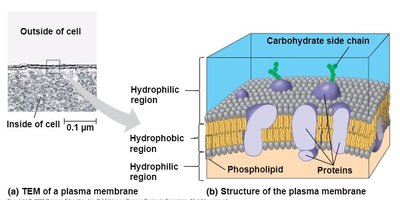
Plasma membrane: Selectively permeable, double layer of phospholipids
Cytosol: Semifluid substance including cytoplasm and organelles
Chromosomes: Carry genetic information
Ribosomes: Protein synthesis
Nucleus - Information Storage
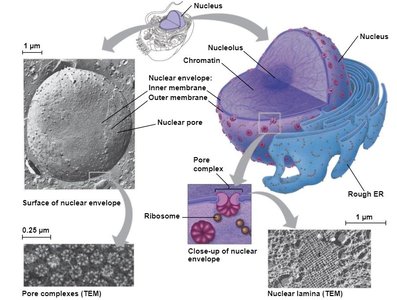
The nucleus is the control center of the cell, storing most genetic material and coordinating activities like growth and reproduction.
Nuclear envelope: Double membrane separating nucleus from cytoplasm
Nucleolus: Site of ribosomal RNA synthesis
Ribosomes - Protein Factories
Ribosomes are responsible for protein synthesis, using genetic instructions from DNA.
Free ribosomes: In cytosol, synthesize proteins for use within the cell
Bound ribosomes: Attached to ER or nuclear envelope, synthesize proteins for membranes or export
Endoplasmic Reticulum (ER) - Biosynthetic Factory
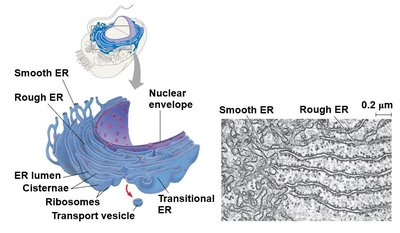
The ER is a network of membranes involved in synthesis and transport of proteins and lipids.
Smooth ER: Synthesizes lipids, metabolizes carbohydrates, stores calcium, detoxifies poisons
Rough ER: Has ribosomes, produces proteins and membranes
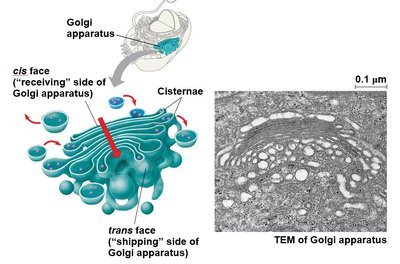
Golgi Apparatus - Shipping and Receiving Center
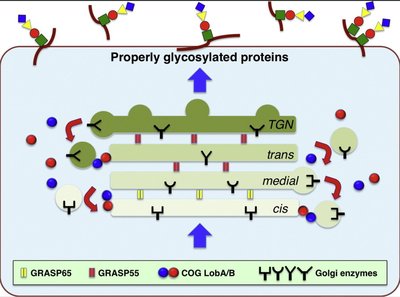
The Golgi apparatus modifies, sorts, and packages proteins and lipids for storage or transport out of the cell.
Cisternae: Flattened membranous sacs
Modifies products of the ER
Sorts and packages materials into transport vesicles
Lysosomes - Digestive Compartments
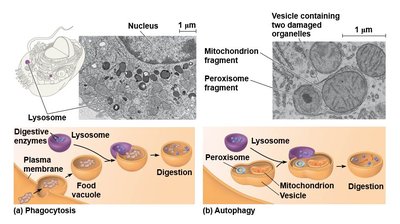
Lysosomes are organelles containing hydrolytic enzymes for digestion and recycling of cellular components.
Autophagy: Recycling of organelles and macromolecules
Hydrolyze proteins, fats, polysaccharides, nucleic acids
Vacuoles and Vesicles - Various Cell Compartments
Vacuoles and vesicles are membrane-bound sacs with diverse functions in storage, transport, and maintenance of cell shape.
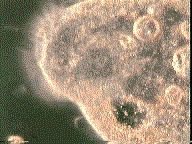
Food vacuoles: Formed by phagocytosis
Contractile vacuoles: Pump excess water out of cells
Central vacuoles: Store organic compounds and water in plants
Vesicles: Smaller, used for short-term storage or transport
Mitochondria - Chemical Energy Conversion
Mitochondria are the powerhouses of the cell, converting chemical energy in food to ATP through cellular respiration.
Double membrane: Outer smooth, inner folded into cristae
Compartmentalization: Intermembrane space and mitochondrial matrix
Folding increases surface area for ATP synthesis
Chloroplasts - Capturing Light Energy
Chloroplasts are organelles found in plants and algae, responsible for photosynthesis.
Contain chlorophyll
Structure: Thylakoids (membranous sacs), stroma (internal fluid)
Plastids - Plant Cell Organelles
Plastids are small organelles in plant cells, contributing to metabolism, growth, and development.
Contain pigment or food
Double membrane
Peroxisomes - Oxidation
Peroxisomes are specialized metabolic compartments that carry out oxidation reactions, breaking down lipids and detoxifying substances.
Produce hydrogen peroxide and convert it to water
Cytoskeleton - Support and Motility
The cytoskeleton is a network of fibers that provides structural support, organizes cell contents, and enables movement.
Components: Microtubules, intermediate filaments, microfilaments
Anchors organelles, serves as tracks for vesicle movement
Centrosomes and Centrioles
Centrosomes are microtubule-organizing centers in animal cells, containing a pair of centrioles.
Microtubules grow out from centrosome near nucleus
Cilia and Flagella
Cilia and flagella are cellular appendages for movement, controlled by microtubules and motor proteins like dynein.
Dynein drives bending movements
Cytoplasmic Streaming
Cytoplasmic streaming is the circular flow of cytoplasm within cells, speeding up distribution of materials.
Driven by actin-myosin interactions
Topic 2.2: Endomembrane System
Endomembrane System
The endomembrane system regulates protein traffic and performs metabolic functions. It includes the nuclear envelope, ER, Golgi apparatus, lysosomes, vacuoles, and plasma membrane.
Components are continuous or connected via vesicles
Topic 2.10: Compartmentalization
Cell Compartmentalization
Cellular compartmentalization allows for specialized microenvironments and efficient functioning.
Advantages: Efficiency, multi-functionality, increased surface area for reactions
Disadvantages: Requires larger cell size, barriers to movement, increased ATP requirement
Topic 2.11: Origins of Cell Compartmentalization
Endosymbiotic Theory
The endosymbiotic theory explains the origin of mitochondria and chloroplasts, suggesting they evolved from engulfed prokaryotes.
Evidence: Double membranes, circular DNA, free ribosomes, independent reproduction
Topic 2.3: Cell Size
Limits on Cell Size
Cell size is limited by metabolic needs and the surface area to volume ratio (SA:V). As cells grow, volume increases faster than surface area, affecting efficiency.
Cells maximize SA:V ratio by structural adaptations
Topic 2.4: Plasma Membranes
Plasma Membrane Structure
The plasma membrane is a selectively permeable boundary, composed mainly of phospholipids and proteins.
Phospholipids: Hydrophobic tails inside, hydrophilic heads outside
Proteins: Transport, signaling, adhesion
Fluid Mosaic Model: Membrane is a fluid bilayer with embedded proteins
Cholesterol: Maintains membrane fluidity
Topic 2.5: Membrane Permeability
Selective Permeability
Membranes allow selective passage of substances based on size, solubility, charge, and presence of transport proteins.
Transport proteins: Channel and carrier proteins facilitate movement
Extracellular Matrix (ECM) and Cell Junctions
The ECM provides structural support and regulates cell behavior. Animal cells have tight junctions, desmosomes, and gap junctions for communication and adhesion.
Tight junctions: Prevent leakage
Desmosomes: Fasten cells together
Gap junctions: Allow cytoplasmic exchange
Plant Cell Walls and Plasmodesmata
Plant cell walls protect, maintain shape, and prevent excessive water uptake. Plasmodesmata are channels for cell-to-cell communication.
Structure: Cellulose fibers, multiple layers
Plasmodesmata: Allow passage of water, solutes, proteins, RNA
Topic 2.6/2.9: Membrane Transport Mechanisms
Passive Transport
Passive transport involves movement of substances across membranes without energy input.
Diffusion: Movement from high to low concentration
Osmosis: Diffusion of water
Facilitated diffusion: Transport proteins speed movement
Active Transport
Active transport moves substances against their concentration gradient, requiring energy (ATP).
Integral proteins: Ex. sodium-potassium pump
Electrogenic pump: Generates voltage
Co-transport: One solute's transport drives another's
Exocytosis: Vesicles release contents outside cell
Endocytosis: Cell takes in macromolecules via vesicles
Types of Endocytosis
Phagocytosis: "Cellular eating"
Pinocytosis: "Cellular drinking"
Receptor-mediated endocytosis: Ligand binding triggers vesicle formation
Topic 2.7: Facilitated Diffusion
Facilitated Diffusion
Facilitated diffusion is a type of passive transport mediated by membrane proteins, allowing polar molecules to cross membranes.
Movement from high to low concentration
Used by ions, acids, carbohydrates
Active Transport and Membrane Potential
Active transport creates membrane potential and electrochemical gradients, driving ion movement.
Electrogenic pumps: Generate voltage
Sodium-potassium pump: Maintains ion concentrations in animal cells
Topic 2.8: Tonicity and Osmoregulation
Osmosis and Tonicity
Osmosis is the diffusion of water, influenced by solute concentration. Tonicity describes a solution's effect on cell water balance.
Isotonic: No net water movement
Hypertonic: Cell loses water
Hypotonic: Cell gains water
Osmoregulation Examples
Contractile vacuoles in protists: Expel excess water
Central vacuoles in plants: Regulate turgor pressure
Water Potential
Water potential measures the tendency of water to move, combining solute and pressure potentials.
Formula:
Solute potential:
i: Ionization constant
C: Molar concentration
R: Pressure constant
T: Temperature in Kelvin (K)
Sample Problem: Apples in Sucrose Solution
Table showing mass changes in apple cells placed in solutions of varying molarity, illustrating osmosis and water potential.
Molarity of Solution | Initial Mass (g) | Final Mass (g) | Change in Mass (g) | Percent Change (%) |
|---|---|---|---|---|
0.0 | 50.0 | 60.8 | 10.8 | 21.6 |
0.2 | 50.5 | 54.9 | 4.4 | 8.7 |
0.4 | 50.2 | 46.5 | -3.7 | -7.4 |
0.6 | 49.8 | 40.2 | -9.6 | -19.2 |
0.8 | 51.0 | 39.4 | -11.6 | -22.7 |
1.0 | 50.4 | 32.1 | -18.3 | -36.3 |
Additional info: These notes expand on brief points with academic context, definitions, and examples, making them suitable for exam preparation in General Biology.
