 Back
Cell Structure, Function, and Membrane Transport: Study Notes for General Biology
Study Guide - Smart Notes
 Tailored notes based on your materials, expanded with key definitions, examples, and context.
Cell Structure and Function
What is a Cell?
A cell is the basic unit of life, consisting of organelles and molecules working together to perform specific tasks and maintain homeostasis. All living organisms are composed of at least one cell. Cells are categorized as either prokaryotic or eukaryotic.
Prokaryotes: Bacteria and Archaea; single-celled, lack a nucleus and membrane-bound organelles, smaller and simpler, oldest cell type.
Eukaryotes: Plants, animals, fungi, protists; can be single-celled or multicellular, have a nucleus and membrane-bound organelles, larger and more complex, evolved from prokaryotes.
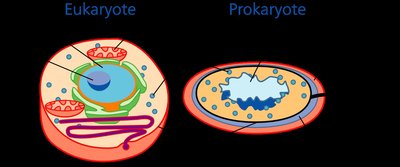
Prokaryotic vs. Eukaryotic Cells
Both have genetic material (DNA/RNA), a cell membrane, and ribosomes.
Some may have cell walls and flagella.
Both perform cellular respiration to produce ATP.
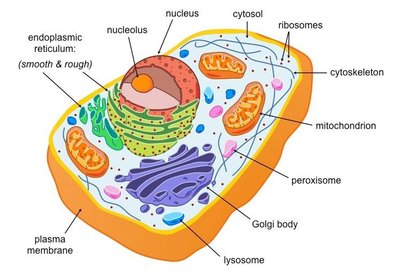
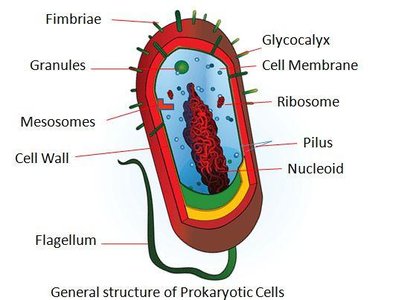
Cell Shape and Function
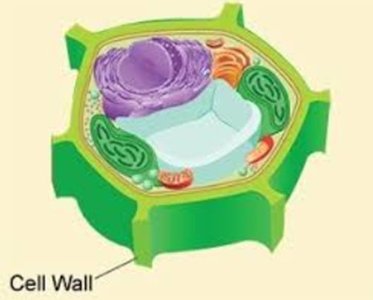
The shape of a cell and the types and amounts of organelles it contains determine its function. For example, sperm cells have long flagella and many mitochondria for movement, while plant cells have a rigid cell wall for structure.
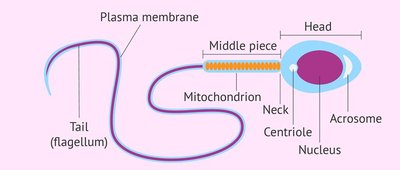
Cellular Organelles
Membrane-Bound vs. Non-Membrane-Bound Organelles
Non-membrane-bound organelles: Ribosomes, cell membrane, cell wall, cytoplasm, cytoskeleton, centrioles, spindle fibers, flagella.
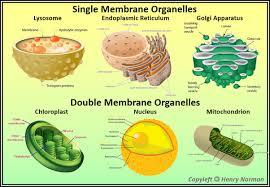
Membrane-bound organelles: Nucleus, vacuole, mitochondria, chloroplast, Golgi apparatus, endoplasmic reticulum (ER), lysosome, peroxisome.
Ribosomes
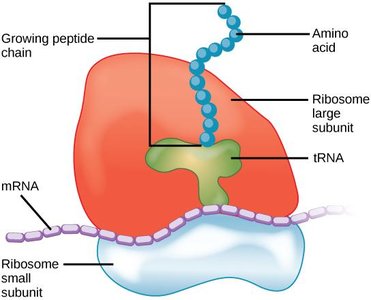
Ribosomes are found in all living organisms and are composed of protein and ribosomal RNA (rRNA). They synthesize proteins by reading messenger RNA (mRNA).
Mitochondria and Chloroplasts
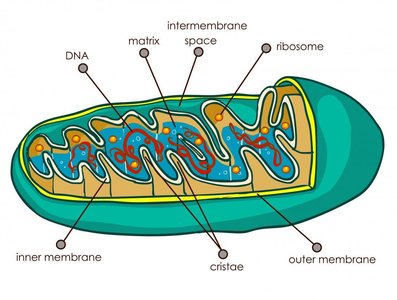
Mitochondria: Site of ATP synthesis via the citric acid cycle and oxidative phosphorylation. Has a double membrane; the inner membrane is highly folded (cristae) to increase surface area.
Chloroplasts: Site of photosynthesis in plants; contains stacks of thylakoid membranes (grana) to increase surface area for reactions.
Endosymbiotic Theory
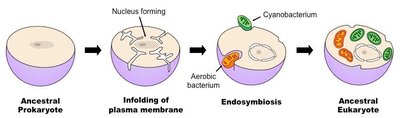
The endosymbiotic theory proposes that eukaryotic cells evolved when ancestral prokaryotes engulfed other prokaryotic cells (such as mitochondria and chloroplasts), forming a mutualistic relationship.
Component | Evidence |
|---|---|
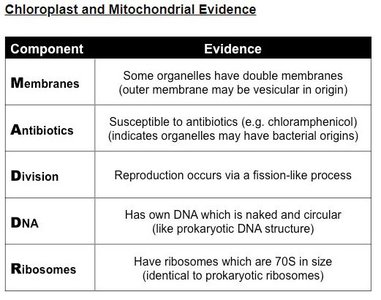
Membranes | Some organelles have double membranes (outer membrane may be vesicular in origin) |
Antibiotics | Susceptible to antibiotics (e.g., chloramphenicol), indicating bacterial origins |
Division | Reproduction occurs via a fission-like process |
DNA | Own DNA, naked and circular (like prokaryotic DNA) |
Ribosomes | Have 70S ribosomes (identical to prokaryotic ribosomes) |
Cell Membrane Structure and Function
Fluid Mosaic Model
The cell membrane (plasma membrane) is a lipid bilayer composed mainly of phospholipids, proteins, carbohydrates, and cholesterol. It is described as a "fluid mosaic" because its components can move laterally within the layer, and it is made of many different molecules.
Phospholipids: Have hydrophilic heads and hydrophobic tails, forming a bilayer in aqueous environments.
Proteins: Peripheral, integral, and transmembrane proteins serve roles in signaling, transport, and structure.
Carbohydrates: Attached to lipids (glycolipids) or proteins (glycoproteins) for cell recognition and adhesion.
Cholesterol: Regulates membrane fluidity.
Selective Permeability
The membrane allows only certain molecules to pass freely (small, non-polar molecules like O2, CO2, and small amounts of water). Large, polar, or charged molecules require transport proteins.
Membrane Transport Mechanisms
Passive vs. Active Transport
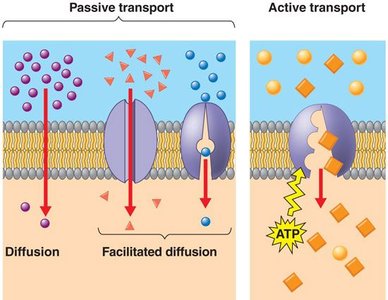
Passive Transport: Movement of molecules with the concentration gradient (high to low concentration) without energy input. Includes simple diffusion, facilitated diffusion, and osmosis.
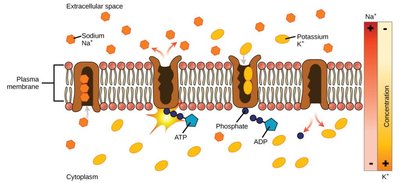
Active Transport: Movement of molecules against the concentration gradient (low to high concentration) requiring energy (ATP).
Diffusion and Facilitated Diffusion
Simple Diffusion: Movement of small, non-polar molecules directly through the membrane.
Facilitated Diffusion: Movement of large, polar, or charged molecules via channel or carrier proteins.
Osmosis and Water Potential
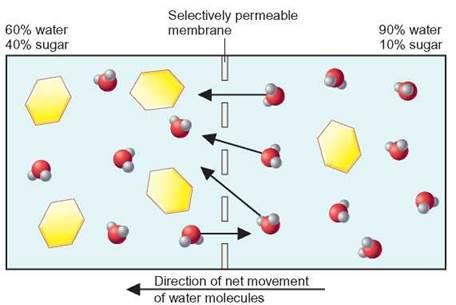
Osmosis is the diffusion of water across a semipermeable membrane from high water concentration (low solute) to low water concentration (high solute). Water potential (Ψ) quantifies the tendency of water to move and is affected by solute potential (Ψs) and pressure potential (Ψp).
Water Potential Equation:
Solute Potential: where: = ionization constant = molar concentration = pressure constant (0.0831 L·bar/mol·K) = temperature in Kelvin
Tonicity
Hypotonic Solution: Lower solute concentration outside; water moves into the cell.
Isotonic Solution: Equal solute concentration; no net water movement.
Hypertonic Solution: Higher solute concentration outside; water moves out of the cell.
Factors Affecting Cell Transport Efficiency
Surface Area to Volume Ratio
Cells must maintain a large surface area to volume ratio for efficient transport of materials. As cells grow, volume increases faster than surface area, limiting exchange efficiency. Projections like villi increase surface area.
Surface Area of a Cube:
Volume of a Cube:
Surface Area to Volume Ratio:
Summary Table: Membrane Transport Types
Transport Type | Energy Required? | Direction | Examples |
|---|---|---|---|
Simple Diffusion | No | High to Low | O2, CO2 |
Facilitated Diffusion | No | High to Low | Glucose, ions via channels |
Osmosis | No | High to Low (water) | Water |
Active Transport | Yes (ATP) | Low to High | Na+/K+ pump |
Endocytosis/Exocytosis | Yes (ATP) | Bulk transport | Large molecules, particles |
Additional info: These notes integrate and expand upon the provided material, ensuring coverage of all major concepts relevant to cell structure, function, and membrane transport for a General Biology course.
