 Back
Cell Structure, Function, and Membrane Transport: General Biology Study Notes
Study Guide - Smart Notes
 Tailored notes based on your materials, expanded with key definitions, examples, and context.
Cell Structure and Function
What is a Cell?
Cells are the basic units of life, consisting of organelles and molecules that work together to perform specific tasks and maintain homeostasis. All living organisms are composed of at least one cell, which can be classified as either prokaryotic or eukaryotic.
Prokaryotic cells: Simpler, smaller, lack a nucleus and membrane-bound organelles. Found in Bacteria and Archaea.
Eukaryotic cells: Larger, more complex, contain a nucleus and membrane-bound organelles. Found in plants, animals, fungi, and protists.
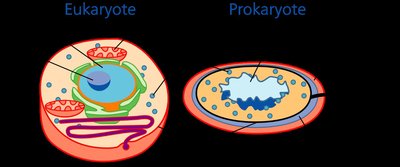
Prokaryotic vs. Eukaryotic Cells
Prokaryotes:
Single-celled only
No nucleus; DNA is in the nucleoid region
No membrane-bound organelles
Cell wall, flagella, and ribosomes present
Smaller and evolutionarily older
Eukaryotes:
Single-celled or multicellular
DNA enclosed in a nucleus
Membrane-bound organelles (e.g., mitochondria, ER, Golgi apparatus)
Larger and more complex
Evolved from prokaryotic ancestors
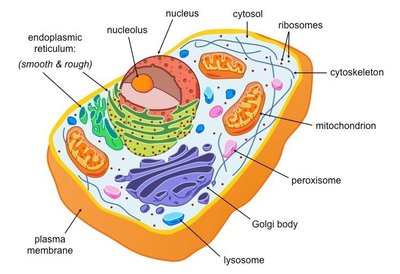
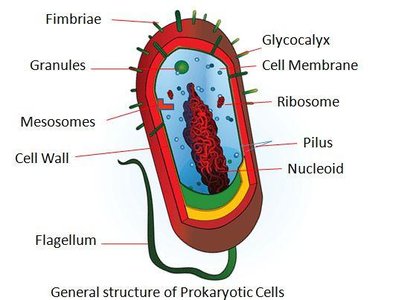
Cell Shape and Function
The shape of a cell and the types and amounts of organelles it contains determine its function. For example, sperm cells have long flagella and many mitochondria for movement, while plant cells have rigid cell walls for structure.
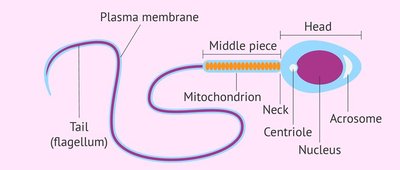
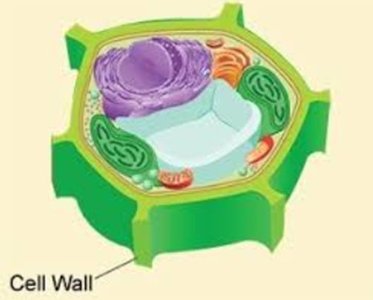
Cellular Organelles
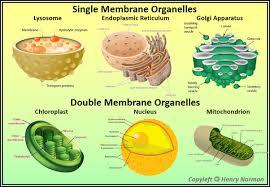
Membrane-Bound vs. Non-Membrane-Bound Organelles
Non-membrane-bound organelles: Ribosomes, cell membrane, cell wall, cytoplasm, cytoskeleton, centrioles, flagella.
Membrane-bound organelles: Nucleus, vacuole, mitochondria, chloroplast, Golgi apparatus, endoplasmic reticulum, lysosome, peroxisome.
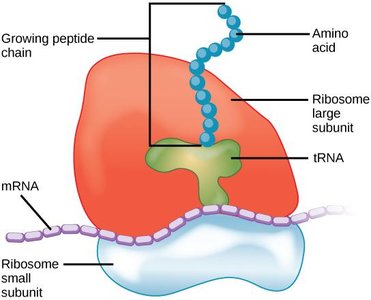
Ribosomes
Ribosomes are found in all cells and are responsible for protein synthesis. They can be free-floating in the cytoplasm or attached to the rough endoplasmic reticulum.
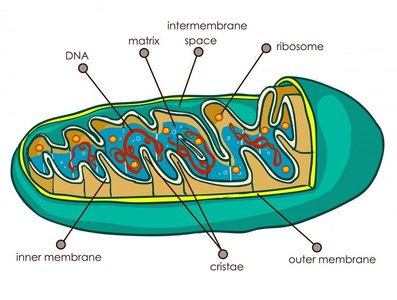
Mitochondria and Chloroplasts
Mitochondria are the sites of ATP production through cellular respiration. Chloroplasts are found in plant cells and are responsible for photosynthesis. Both have double membranes and their own DNA, supporting the endosymbiotic theory.
Endosymbiotic Theory
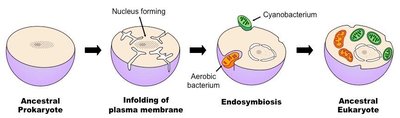
The endosymbiotic theory proposes that mitochondria and chloroplasts originated as free-living prokaryotes that were engulfed by ancestral eukaryotic cells, forming a mutualistic relationship.
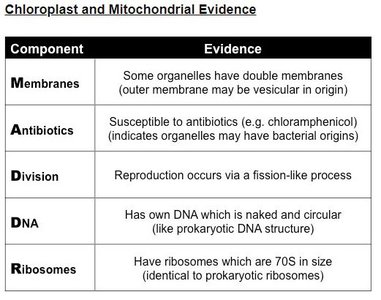
Component | Evidence |
|---|---|
Membranes | Some organelles have double membranes (outer membrane may be vesicular in origin) |
Antibiotics | Susceptible to antibiotics (e.g., chloramphenicol), indicating bacterial origins |
Division | Reproduction occurs via a fission-like process |
DNA | Own DNA, naked and circular (like prokaryotic DNA) |
Ribosomes | Have 70S ribosomes, identical to prokaryotic ribosomes |
Cell Membrane Structure and Function
Fluid Mosaic Model
The cell membrane is a dynamic structure composed of a phospholipid bilayer with embedded proteins, cholesterol, and carbohydrates. This arrangement allows for selective permeability and fluidity.
Phospholipids: Form the bilayer; hydrophilic heads face outward, hydrophobic tails face inward.
Proteins: Serve as channels, receptors, or enzymes.
Cholesterol: Regulates membrane fluidity.
Carbohydrates: Involved in cell recognition and adhesion.
Membrane Transport
Passive vs. Active Transport
Passive Transport: Movement of molecules down their concentration gradient without energy input. Includes simple diffusion, facilitated diffusion, and osmosis.
Active Transport: Movement of molecules against their concentration gradient, requiring energy (usually ATP).
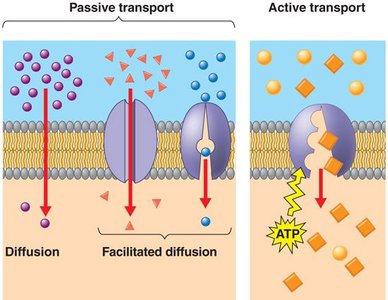
Diffusion and Facilitated Diffusion
Diffusion is the movement of molecules from high to low concentration. Facilitated diffusion requires channel or carrier proteins for large or polar molecules.
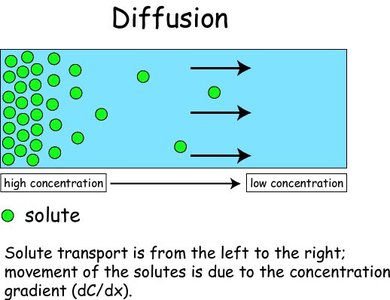
Osmosis and Tonicity
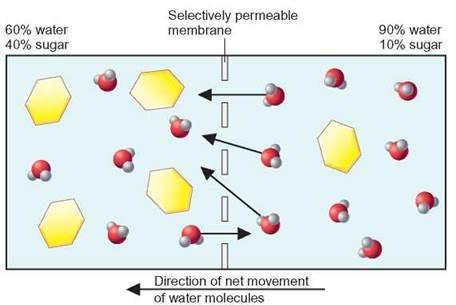
Osmosis is the diffusion of water across a semipermeable membrane. Tonicity describes the relative concentration of solutes in solutions separated by a membrane:
Hypotonic: Lower solute concentration outside; water enters the cell.
Isotonic: Equal solute concentration; no net water movement.
Hypertonic: Higher solute concentration outside; water leaves the cell.
Surface Area to Volume Ratio
Cells must maintain a high surface area to volume ratio for efficient transport of materials. As cells grow, volume increases faster than surface area, limiting cell size.
Summary Table: Key Differences Between Prokaryotic and Eukaryotic Cells
Feature | Prokaryotic Cells | Eukaryotic Cells |
|---|---|---|
Nucleus | Absent | Present |
Membrane-bound Organelles | Absent | Present |
Cell Size | Small (1-10 µm) | Larger (10-100 µm) |
Examples | Bacteria, Archaea | Plants, Animals, Fungi, Protists |
