 Back
Cell Structure, Function, and Membrane Transport: General Biology Study Notes
Study Guide - Smart Notes
 Tailored notes based on your materials, expanded with key definitions, examples, and context.
Cell Structure and Function
What is a Cell?
A cell is the basic unit of life, composed of organelles and molecules working together to perform specific tasks and maintain homeostasis. All living organisms are made of at least one cell.
Prokaryotes: Simple, single-celled organisms without a nucleus or membrane-bound organelles. Examples: Bacteria and Archaea.
Eukaryotes: Can be single-celled or multicellular, have a nucleus and membrane-bound organelles. Examples: Plants, Animals, Fungi, Protists.
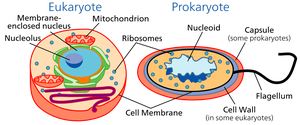
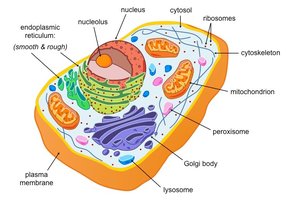
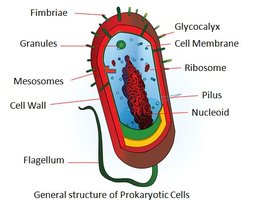
Prokaryotic vs. Eukaryotic Cells
Prokaryotic Cells: No nucleus, DNA in nucleoid, no membrane-bound organelles, smaller and simpler, oldest cell type.
Eukaryotic Cells: Have a nucleus, membrane-bound organelles, larger and more complex, evolved from prokaryotes.
Shared Features: DNA/RNA, cell membrane, ribosomes, some have cell walls and flagella.
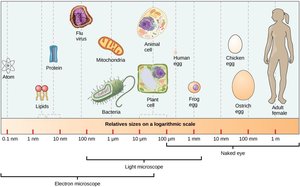
Cell Size and Shape
Cells range from 10 micrometers to 1 mm. Size must balance the need to house DNA and organelles with efficient exchange of materials.
Cell Shape and Function
Shape and organelle composition determine cell function.
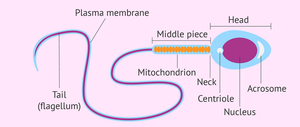
Sperm cells: Long flagella and many mitochondria for movement.
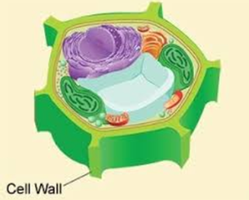
Plant cells: Cell wall and square shape for stacking and structure.
Types of Organelles
Non-Membrane Bound Organelles
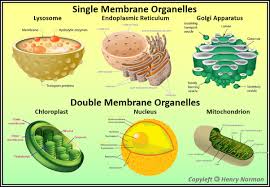
Examples: Ribosomes, cell membrane, cell wall, cytoplasm, cytoskeleton, centrioles, flagella.
Membrane Bound Organelles
Examples: Nucleus, vacuole, mitochondria, chloroplast, Golgi apparatus, endoplasmic reticulum.
Cell Compartmentalization
Importance of Membrane Bound Organelles
Compartmentalization allows different areas of the cell to have specialized conditions and concentrate enzymes/substrates.
Organelle membranes are often folded to increase surface area, enhancing reaction rates.
Evolution of Eukaryotic Cells
Endosymbiotic Theory
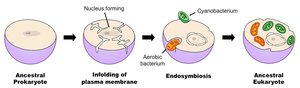
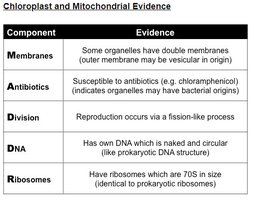
Eukaryotic cells evolved when ancestral prokaryotes ingested mitochondrion and chloroplast-like cells, forming mutualistic relationships. This allowed survival in oxygen-rich environments and provided protection/resources for the proto-prokaryotes.
Evidence for Endosymbiosis
Component | Evidence |
|---|---|
Membranes | Double membranes in some organelles |
Antibiotics | Susceptibility to antibiotics (bacterial origins) |
Division | Fission-like reproduction |
DNA | Own DNA, naked and circular (like prokaryotes) |
Ribosomes | 70S ribosomes (prokaryotic type) |
Cell Transport
Importance of Cell Transport
Removes waste, maintains pH and salt balance, allows communication, absorbs nutrients, enables respiration, and regulates apoptosis.
Concentration Gradient
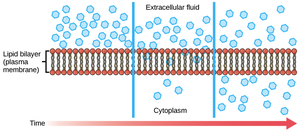
A concentration gradient is the difference in concentration of molecules across a space. Molecules move from high to low concentration (with the gradient).
Passive vs. Active Transport
Passive Transport: Moves molecules with the concentration gradient, does not require ATP.
Active Transport: Moves molecules against the gradient, requires ATP.
Dynamic Equilibrium
Occurs when molecules reach equal concentration on both sides of the membrane; net movement is zero.
Types of Passive Transport
Simple Diffusion: Small, non-polar molecules (O2, N2, CO2, small water) move freely.
Facilitated Diffusion: Large, polar, or charged molecules use channel proteins.
Osmosis: Diffusion of water across a semipermeable membrane.
Facilitated Transport
Large, polar, and charged molecules require channel proteins to cross the membrane.
Includes facilitated diffusion and active transport.
Sodium-Potassium Pump
Example of active transport; maintains Na+ and K+ gradients in neurons, essential for membrane potential and signaling.
Membrane Structure and Function
Cell Membrane
The cell membrane (phospholipid bilayer) surrounds all cells, controlling entry and exit of substances. Composed of phospholipids, proteins, carbohydrates, and cholesterol.
Phospholipid Structure
Head: Polar, hydrophilic, interacts with water.
Tails: Non-polar, hydrophobic, avoid water. Unsaturated tails are bent, increasing fluidity.
Membrane Structure
Phospholipids form a bilayer in water, with hydrophilic heads facing out and hydrophobic tails inward.
Membrane Components
Cholesterol: Regulates fluidity.
Glycolipids: Cell adhesion and recognition.
Glycoproteins: Cross-linking for tissue strength.
Proteins: Peripheral (signaling), integral (embedded), transmembrane (channels).
Fluid Mosaic Model
The membrane is a dynamic structure with many components moving laterally, allowing flexibility and selective permeability.
Selective Permeability
Only small, non-polar molecules diffuse freely; polar/charged molecules require channels.
Endomembrane System
Non-Membrane Bound Organelles
Cell membrane, cell wall, ribosomes, cytoplasm, cytoskeleton, centrioles, flagella.
Membrane Bound Organelles
Nucleus, nucleolus, smooth/rough ER, Golgi apparatus, lysosome, peroxisome, vacuole, mitochondrion, chloroplast.
Nucleus and Nucleolus
Nucleus: Double membrane, houses DNA, site of transcription.
Nucleolus: Site of ribosome synthesis.
Endoplasmic Reticulum
Smooth ER: Lipid/hormone synthesis, detoxification.
Rough ER: Protein packaging, ribosomes attached.
Golgi Apparatus
Folds/modifies proteins, packages into vesicles, directs to destinations.
Protein Secretion Pathway
Ribosomes synthesize proteins.
Rough ER folds/tags proteins.
Golgi packages proteins.
Vesicles transport proteins.
Vesicles fuse with membrane for secretion.
Peroxisomes and Lysosomes
Peroxisomes: Lipid hydrolysis, break down hydrogen peroxide.
Lysosomes: Hydrolytic enzymes, break down waste, apoptosis.
Vacuole
Stores/releases fluids and biomolecules, maintains plant cell shape/turgor pressure.
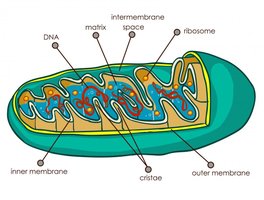
Mitochondrion
Double membrane, compartmentalizes reactions, inner membrane folded for ATP production.
Site of citric acid cycle and oxidative phosphorylation.
Chloroplast
Double membrane, stacks of thylakoids (grana) increase surface area for photosynthesis.
Osmosis and Water Potential
Osmoregulation
Maintains water balance and solute composition, essential for cell and organism survival.
Osmosis
Diffusion of water from high to low concentration across a semipermeable membrane.
Small amounts of water can cross the membrane; bulk transport uses aquaporins.
Tonicity
Describes solute concentration in solutions.
Hypotonic: Less solute outside, water moves in.
Isotonic: Equal solute, no net movement.
Hypertonic: More solute outside, water moves out.
Water Potential Equation
Quantifies water movement:
= Water potential, = Pressure potential, = Solute potential.
Solute potential:
i = ionization constant, C = molar concentration, R = gas constant (0.0831), T = temperature in Kelvin.
Osmosis in Plants
Water moves through cell wall and membrane, stored in vacuoles, turgor pressure maintains cell shape.
Summary Table: Membrane Transport Types
Type | Energy Required | Direction | Example |
|---|---|---|---|
Simple Diffusion | No | With gradient | O2, CO2 |
Facilitated Diffusion | No | With gradient | Glucose, ions |
Osmosis | No | With gradient | Water |
Active Transport | Yes (ATP) | Against gradient | Sodium-potassium pump |
