 Back
Cell Structure, Function, and Origins: General Biology Study Notes
Study Guide - Smart Notes
 Tailored notes based on your materials, expanded with key definitions, examples, and context.
Cell Types and Common Components
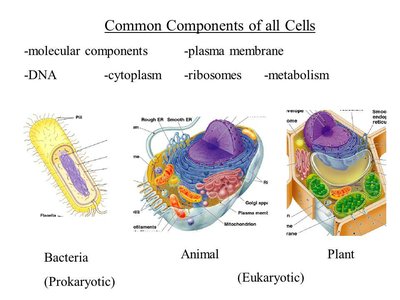
Prokaryotic vs. Eukaryotic Cells
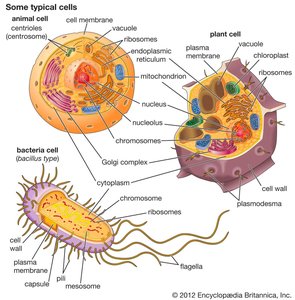
Cells are the fundamental units of life, classified into two main types: prokaryotic and eukaryotic. Both share certain essential components, but differ in complexity and internal structure.
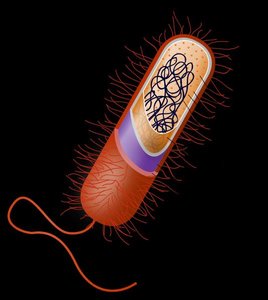
Prokaryotic cells lack a nucleus and membrane-bound organelles. Their DNA is circular and located in the nucleoid region.
Eukaryotic cells possess a nucleus and various membrane-bound organelles, allowing compartmentalization of functions.
All cells contain: plasma membrane, cytoplasm, DNA, and ribosomes.
Example: Bacteria are prokaryotes; animal and plant cells are eukaryotes.
Cell Sizes and Scales
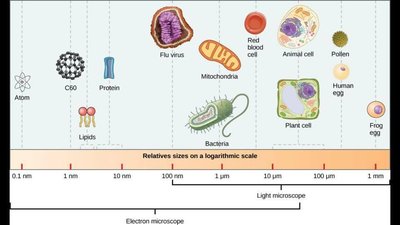
Relative Sizes of Cells and Structures
Cells and their components vary greatly in size, from molecules to multicellular organisms. Understanding these scales is crucial for appreciating cellular function and microscopy.
Smallest: molecules (e.g., proteins, lipids)
Intermediate: viruses, organelles (e.g., mitochondria)
Larger: prokaryotic cells (e.g., bacteria), eukaryotic cells (e.g., animal, plant cells)
Largest: multicellular organisms (e.g., chicken egg)
Example: T4 bacteriophage < Staphylococcus aureus < Candida albicans < Chicken egg
Cell Structure and Function
Major Organelles and Their Roles
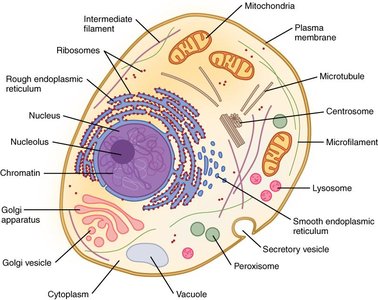
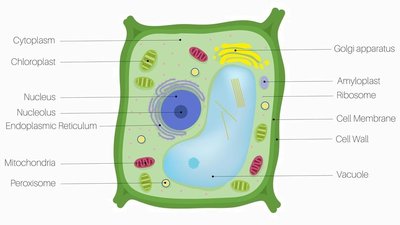
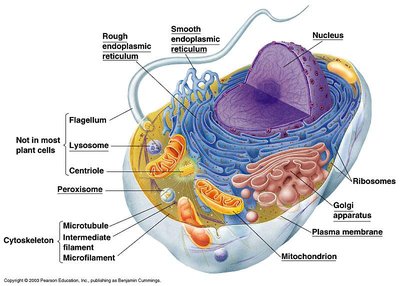
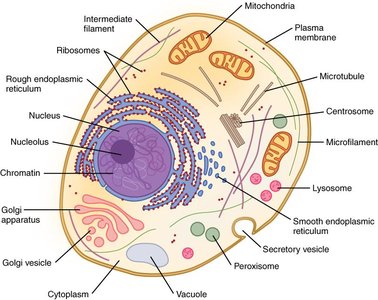
Eukaryotic cells contain specialized organelles, each with distinct functions. The presence and abundance of certain organelles can predict a cell's function.
Nucleus: Contains genetic material (DNA); controls cell activities.
Mitochondria: Site of ATP production; "powerhouse" of the cell.
Ribosomes: Protein synthesis; found in cytoplasm or on rough ER.
Golgi apparatus: Modifies, sorts, and packages proteins for secretion.
Lysosomes: Digestive enzymes; breakdown of waste and cellular debris.
Endoplasmic reticulum (ER): Rough ER synthesizes proteins; smooth ER synthesizes lipids.
Vacuole: Storage of substances; large in plant cells.
Chloroplast: Photosynthesis in plant cells.
Peroxisome: Detoxifies harmful substances.
Cytoskeleton: Provides structure, shape, and movement.
Example: Goblet cells have abundant rough ER, Golgi, and vesicles for mucin secretion.
Surface Area and Volume in Cells
Importance of Surface Area (SA) and SA:V Ratio
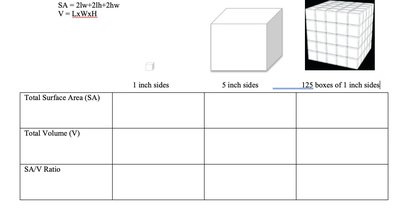
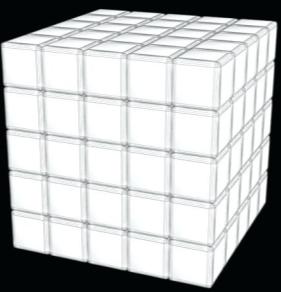
The surface area to volume (SA:V) ratio is a critical factor in cell biology. As cells grow, their volume increases faster than their surface area, affecting nutrient and waste transport.
Surface area: Determines the rate of exchange of materials across the cell membrane.
Volume: Represents the space for metabolic reactions and storage.
As cell size increases, SA:V ratio decreases, limiting efficient transport.
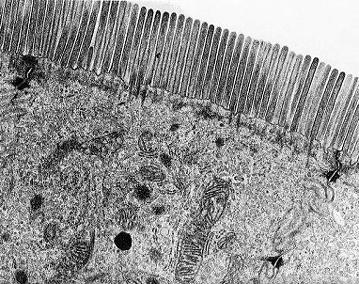
Cells may increase SA by forming microvilli or dividing into smaller cells.
Formulas:
Surface Area of a cube:
Volume of a cube:
SA:V Ratio:
Example: Microvilli in intestinal cells increase SA for absorption.

Cell Function and Disease Applications
Predicting Cell Function and Malfunction
The predominance of certain organelles in a cell can indicate its function. Malfunctioning organelles lead to specific cellular disorders.
Goblet cells: Excessive mucin secretion due to abundant rough ER and Golgi.
B-cells: Active antibody production requires many ribosomes, rough ER, and Golgi.
Leydig cells: Testosterone synthesis relies on smooth ER and Golgi.
Macrophages: Engulf and digest bacteria using lysosomes and vacuoles.
Golgi apparatus malfunction: Leads to decreased secretion of proteins, as seen in achondrogenesis.
Example: Achondrogenesis results from defective Golgi, causing poor growth hormone secretion and bone development.
Cell Origins and the Endosymbiotic Theory
Evolution of Eukaryotic Cells
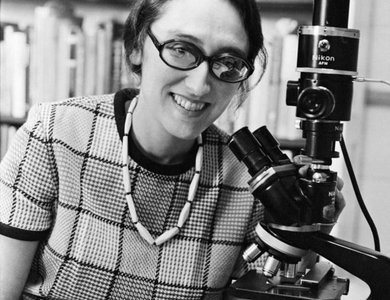
The endosymbiotic theory, developed by Lynn Margulis, explains the origin of mitochondria and chloroplasts in eukaryotic cells. These organelles were once free-living bacteria engulfed by ancestral cells.
Evidence: Double membranes, own genetic material (DNA), own ribosomes, similarities to bacteria.
Mitochondria and chloroplasts replicate independently and have circular DNA.
Example: Mitochondria contain 70S ribosomes and circular DNA, similar to prokaryotes.
Summary Table: Comparison of Cell Types
This table summarizes the main differences and similarities between prokaryotic and eukaryotic cells.
Feature | Prokaryotic Cell | Eukaryotic Cell |
|---|---|---|
Nucleus | Absent | Present |
DNA Structure | Circular | Linear |
Membrane-bound Organelles | Absent | Present |
Cell Size | Small (0.1–5 μm) | Larger (10–100 μm) |
Examples | Bacteria, Archaea | Animals, Plants, Fungi, Protists |
Additional info: Eukaryotic cells may have specialized structures (e.g., cilia, flagella) for movement and increased surface area.
----------------------------------------
