 Back
Cell Structure, Function, and Stem Cells: Foundations of Life
Study Guide - Smart Notes
 Tailored notes based on your materials, expanded with key definitions, examples, and context.
Cell Structure and Function
Introduction to Cells
Cells are the fundamental units of life, forming the basis of all living organisms. Each cell is a small, membrane-bound compartment containing the molecules and structures necessary for life. Understanding cell structure is essential for grasping the complex interactions that sustain living organisms.
Cell Theory
The cell theory is a foundational concept in biology, describing the properties and significance of cells:
All living organisms are composed of cells. Multicellular organisms (e.g., humans) consist of many cells, while unicellular organisms (e.g., bacteria) consist of a single cell.
Cells are the basic unit of structure and function in all organisms.
Cells are the smallest unit of life. They are the smallest structures capable of independent survival.
Cells arise from preexisting cells. New cells are produced by the division of existing cells.
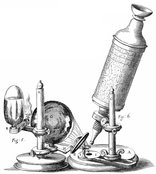
Microscopy and Cell Size
Cells are microscopic and cannot be seen with the naked eye. The scale of cells is extremely small, with most cells ranging from 1 to 100 micrometers (μm) in diameter. The use of microscopes has been essential in discovering and studying cells.
Limits to Cell Size: Surface Area to Volume Ratio
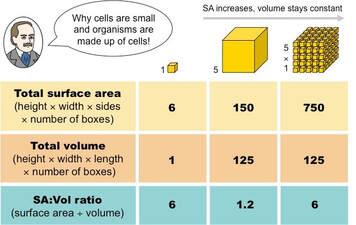
Cells are small due to physiological constraints related to the surface area to volume ratio. As a cell grows, its volume increases faster than its surface area, limiting the rate at which materials can enter or exit the cell. This constraint explains why organisms are composed of many small cells rather than a few large ones.
Surface area is the total area of the cell's outer membrane.
Volume is the space inside the cell.
A high surface area to volume ratio allows efficient exchange of materials.
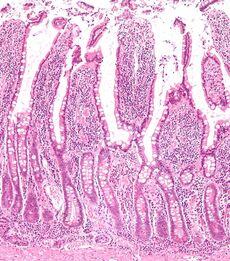
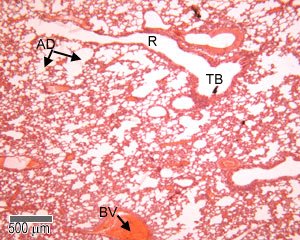
Specialized structures, such as microvilli in the intestine and alveoli in the lungs, increase surface area for absorption and exchange.
Prokaryotic and Eukaryotic Cells
Cells are classified as either prokaryotic or eukaryotic based on their structural features.
Prokaryotic Cells
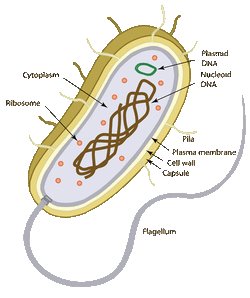
Prokaryotes (Bacteria and Archaea) are single-celled organisms with simple cell structure:
No true nucleus; genetic material is in a region called the nucleoid.
Lack membrane-bound organelles.
Common shapes: spherical, rod-shaped, spiral.
Structures include capsule, cell wall, plasma membrane, cytoplasm, ribosomes, pili, flagella, and plasmids.
Eukaryotic Cells
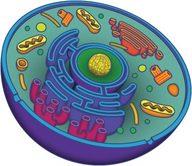
Eukaryotes (animals, plants, fungi, protists) have more complex cells:
Contain a true nucleus surrounded by a nuclear membrane.
Possess membrane-bound organelles (e.g., mitochondria, endoplasmic reticulum, Golgi apparatus).
Can be unicellular or multicellular.
Comparison of Prokaryotic and Eukaryotic Cells
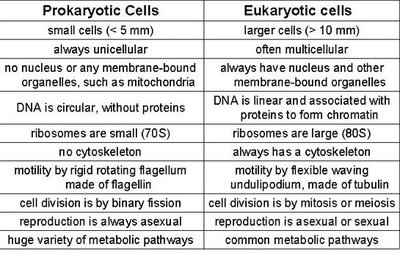
Feature | Prokaryotic Cells | Eukaryotic Cells |
|---|---|---|
Size | Small (< 5 μm) | Larger (> 10 μm) |
Nucleus | Absent | Present |
Organelles | Absent | Present |
DNA | Circular, free in cytoplasm | Linear, in nucleus |
Ribosomes | Small (70S) | Large (80S) |
Cell Division | Binary fission | Mitosis or meiosis |
Reproduction | Asexual | Asexual or sexual |
Cell Organelles and Their Functions
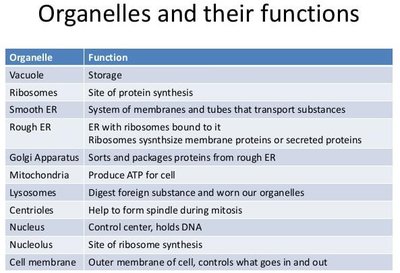
Eukaryotic cells contain specialized structures called organelles, each with distinct functions:
Organelle | Function |
|---|---|
Vacuole | Storage |
Ribosomes | Site of protein synthesis |
Smooth ER | Membrane system for transport |
Rough ER | Protein synthesis (with ribosomes) |
Golgi Apparatus | Sorts and packages proteins |
Mitochondria | Produce ATP (energy) |
Lysosomes | Digest foreign substances |
Centrioles | Spindle formation in mitosis |
Nucleus | Control center, holds DNA |
Nucleolus | Ribosome synthesis |
Cell membrane | Controls entry/exit of substances |
Plant vs. Animal Cells
Plant and animal cells share many features but also have key differences:
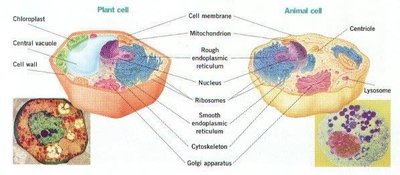
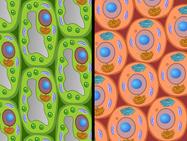
Plant cells have a cell wall, chloroplasts, and a large central vacuole.
Animal cells lack a cell wall and chloroplasts but have centrioles and lysosomes.
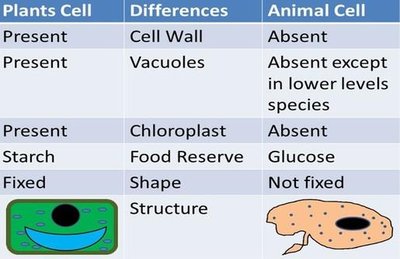
Feature | Plant Cell | Animal Cell |
|---|---|---|
Cell Wall | Present | Absent |
Vacuole | Large, central | Small or absent |
Chloroplast | Present | Absent |
Food Reserve | Starch | Glucose |
Shape | Fixed | Not fixed |
Cell Differentiation and Specialized Cells
Cell Differentiation
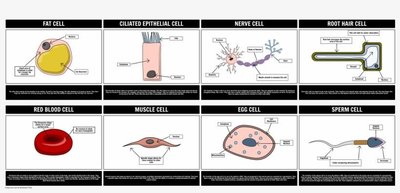
In multicellular organisms, cells differentiate to form specialized tissues. Differentiation is controlled by gene expression, allowing cells to develop structures and functions suited to specific roles.
All cells contain the same genetic material, but only certain genes are expressed in each cell type.
Examples of specialized cells include neurons, muscle cells, red blood cells, and root hair cells.
Stem Cells
Types of Stem Cells
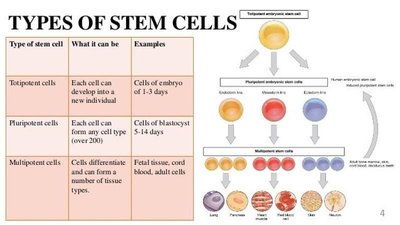
Stem cells are undifferentiated cells capable of self-renewal and differentiation into specialized cell types. They are essential for development, growth, and tissue repair.
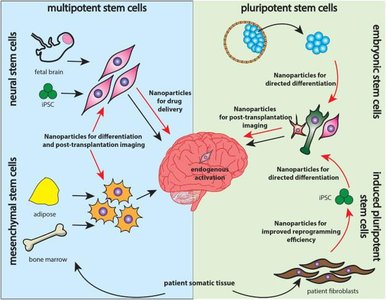
Embryonic stem cells: Pluripotent, can become any cell type in the body.
Tissue-specific (adult) stem cells: Multipotent, can become a limited range of cell types.
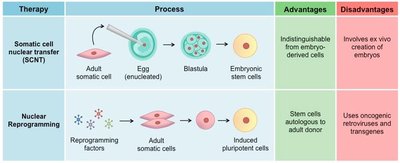
Induced pluripotent stem cells (iPSCs): Adult cells reprogrammed to behave like embryonic stem cells.
Medical Uses of Stem Cells
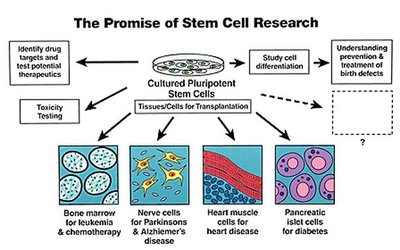
Stem cells have significant potential in medicine, including:
Regenerating damaged tissues and organs
Treating diseases such as leukemia, diabetes, Parkinson's, and heart disease
Testing new drugs for safety and effectiveness
Benefits and Drawbacks of Stem Cell Types
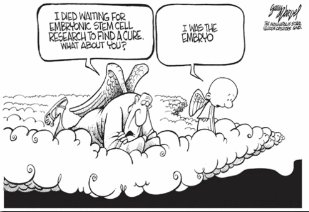
Stem cell research raises ethical, technical, and medical questions. The main types of stem cells used in research and therapy are embryonic, cord blood, and adult stem cells. Each has advantages and disadvantages:
Type | Advantages | Disadvantages |
|---|---|---|
Embryonic | Pluripotent, high replication rate | Ethical concerns, risk of rejection |
Cord Blood | Less ethical controversy, effective in some treatments | Limited differentiation potential |
Adult | Patient-specific, fewer ethical issues | Limited to certain cell types |
Key Terms
Cytoplasm: Gel-like substance inside the cell membrane
Organelle: Specialized structure within a cell
Chloroplast: Organelle for photosynthesis in plants
Vacuole: Storage organelle
Surface area: Total area of the cell membrane
Differentiation: Process by which cells become specialized
Somatic cell: Any cell forming the body of an organism
Mitochondria: Organelle for energy production
Nucleus: Organelle containing genetic material
Cell theory: Fundamental theory describing cells
Volume: Space inside the cell
Stem cell: Undifferentiated cell with self-renewal and differentiation capacity
Plasma membrane: Cell's outer membrane
Endoplasmic reticulum: Organelle for protein and lipid synthesis
Golgi apparatus: Organelle for protein modification and sorting
Pili: Hair-like structures on prokaryotes
Totipotent: Stem cell able to become any cell type
Lysosomes: Organelle for digestion
Cell wall: Rigid outer layer in plants, fungi, and some prokaryotes
Prokaryote: Cell without a nucleus
Nucleoid: Region containing DNA in prokaryotes
Pluripotent: Stem cell able to become many cell types
Flagellum: Whip-like structure for movement
Ribosomes: Site of protein synthesis
Gene: Unit of heredity
Eukaryote: Cell with a nucleus
Plasmid: Small DNA molecule in prokaryotes
Multipotent: Stem cell able to become a limited range of cells
