 Back
Cell Structure, Function, and the Evolution of Eukaryotes: Study Notes for General Biology
Study Guide - Smart Notes
 Tailored notes based on your materials, expanded with key definitions, examples, and context.
The Origin and Diversification of Eukaryotes
Evolution of Multicellularity
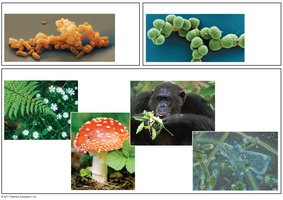
The earliest evidence of eukaryotic cells dates back to approximately 1.8 billion years ago. The evolution of eukaryotic cells enabled a greater diversity of unicellular forms, and a second wave of diversification occurred with the emergence of multicellularity. This development gave rise to major groups such as algae, plants, fungi, and animals.
Key Points:
Eukaryotes are characterized by complex cellular structures, including membrane-bound organelles.
Multicellularity allowed for specialized functions and greater organismal complexity.
Major lineages include Kingdom Plantae, Kingdom Fungi, Kingdom Animalia, and protists.
These groups are classified within the domain Eukarya.
Example: The transition from unicellular to multicellular life forms is seen in the evolution of algae and fungi.
Cell Size and Structure
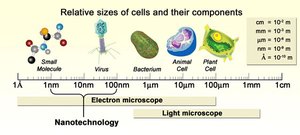
Relative Sizes of Cells and Their Components
Cells and their components vary greatly in size, from small molecules to large plant cells. Understanding these differences is essential for appreciating cellular function and the limitations imposed by size.
Key Points:
Small molecules, viruses, bacteria, animal cells, and plant cells differ in size by orders of magnitude.
Microscopes (light and electron) are required to visualize most cellular structures.
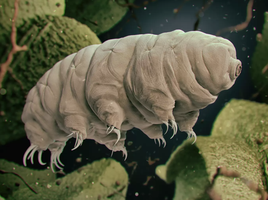
Plant cells are generally larger than animal cells, but some single-celled organisms (e.g., amoebas) can be as large as multicellular organisms like dust mites or water bears.
Example: A single-celled amoeba can be similar in size to a multicellular water bear (tardigrade).
Why Are Cells So Small?
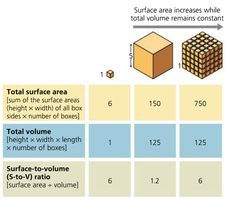
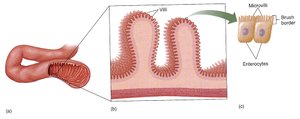
Cell size is limited by the need for efficient exchange of materials across the plasma membrane. Diffusion has a speed limit, and as cells grow larger, their volume increases faster than their surface area, making exchange less efficient.
Key Points:
For each square micrometer of plasma membrane, only a certain amount of substance can cross per second.
Larger cells require more nutrients and produce more waste, increasing the demand for exchange.
The surface area-to-volume ratio decreases as cell size increases, limiting the efficiency of exchange.
Formula:
Example: Cells in the small intestine have adaptations to increase surface area for nutrient absorption.
Prokaryotic vs. Eukaryotic Cells
Major Features Distinguishing Eukaryotic Cells from Prokaryotic Cells
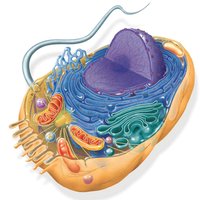
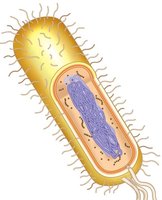
Eukaryotic cells are more complex than prokaryotic cells, possessing membrane-bound organelles and a nucleus. Both cell types share some basic features, but differ in DNA organization, cell wall presence, and organelle structure.
Key Points:
Prokaryotes: No nucleus, circular DNA, cell wall always present, no membrane-bound organelles.
Eukaryotes: Nucleus, linear DNA, may or may not have a cell wall, have membrane-bound organelles.
Both: Plasma membrane, cytosol, chromosomes, ribosomes.
Example: Bacteria are prokaryotes, while plants and animals are eukaryotes.
Plant vs. Animal Cells
Shared and Unique Organelles
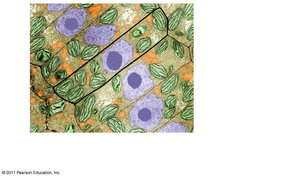
Plant and animal cells share most organelles, but plants have unique structures such as cell walls and chloroplasts. Both types of cells contain nuclei, mitochondria, and other organelles essential for cellular function.
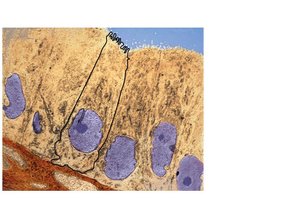
Key Points:
Plant cells: Cell wall, chloroplasts, large central vacuole.
Animal cells: No cell wall, no chloroplasts, smaller vacuoles.
Both have nuclei, mitochondria, endoplasmic reticulum, Golgi apparatus, and ribosomes.
Example: Duckweed cells (plant) and human uterine lining cells (animal) both contain nuclei and nucleoli.
Endomembrane System
Components and Functions
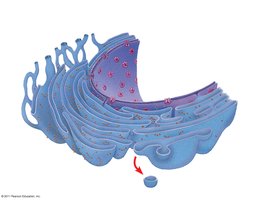
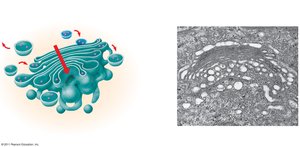
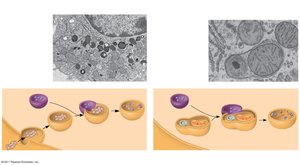
The endomembrane system is a group of organelles involved in the synthesis, modification, and transport of cellular materials. It includes the nucleus, endoplasmic reticulum (ER), Golgi apparatus, and lysosomes.
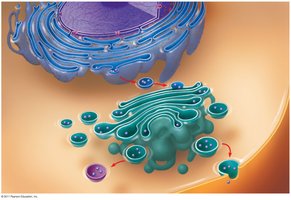
Key Points:
Nucleus: Contains genetic material and controls cellular activities.
Endoplasmic Reticulum (ER): Smooth ER synthesizes lipids and detoxifies toxins; rough ER is involved in protein synthesis.
Golgi Apparatus: Modifies, sorts, and packages proteins and lipids for transport.
Lysosomes: Digestive compartments containing hydrolytic enzymes.
Example: Cells specialized in protein production have abundant rough ER and Golgi apparatus.
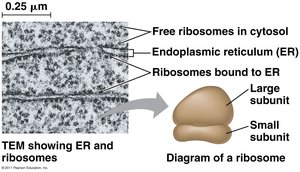
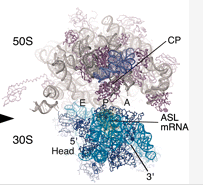
Mitochondria and Chloroplasts
Mitochondria: Site of Cellular Respiration
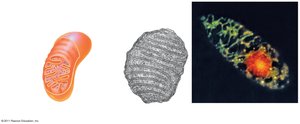
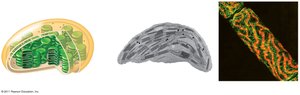
Mitochondria are organelles responsible for cellular respiration, a process that uses oxygen to release energy from glucose and produce ATP. Their structure includes an outer membrane, inner membrane with cristae, matrix, and mitochondrial DNA.
Key Points:
Cellular respiration occurs in the mitochondria.
Inner membrane's extensive surface area is crucial for ATP production.
Mitochondria contain their own DNA and ribosomes.
Example: Mitochondria are abundant in cells with high energy demands, such as muscle cells.
Chloroplasts: Site of Photosynthesis
Chloroplasts are organelles found in plant cells and some protists, responsible for photosynthesis. They convert solar energy into chemical energy by transforming CO2 into sugars. Their structure includes inner and outer membranes, thylakoids, grana, stroma, and chloroplast DNA.
Key Points:
Photosynthesis occurs in the thylakoid membranes.
Chloroplasts contain their own DNA and ribosomes.
Extensive thylakoid membrane surface area is essential for light absorption and energy conversion.
Example: Chloroplasts are abundant in leaf cells, facilitating efficient photosynthesis.
The Cytoskeleton
Components and Functions
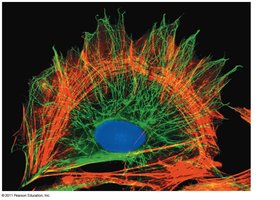
The cytoskeleton is a network of protein fibers that organizes cell structure and activities. It consists of three main components: microtubules, microfilaments, and intermediate filaments.
Key Points:
Microtubules: Thickest, made of tubulin, provide structural support and facilitate movement.
Microfilaments: Thinnest, made of actin, involved in cell shape and motility.
Intermediate Filaments: Intermediate thickness, made of various proteins (e.g., keratin), provide structural stability.
Example: Microtubules are involved in chromosome movement during cell division; actin filaments enable muscle contraction.
Additional info: The cytoskeleton also anchors organelles and connects to the extracellular matrix.
