 Back
Cell Structure, Membrane Function, and Transport Mechanisms
Study Guide - Smart Notes
 Tailored notes based on your materials, expanded with key definitions, examples, and context.
Cellular Structure and Organelles
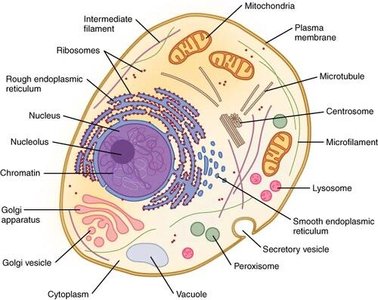
Nucleus and Associated Structures
The nucleus is the control center of the eukaryotic cell, housing genetic material and coordinating cellular activities such as growth, metabolism, and reproduction.
Nucleus: Contains DNA and regulates gene expression.
Nuclear Envelope: Double membrane surrounding the nucleus, controlling entry and exit of substances.
Nucleolus: Site of ribosomal RNA (rRNA) synthesis and ribosome assembly.
Chromatin: Complex of DNA and proteins, condenses to form chromosomes during cell division.
Major Organelles and Their Functions
Eukaryotic cells contain specialized organelles that perform distinct functions necessary for cell survival and activity.
Mitochondria: Generate ATP through cellular respiration, powering cellular reactions.
Rough Endoplasmic Reticulum (ER): Studded with ribosomes; site of protein synthesis.
Ribosomes: Synthesize proteins by translating mRNA.
Golgi Apparatus: Modifies, sorts, and packages proteins and lipids for secretion or delivery to other organelles.
Smooth Endoplasmic Reticulum (ER): Synthesizes lipids and detoxifies certain chemicals.
Centrosome: Main microtubule organizing center; important for cell division.
Lysosomes: Contain hydrolytic enzymes for digesting macromolecules and recycling cellular components.
Peroxisomes: Break down fatty acids and neutralize toxins, producing hydrogen peroxide and water.
Cytoskeleton
Components and Functions
The cytoskeleton is a network of protein fibers that provides structural support, facilitates intracellular transport, and enables cell movement.
Microfilaments: Thin filaments made of actin; involved in cell shape, movement, and muscle contraction.
Microtubules: Hollow tubes; maintain cell shape, serve as tracks for organelle movement, and are involved in cell division.
Intermediate Filaments: Provide mechanical support and anchor organelles; not involved in cell movement.
Cell Membrane Structure and Function
Phospholipid Bilayer and Fluid Mosaic Model
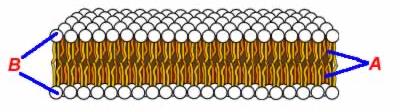
The plasma membrane is a selectively permeable barrier composed of a phospholipid bilayer with embedded proteins, carbohydrates, and cholesterol. It regulates the movement of substances into and out of the cell.
Phospholipid Bilayer: Consists of hydrophilic (polar) heads facing outward and hydrophobic (nonpolar) tails facing inward.
Fluid Mosaic Model: Describes the dynamic arrangement of lipids and proteins within the membrane.
Cholesterol: Stabilizes membrane fluidity; prevents excessive rigidity in cold and excessive fluidity in heat.
Membrane Proteins and Their Roles
Peripheral Proteins: Attached to the membrane surface; involved in signaling and cell recognition.
Integral (Transmembrane) Proteins: Span the membrane; function as channels, carriers, receptors, and enzymes.
Transport Proteins: Facilitate movement of molecules across the membrane.
Carrier Proteins: Change shape to move substances.
Channel Proteins: Provide passageways for molecules to follow concentration gradients (e.g., Aquaporin for water transport).
Glycoproteins: Proteins with carbohydrate chains; involved in cell recognition.
Glycolipids: Lipids with carbohydrate chains; also aid in cell recognition.
Attachment Proteins: Help cells bind to each other or to surfaces.
Transport Mechanisms Across the Membrane
Passive and Active Transport
Cells use various mechanisms to move substances across the membrane, depending on energy requirements and concentration gradients.
Passive Transport: Does not require energy; includes diffusion and osmosis.
Simple Diffusion: Movement of molecules directly across the membrane down their concentration gradient.
Facilitated Diffusion: Movement of molecules via transport proteins; still down the concentration gradient.
Active Transport: Requires ATP to move molecules against their concentration gradient.
Bulk Transport: Involves movement of large particles:
Exocytosis: Expels large molecules or waste from the cell using vesicles.
Endocytosis: Engulfs large particles or molecules into the cell.
Osmosis and Tonicity
Osmosis is the movement of water across a semipermeable membrane from an area of low solute concentration to high solute concentration. Tonicity describes the effect of solute concentration on cell volume.
Hypertonic: Higher solute concentration outside; cell shrivels as water exits.
Hypotonic: Lower solute concentration outside; cell swells and may burst as water enters.
Isotonic: Equal solute concentration; cell volume remains unchanged.
Gradients
Chemical Gradient: Difference in concentration of a substance across a space.
Electrical Gradient: Difference in charge across a membrane.
Electrochemical Gradient: Combined effect of chemical and electrical gradients; drives ion movement.
Cell Types: Prokaryotic vs. Eukaryotic
Comparison of Cell Types
Cells are classified as prokaryotic or eukaryotic based on the presence of membrane-bound organelles.
Feature | Prokaryotic | Eukaryotic |
|---|---|---|
Nucleus | No (nucleoid region) | Yes |
Membrane-bound organelles | No | Yes |
Ribosomes | Yes | Yes |
Plasma membrane | Yes | Yes |
Flagella | Yes | Yes |
Mitochondria | No | Yes |
Lysosomes | No | Yes |
Plant Cell vs. Animal Cell
Key Differences and Similarities
Plant and animal cells share many organelles but also have unique structures that reflect their functions.
Feature | Plant Cell | Animal Cell |
|---|---|---|
Cell Wall | Present (cellulose fibers) | Absent |
Central Vacuole | Large, maintains internal pressure | Small or absent |
Chloroplasts | Present (photosynthesis) | Absent |
Centrioles | Absent | Present |
Mitochondria | Present | Present |
Nucleus | Present | Present |
Cytoskeleton | Present | Present |
Plasma Membrane | Present | Present |
Endoplasmic Reticulum | Present | Present |
Golgi Apparatus | Present | Present |
Key Terms and Concepts
Solute: Substance dissolved in a solvent to form a solution.
Osmosis: Movement of water from low solute to high solute concentration.
Exocytosis: Active transport process moving large particles out of the cell.
Endocytosis: Active transport process bringing large particles into the cell.
Sample Multiple-Choice Questions
Use these questions to review key concepts:
Which organelle acts as the control center of the cell and houses DNA? Nucleus
What is the primary function of the nucleolus? Housing the RNA for making ribosomes
Which organelle generates chemical energy called ATP to power cellular reactions? Mitochondria
Which organelle is responsible for synthesizing lipids and creating lysosomes? Smooth Endoplasmic Reticulum
What is the role of peroxisomes within the cell? Breaking down fatty acids and dangerous toxins
Which cytoskeletal fiber is the only one NOT associated with cellular motion and is primarily used to anchor organelles like the nucleus? Intermediate Filaments
How does cholesterol assist the cell membrane during cold temperature conditions? Keeps phospholipids apart as the space between them shrinks
Which process moves molecules across the phospholipid bilayer against their concentration gradient using ATP? Active Transport
What term describes the movement of water molecules from an area of low solute concentration to an area of high solute concentration? Osmosis
What happens to a cell placed in a hypertonic environment? It shrivels as water exits
Which channel protein is specifically used to transport water molecules across the cell membrane? Aquaporin
Which structure is present in both prokaryotic and eukaryotic cells? Ribosomes
What is the cell wall of a plant cell made of? Cellulose fibers
Which organelle modifies and packages proteins received from the Rough ER? Golgi Apparatus
What function do lysosomes perform within the cell? Containing destructive enzymes to digest macromolecules and dead organelles
Which process is an active transport mechanism that uses transport vesicles to move large waste particles or molecules out of the cell? Exocytosis
What is the role of the central vacuole in plant cells? Maintaining internal pressure to help plant cells keep their shape
How do simple diffusion and facilitated diffusion differ? Facilitated diffusion requires transport proteins, whereas simple diffusion does not
