 Back
Cell Structure, Membranes, and Cellular Processes: Study Notes for General Biology
Study Guide - Smart Notes
 Tailored notes based on your materials, expanded with key definitions, examples, and context.
Cell Structure and Function
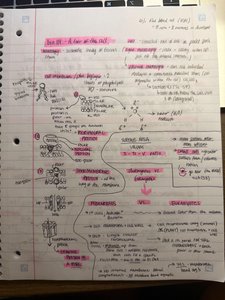
Overview of Cell Types
Cells are the fundamental units of life, exhibiting a variety of structures and functions. They can be classified as prokaryotic or eukaryotic, with eukaryotic cells further divided into plant and animal cells.
Prokaryotic Cells: Lack a nucleus and membrane-bound organelles (e.g., bacteria, archaea).
Eukaryotic Cells: Possess a nucleus and various membrane-bound organelles (e.g., plants, animals, fungi, protists).
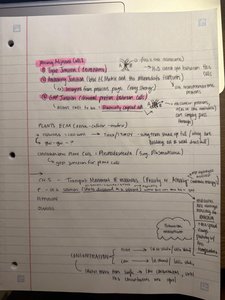
Cell Junctions
Cell junctions are specialized structures that connect cells to one another, facilitating communication and maintaining tissue integrity.
Tight Junctions: Seal adjacent cells together, preventing leakage of extracellular fluid.
Anchoring Junctions (Desmosomes): Fasten cells together into strong sheets; provide mechanical stability.
Gap Junctions: Channels that allow ions and small molecules to pass directly from one cell to another, enabling communication.
Plant Cell Junctions
Plasmodesmata: Channels between plant cells that allow for transport and communication.
Cell Membrane Structure and Function
Membrane Composition
The cell membrane is a selectively permeable barrier composed primarily of a phospholipid bilayer with embedded proteins, cholesterol, and carbohydrates.
Phospholipid Bilayer: Hydrophilic (water-attracting) heads face outward; hydrophobic (water-repelling) tails face inward.
Proteins: Serve as channels, carriers, receptors, and enzymes.
Carbohydrates: Involved in cell recognition and signaling.
Transport Across Membranes
Cells regulate the movement of substances across their membranes through various mechanisms:
Passive Transport: Movement of molecules down their concentration gradient without energy input (e.g., diffusion, osmosis, facilitated diffusion).
Active Transport: Movement of molecules against their concentration gradient, requiring energy (usually ATP).
Osmosis and Tonicity
Osmosis is the diffusion of water across a selectively permeable membrane. Tonicity describes the relative concentration of solutes in solutions separated by a membrane:
Isotonic: Equal solute concentration; no net water movement.
Hypertonic: Higher solute concentration outside the cell; water moves out, causing cell shrinkage.
Hypotonic: Lower solute concentration outside the cell; water moves in, causing cell swelling.
Cytoskeleton and Cell Movement
Cytoskeleton Components
The cytoskeleton provides structural support, maintains cell shape, and facilitates movement.
Microtubules: Hollow tubes; maintain cell shape, aid in cell division, and serve as tracks for organelle movement.
Microfilaments (Actin Filaments): Thin rods; involved in muscle contraction, cell movement, and cytokinesis.
Intermediate Filaments: Provide mechanical support and maintain cell integrity.
Motor Proteins
Motor proteins (e.g., kinesin, dynein, myosin) move along cytoskeletal filaments, transporting vesicles and organelles within the cell.
Cellular Organelles and Their Functions
Nucleus
The nucleus contains the cell's genetic material (DNA) and controls cellular activities.
Nuclear Envelope: Double membrane with pores for transport of materials.
Nucleolus: Site of ribosome synthesis.
Endomembrane System
This system includes organelles involved in synthesis, modification, and transport of proteins and lipids.
Endoplasmic Reticulum (ER):
Rough ER: Studded with ribosomes; synthesizes proteins.
Smooth ER: Lacks ribosomes; synthesizes lipids and detoxifies chemicals.
Golgi Apparatus: Modifies, sorts, and packages proteins and lipids for secretion or delivery to other organelles.
Lysosomes: Contain digestive enzymes; break down macromolecules and old organelles.
Vacuoles: Storage organelles; large central vacuole in plants maintains turgor pressure.
Mitochondria and Chloroplasts
Mitochondria: Site of cellular respiration; produce ATP from glucose and oxygen.
Chloroplasts: Found in plants and algae; site of photosynthesis, converting light energy into chemical energy.
Cell Division and Genetic Material
Cell Cycle and Mitosis
Cells reproduce by dividing, ensuring genetic continuity. The cell cycle consists of interphase (growth and DNA replication) and mitotic phase (division).
Mitosis: Division of the nucleus, producing two genetically identical daughter cells.
Cytokinesis: Division of the cytoplasm, completing cell division.
Meiosis
Meiosis is a specialized form of cell division that reduces the chromosome number by half, producing gametes (sperm and egg cells) for sexual reproduction.
Genetic Variation: Achieved through crossing over and independent assortment during meiosis.
Summary Table: Key Differences Between Prokaryotic and Eukaryotic Cells
Feature | Prokaryotic Cells | Eukaryotic Cells |
|---|---|---|
Nucleus | Absent | Present |
Membrane-bound Organelles | Absent | Present |
Size | Small (1-10 μm) | Larger (10-100 μm) |
Examples | Bacteria, Archaea | Plants, Animals, Fungi, Protists |
Additional info:
Enzymes catalyze biochemical reactions, lowering activation energy and increasing reaction rates.
Cell communication involves signaling molecules and receptors, often mediated by membrane proteins and junctions.
Specialized plant structures such as cell walls and chloroplasts distinguish plant cells from animal cells.
