 Back
BackCell Surfaces, Connections, and Signaling Pathways
Study Guide - Smart Notes
 Tailored notes based on your materials, expanded with key definitions, examples, and context.
Cell Surfaces and Extracellular Structures
Overview of Cell Surfaces
Cells interact with their environment and each other through specialized surface structures and extracellular matrices. These structures provide mechanical support, facilitate communication, and help maintain tissue integrity.
Cell wall (plants, fungi, some protists): Rigid structure outside the plasma membrane, mainly composed of polysaccharides.
Extracellular matrix (ECM) (animals): Network of proteins and carbohydrates outside animal cells, providing structural and biochemical support.
Functions of Membrane Proteins
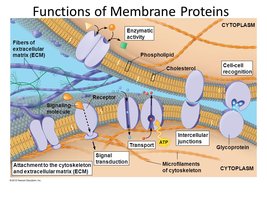
Membrane proteins are essential for cell-environment interactions, communication, and transport.
Transport: Move substances across the membrane.
Enzymatic activity: Catalyze reactions at the membrane surface.
Signal transduction: Relay signals from outside to inside the cell.
Cell-cell recognition: Allow cells to identify each other.
Intercellular joining: Connect adjacent cells.
Attachment to cytoskeleton and ECM: Maintain cell shape and stabilize location.
Extracellular Structures in Plants
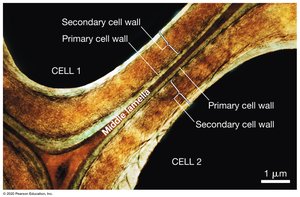
Plant cells are surrounded by a primary cell wall composed mainly of cellulose microfibrils embedded in a matrix of other polysaccharides such as pectin. This structure provides strength and flexibility.
Primary cell wall: Flexible, allows for cell growth.
Secondary cell wall: Deposited after cell growth, contains lignin for added rigidity (especially in woody tissues).
Pectin: Gelatinous polysaccharide that helps bind cells together and retain water.
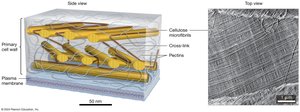
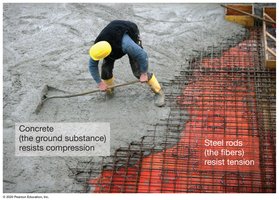
The cell wall's structure can be compared to reinforced concrete: cellulose fibers resist tension, while the pectin matrix resists compression.
Extracellular Structures in Animals
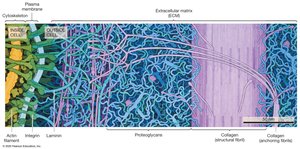
The animal ECM is composed of proteins (such as collagen), glycoproteins, and proteoglycans. It provides structural support and mediates cell signaling.
Collagen: Main structural protein, forms strong fibers.
Proteoglycans: Protein-polysaccharide complexes that form a gel-like matrix.
Integrins: Membrane proteins that connect the ECM to the cytoskeleton.
Cell-Cell Attachments and Communication
Plant Cell Connections
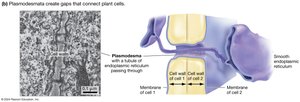
Plant cells are connected by the middle lamella and plasmodesmata, which facilitate adhesion and communication.
Middle lamella: Pectin-rich layer that glues adjacent plant cells together.
Plasmodesmata: Channels through cell walls that connect the cytoplasm of adjacent cells, allowing the movement of ions, water, and small molecules.
Animal Cell Junctions
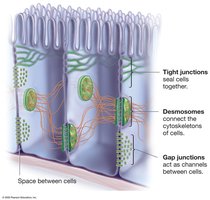
Animal cells use specialized junctions for adhesion, communication, and barrier formation.
Tight junctions: Form water-tight seals between cells, preventing leakage of extracellular fluid.
Desmosomes: Anchor cells together, providing mechanical stability by connecting to intermediate filaments of the cytoskeleton.
Gap junctions: Channels that allow ions and small molecules to pass directly between adjacent cells, enabling rapid communication.
Cell Signaling: Overview and Signal Reception
Introduction to Cell Signaling
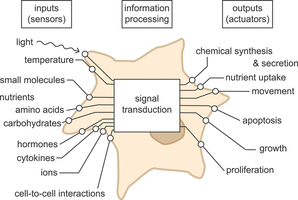
Cells sense and respond to their environment through signaling pathways. These pathways involve the detection of signals (ligands) by receptors, leading to changes in cell behavior.
Ligand: A signaling molecule that binds to a receptor.
Receptor: A protein that specifically binds a ligand and initiates a cellular response.
Signal transduction: The process by which a signal is relayed and amplified inside the cell.
Types of Receptors and Signal Specificity
Receptors are highly specific for their ligands, and binding is reversible. The receptor undergoes a conformational change upon ligand binding, which initiates the signaling cascade.
Specificity: Determined by the three-dimensional shape of the receptor and ligand.
Reversibility: Ligand binding is not permanent; the ligand can dissociate from the receptor.
Molecular switch: Receptor activation often acts as a switch, turning on downstream signaling events.
Signal Transduction Pathways
Signal transduction involves a series of molecular events, often including multiple proteins and second messengers, that ultimately lead to a cellular response. Some receptors act as both transducers and effectors, while others initiate a cascade involving many intermediates.
Transducer: Converts the signal from one form to another.
Effector: The molecule that directly brings about the cellular response.
Examples of Cell Signaling Pathways
G-Protein Coupled Receptors (GPCRs): Activate intracellular G-proteins, which then trigger various signaling cascades.
Receptor Tyrosine Kinases (RTKs): Dimerize and autophosphorylate upon ligand binding, activating downstream signaling proteins.
Example: Acetylcholine receptor (AChR) is a ligand-gated ion channel that opens in response to acetylcholine, allowing ions to flow across the membrane and altering cell activity.
Summary Table: Plant vs. Animal Extracellular Structures
Feature | Plants | Animals |
|---|---|---|
Main structural component | Cellulose (in cell wall) | Collagen (in ECM) |
Matrix substance | Pectin | Proteoglycans |
Adhesion structure | Middle lamella | Desmosomes, tight junctions |
Communication channel | Plasmodesmata | Gap junctions |
Additional info: This guide covers the foundational concepts of cell surfaces, extracellular matrices, cell-cell attachments, and the basics of cell signaling, as outlined in Chapter 11 of a typical college biology curriculum. Understanding these principles is essential for grasping how cells interact, communicate, and coordinate activities in multicellular organisms.
