 Back
Cell–Cell Interactions: Structure, Communication, and Signaling
Study Guide - Smart Notes
 Tailored notes based on your materials, expanded with key definitions, examples, and context.
Cell–Cell Interactions
Introduction to Cell–Cell Interactions
Cell–cell interactions are fundamental to the organization and function of multicellular organisms. These interactions allow cells to communicate, cooperate, and maintain tissue integrity, while unicellular organisms rely on environmental cues and signaling for survival.
Unicellular organisms respond to environmental changes independently.
Multicellular organisms require intercellular communication for coordinated function.
Cell surface structures and signaling molecules mediate these interactions.
Structure and Function of Extracellular Layers
Extracellular Layers in Prokaryotes and Eukaryotes
Most cells possess a protective extracellular layer or wall that provides structural support, defines cell shape, and acts as a defense mechanism.
Extracellular membrane (ECM): Defines cell shape, attaches cells, and acts as a first defense.
Prokaryotic cell walls:
Bacteria: Cell walls made of peptidoglycan polymers linked by peptide bonds.
Archaea: Lack peptidoglycan; cell walls are dense protein coats (S-layer).
Eukaryotic extracellular layers: Fiber composite structure with long filaments resisting tension, surrounded by a stiff ground substance protecting against compression.
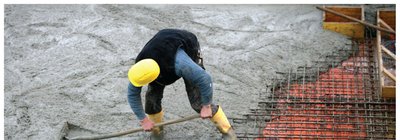
Example: Concrete (ground substance) resists compression, while steel rods (fibers) resist tension, analogous to ECM structure.

Plant Cell Walls
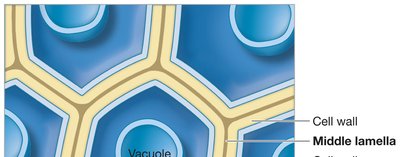
Plant cells are surrounded by cell walls that provide structural support and regulate cell growth.
Primary cell wall: Composed of cellulose microfibrils in a crisscrossed network, with pectin keeping the wall moist.
Turgor pressure: Water entering by osmosis creates pressure, counteracted by the cell wall.
Expansins: Proteins that disrupt microfibril cross-linking, allowing cell growth.
Secondary cell wall: Secreted by mature cells, varies by cell type (waxes in leaves, lignin in wood).

Extracellular Matrix (ECM) in Animals
Animal cells secrete a fiber composite called the extracellular matrix (ECM), which provides structural support and mediates cell attachment.
Collagen: Main fibrous component, forms triple helix fibrils.
Proteoglycans: Proteins with attached polysaccharides, give cartilage its rubber-like consistency.
ECM composition varies by tissue type (e.g., elastin in lungs).
Integrins: Membrane proteins that bind ECM cross-linking proteins (laminins), anchoring the cytoskeleton to the ECM.


Cell–Cell Attachments and Communication
Direct and Indirect Cell–Cell Attachments
Physical connections between cells are essential for multicellularity, maintaining tissue structure and function.
Indirect attachments in plants: Middle lamella (gelatinous pectins) glues adjacent cells together, continuous with primary cell walls.

Cell–Cell Adhesion Structures in Animals
Animal cells use specialized structures for adhesion and communication.
Tight junctions: Membrane proteins form watertight seals, especially in epithelia; dynamic and can open/close.
Desmosomes: Strong attachments reinforced by cytoskeletal intermediate filaments; common in epithelial and muscle cells.
Selective adhesion: Cells bind to each other via specific molecules (e.g., cadherins in desmosomes).
Cell–Cell Communication via Gaps
Direct connections allow ions and small molecules to pass between cells, regulating gene expression and protein activity.
Gap junctions (animals): Protein channels connect adjacent cells, allowing rapid communication.
Plasmodesmata (plants): Membrane-lined channels connect cytoplasm and smooth ER of adjacent cells; divides tissues into symplast (shared cytoplasm) and apoplast (extracellular space).
Communication Between Distant Cells
Signaling Molecules and Signal Reception
Distant cells communicate via signaling molecules such as neurotransmitters and hormones, which bind to specific receptors on target cells.
Hormones: Information-carrying molecules secreted and circulated to distant target cells.
Signal reception: Receptor proteins change shape and activity upon binding signaling molecules; only cells with appropriate receptors respond.
Lipid-soluble signals: Diffuse across plasma membrane, receptors in cytoplasm.
Lipid-insoluble signals: Recognized at cell surface, receptors on plasma membrane.
Signal Processing and Transduction
After signal reception, cells initiate responses through signal transduction pathways, converting extracellular signals to intracellular messages.
Lipid-soluble steroid hormones: Enter cytosol, form hormone–receptor complex, transported to nucleus, alter gene expression.
Lipid-insoluble signals: Trigger signal transduction, converting extracellular hormone signal to intracellular signal.
Signal amplification: Message can be amplified and diversified.
G-protein-coupled receptors: Initiate production of second messengers (e.g., cAMP, Ca2+), amplify signal.
Enzyme-linked receptors: Directly catalyze reactions, often via phosphorylation cascades (e.g., MAPKs).

Examples of Second Messengers
Second messengers are small molecules or ions that relay signals inside the cell, leading to various cellular responses.
Name | Type of Response |
|---|---|
Calcium ion (Ca2+) | Binds to calmodulin, activates proteins |
Cyclic adenosine monophosphate (cAMP) | Activates protein kinases |
Cyclic guanosine monophosphate (cGMP) | Opens ion channels, activates kinases |
Diacylglycerol (DAG) | Activates protein kinases |
Inositol trisphosphate (IP3) | Opens calcium channels |
Signal Response and Deactivation
The ultimate cellular response to signaling molecules includes changes in gene expression or protein activity. Cells have mechanisms for rapid signal deactivation, such as phosphatases removing phosphate groups, ensuring sensitivity to new signals.
Example: Plants secrete abscisic acid during drought, which binds to guard cell receptors and regulates gas exchange.
Signaling Between Unicellular Organisms
Quorum Sensing
Unicellular organisms communicate via quorum sensing, a signaling pathway that responds to population density.
Bacteria: Release species-specific signaling molecules at high density, coordinating activities such as biofilm formation.
Quorum sensing via G-protein coupled receptor: Causes aggregation in free-living cells (e.g., slime mold).

Summary Table: Cell–Cell Interaction Structures
Structure | Organism | Main Function |
|---|---|---|
Peptidoglycan cell wall | Bacteria | Structural support, protection |
S-layer | Archaea | Protection, structural support |
Primary cell wall | Plants | Shape, turgor pressure resistance |
Secondary cell wall | Plants | Specialized function (waxes, lignin) |
ECM | Animals | Structural support, cell attachment |
Tight junctions | Animals | Watertight seal |
Desmosomes | Animals | Strong adhesion |
Gap junctions | Animals | Communication portal |
Plasmodesmata | Plants | Communication portal |
Middle lamella | Plants | Cell adhesion |
