 Back
Cells, Organelles, and Bioenergetics: Foundations of General Biology
Study Guide - Smart Notes
 Tailored notes based on your materials, expanded with key definitions, examples, and context.
Cells: The Fundamental Unit of Life
Discovery and Cell Theory
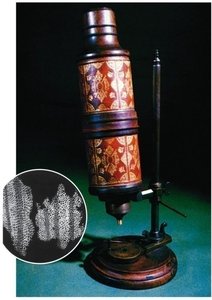
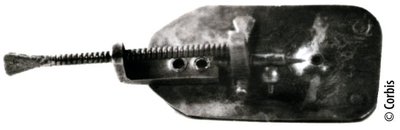
The study of cells began with the invention of the microscope, leading to the discovery of the basic unit of life. The cell theory, articulated in the 19th century, established that all living organisms are composed of cells, cells are the structural unit of life, and all cells arise from pre-existing cells by division.
Robert Hooke and Anton van Leeuwenhoek were pioneers in microscopy, enabling the visualization of cells.
Cell Theory (Schleiden, Schwann, Virchow):
All organisms are composed of one or more cells.
The cell is the basic unit of structure and function in living things.
All cells arise from pre-existing cells.
Microscopy and Cell Visualization
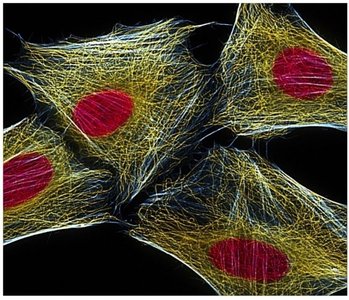
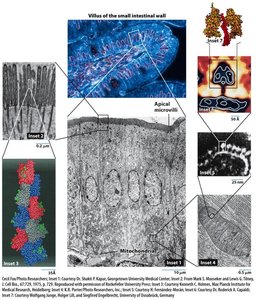
Modern cell biology relies on advanced microscopy techniques to study cell structure and function.
Scanning Electron Microscope (SEM): Images surfaces using reflected electrons.
Transmission Electron Microscope (TEM): Images internal structures using transmitted electrons.
Basic Properties of Cells
Cells exhibit several fundamental properties that define life:
Complexity and Organization: Cells are highly organized, with precise regulation of activities and a high degree of conservation across species.
Genetic Program: Cells contain DNA, which encodes the instructions for cellular structure, function, and replication.
Reproduction: Cells can produce more of themselves, passing on genetic information to daughter cells.
Energy Utilization: Cells acquire and utilize energy, primarily in the form of ATP, to drive biological processes.
Mechanical Activity: Cells can move, change shape, and transport materials internally.
Response to Stimuli: Cells respond to environmental signals via receptors, altering metabolism, movement, or initiating cell death.
Self-Regulation: Cells maintain internal stability and adapt to changes, a property crucial for health and disease prevention.
Types of Cells: Prokaryotic vs. Eukaryotic
Classification and Evolution
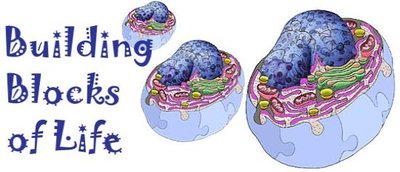
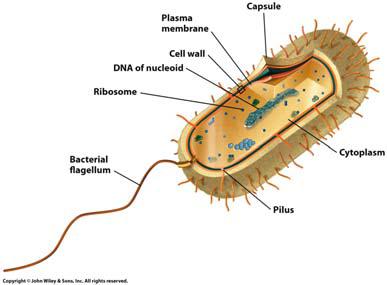
Cells are classified into two fundamental types: prokaryotic and eukaryotic. This distinction is based on structural complexity, organelle presence, and evolutionary history.
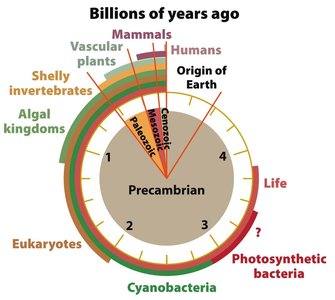
Prokaryotic Cells: Simpler, lack membrane-bound organelles, include all bacteria, and are evolutionarily ancient (~3.7 billion years ago).
Eukaryotic Cells: More complex, contain membrane-bound organelles (nucleus, mitochondria, etc.), include protists, fungi, plants, and animals, and appeared 600 million–1.6 billion years ago.
Comparison of Prokaryotic and Eukaryotic Cells
Feature | Prokaryotic Cells | Eukaryotic Cells |
|---|---|---|
Complexity | Simple | Complex |
Organelles | Absent | Present (nucleus, mitochondria, etc.) |
DNA | Single circular chromosome | Multiple linear chromosomes |
Size | Smaller (0.1–5 μm) | Larger (10–100 μm) |
Examples | Bacteria, Archaea | Protists, Fungi, Plants, Animals |
Cell Size and Limitations
Cell size is constrained by the need to efficiently exchange materials with the environment and support metabolic activities. The surface area-to-volume ratio is a critical factor; as cells grow larger, this ratio decreases, limiting the rate of diffusion and exchange.
Most cells are small (measured in micrometers or nanometers) to optimize exchange and diffusion.
Eukaryotic Cell Structure and Organelles
Major Organelles and Their Functions
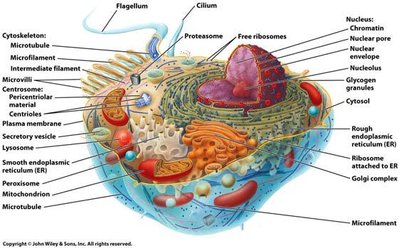
Eukaryotic cells contain specialized organelles that perform distinct functions necessary for cellular life.
Nucleus: Contains genetic material (DNA), site of transcription.
Endoplasmic Reticulum (ER): Rough ER synthesizes proteins; Smooth ER synthesizes lipids.
Golgi Complex: Modifies, sorts, and packages macromolecules for transport.
Mitochondria: Site of ATP production via cellular respiration.
Lysosomes: Contain hydrolytic enzymes for intracellular digestion.
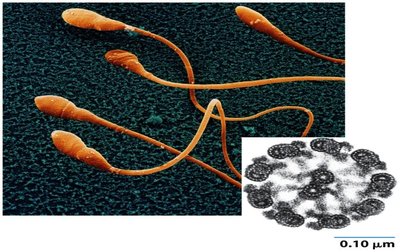
Cytoskeleton: Provides structural support, enables cell movement, and facilitates intracellular transport.
Plasma Membrane: Regulates entry and exit of substances, mediates cell-environment interactions.
Endosymbiont Theory
The endosymbiont theory proposes that mitochondria and chloroplasts originated from ancient prokaryotic cells engulfed by ancestral eukaryotes, leading to a symbiotic relationship.
Cell Specialization and Differentiation
Unicellular vs. Multicellular Eukaryotes
Unicellular eukaryotes perform all life functions within a single cell, while multicellular organisms exhibit cell specialization, with different cell types performing distinct functions.
Cell Differentiation: Process by which less specialized cells become more specialized in structure and function.
Examples: Muscle cells (contractile proteins), cartilage cells (collagen matrix), red blood cells (hemoglobin).
Stem Cells and Cell Replacement Therapy
Stem cells are undifferentiated cells capable of self-renewal and differentiation into specialized cell types. They hold promise for regenerative medicine and cell replacement therapies.
Types of Stem Cells:
Totipotent: Can give rise to all cell types, including the entire organism.
Pluripotent: Can form nearly any tissue but not an entire organism.
Multipotent: Can differentiate into a limited range of cells within a tissue type.
Adult Stem Cells: Multipotent cells used for tissue maintenance and repair.
Induced Pluripotent Stem (iPS) Cells: Differentiated cells reprogrammed to a pluripotent state, offering potential for disease modeling and therapy.
Cell Membrane Structure and Function
Phospholipid Bilayer
The cell membrane is a selectively permeable barrier composed of a phospholipid bilayer with embedded proteins. It protects cellular contents and mediates communication with the environment.
Phospholipids: Amphipathic molecules with hydrophilic heads and hydrophobic tails, forming a bilayer.
Proteins: Integral and peripheral proteins facilitate transport, signaling, and structural support.
Genetic Material: DNA Structure
Chemical Nature of Genes
Genes are composed of DNA, a polymer of nucleotides. Each nucleotide consists of a deoxyribose sugar, a phosphate group, and a nitrogenous base (adenine, thymine, cytosine, or guanine).
Pyrimidines: Single-ring bases (cytosine, thymine).
Purines: Double-ring bases (adenine, guanine).
Chargaff's Rules: [A] = [T], [G] = [C]; base composition varies among species.
Double Helical Structure of DNA
DNA consists of two antiparallel strands forming a right-handed double helix.
The sugar-phosphate backbone is on the outside; bases are paired in the center (A-T, G-C) via hydrogen bonds.
The double helix has major and minor grooves, and the strands are complementary.
Bioenergetics and Cellular Energy
ATP: The Energy Currency of the Cell
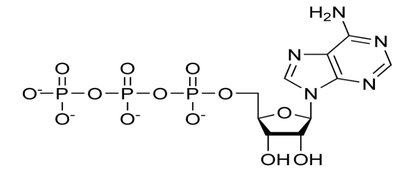
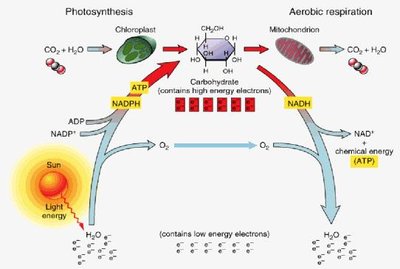
Bioenergetics is the study of energy transformations in living organisms. ATP (adenosine triphosphate) is the primary energy carrier, synthesized in mitochondria during cellular respiration.
Potential Energy: Stored energy due to position or structure.
Kinetic Energy: Energy of motion.
ATP Hydrolysis: Releases energy to drive cellular processes such as active transport, muscle contraction, and biosynthesis.
Active Transport and the Na+/K+ ATPase
Active transport moves molecules against their concentration gradients using energy from ATP. The Na+/K+ ATPase pump is a key example, maintaining ion gradients essential for nerve impulses and osmotic balance.
For each ATP hydrolyzed, 3 Na+ ions are pumped out and 2 K+ ions are pumped into the cell.
This process is vital for cell function and consumes a significant portion of cellular ATP.
Enzymes: Biological Catalysts
Enzymes are proteins that accelerate chemical reactions in cells. They may require cofactors (inorganic) or coenzymes (organic) for activity. The Na+/K+ ATPase is an example of an enzyme embedded in the cell membrane.
Catalysts: Lower activation energy, increasing reaction rates without being consumed.
Summary Table: Prokaryotic vs. Eukaryotic Cells
Feature | Prokaryotic Cells | Eukaryotic Cells |
|---|---|---|
Complexity | Simple | Complex |
Organelles | Absent | Present |
DNA | Circular, single chromosome | Linear, multiple chromosomes |
Size | 0.1–5 μm | 10–100 μm |
Examples | Bacteria, Archaea | Protists, Fungi, Plants, Animals |
