 Back
Cells: The Basis of Life – Structure, Function, and Origins
Study Guide - Smart Notes
 Tailored notes based on your materials, expanded with key definitions, examples, and context.
Cells: The Basis of Life
Introduction to Cell Theory and LUCA
Cells are the fundamental units of life, forming the basis of all living organisms. The cell theory, one of biology's unifying principles, states that all organisms are composed of cells and all cells arise from pre-existing cells. The concept of LUCA (Last Universal Common Ancestor) highlights the shared ancestry of all cellular life.
Cell Theory: All living things are made of cells; cells divide to produce new cells.
LUCA: The hypothetical first cell, existing about four billion years ago, with DNA, RNA, ribosomes, and a membrane.
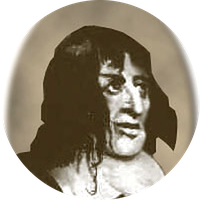
Historical Context: Robert Hooke first described cells in 1665.
Evolution: All cells share a common ancestor, supporting the theory of evolution.
Additional info: LUCA is inferred from molecular evidence, as no fossils exist from this period.
Types of Cells: Prokaryotes and Eukaryotes
Prokaryotic vs. Eukaryotic Cells
Cells are classified into two main types: prokaryotic and eukaryotic. The primary distinction is the presence or absence of a nuclear membrane.
Prokaryotes: Lack a nuclear membrane; DNA is free in the cytoplasm. Examples include bacteria and archaea.
Eukaryotes: Have a nucleus surrounded by a membrane; contain membrane-bound organelles. Examples include plants, animals, fungi, and protists.
Size: Eukaryotic cells are generally larger, but size is a consequence, not a defining feature.
Additional info: The term "prokaryote" means "before the nut," referring to the nucleus.
Inside a Eukaryotic Cell
Cellular Organelles and Their Functions
Eukaryotic cells contain specialized compartments called organelles, each with distinct functions essential for cellular life.
Nucleus: Stores genetic material (DNA); site of transcription.
Rough Endoplasmic Reticulum (ER): Synthesizes proteins; studded with ribosomes.
Smooth ER: Synthesizes lipids and steroids; stores calcium.
Golgi Apparatus: Modifies, sorts, and packages proteins.
Mitochondrion: Generates ATP; contains its own DNA and ribosomes.
Lysosome: Digests cellular waste; operates at low pH.
Plasma Membrane: Regulates entry and exit of substances; contains receptors.
Microvilli: Increase surface area for exchange.
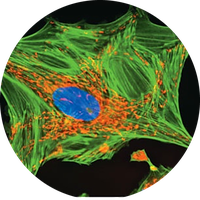
Additional info: Compartmentalization allows eukaryotic cells to perform complex biochemical reactions.
Origin of Organelles: Endosymbiotic Theory
Mitochondria as Evidence of Endosymbiosis
The endosymbiotic theory explains the origin of mitochondria and chloroplasts as formerly free-living bacteria engulfed by ancestral eukaryotic cells.
Double Membrane: Inner membrane resembles bacterial membranes.
Own DNA: Circular DNA, similar to bacteria.
Own Ribosomes: Smaller, bacterial-type ribosomes.
Binary Fission: Mitochondria divide independently of the cell.
Additional info: Lynn Margulis proposed the endosymbiotic theory in 1967, later confirmed by molecular evidence.
Cell Size Constraints
Surface Area to Volume Ratio
Cell size is limited by the relationship between surface area and volume. As cells grow, their volume increases faster than their surface area, reducing the efficiency of exchange.
Surface Area: Site of nutrient and waste exchange.
Volume: Amount of material to be supplied.
Ratio: Lower surface area per unit volume limits cell size.
Formula:
Additional info: Cells may increase their SA:V ratio by folding membranes or staying small.
Diffusion Time and Cell Size
Diffusion is the passive movement of molecules, and its efficiency decreases with increasing distance. The time required for diffusion increases with the square of the distance.
Diffusion Time:
Implication: Small cells can rely on diffusion; large organisms require circulatory systems.
Example: Neurotransmitter crosses a synapse (0.1 µm) in 5 microseconds; across a cell (10 µm) in 50 milliseconds; across a human body (1 m) in 16 years.
Cell Motility
Methods of Motility in Single-Celled Organisms
Single-celled organisms move using specialized structures such as cilia, flagella, and through amoeboid movement.
Cilia: Short, hair-like structures that beat rhythmically to propel cells.
Flagella: Longer, whip-like structures used for swimming.
Amoeboid Movement: Cells change shape by extending pseudopodia.
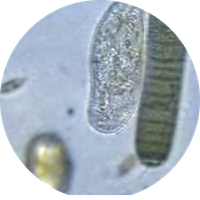
Additional info: Motility is essential for feeding, escaping predators, and finding optimal environments.
Growing and Studying Cells
Tissue Culture and Microbiology
Cells can be grown outside their original organism for research, allowing controlled experiments and observation.
Tissue Culture: Growing mammalian cells in flasks.
Microbiology: Growing colonies of microorganisms on agar plates.
Imaging: Direct observation of cell structures.
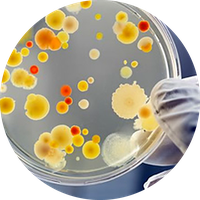
Additional info: Cultured cells are used to study cellular processes, drug effects, and disease mechanisms.
Model Organisms in Biology
Choosing Model Systems
Model organisms are selected for their convenience, rapid growth, and relevance to broader biological questions. Common models include bacteria, yeast, plants, and animals.
Microbiology: Fast, cheap, and large numbers.
Tissue Culture: Human cells under controlled conditions.
Plant Models: Arabidopsis thaliana.
Animal Models: Drosophila melanogaster.
Additional info: The choice of model organism affects the applicability of results to other systems.
The Cytoskeleton
Three Filament Systems
The cytoskeleton is a network of protein filaments that provides structural support, enables movement, and organizes cellular contents.
Microfilaments: Actin filaments involved in cell shape and movement.
Intermediate Filaments: Provide mechanical strength.
Microtubules: Tubulin filaments involved in transport and cell division.
Additional info: The cytoskeleton is essential for intracellular transport, cell division, and motility.
Summary Table: Prokaryotic vs. Eukaryotic Cells
Feature | Prokaryotic Cell | Eukaryotic Cell |
|---|---|---|
Nucleus | No | Yes |
Membrane-bound Organelles | No | Yes |
Size | Small (0.1–5 µm) | Larger (10–100 µm) |
DNA Form | Circular | Linear |
Cell Division | Binary Fission | Mitosis/Meiosis |
