 Back
BackCellular Communication and Signal Transduction Pathways
Study Guide - Smart Notes
 Tailored notes based on your materials, expanded with key definitions, examples, and context.
Cellular Communication
Overview of Cell-to-Cell Communication
Cellular communication is essential for the survival and function of all living organisms. Cells use universal mechanisms to regulate their activities, and the combined effects of multiple signals determine the cellular response. Communication among microorganisms provides insight into how cells send, receive, and respond to signals, with pathway similarities observed between single-celled and multicellular organisms.
Cell junctions facilitate direct communication between adjacent cells.
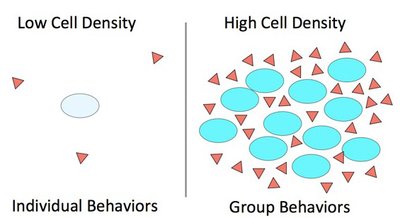
Signaling molecules allow cells to sense population density, a process known as quorum sensing in bacteria.
Multiple signals can regulate complex processes such as blood flow.
Signal Transduction Pathways
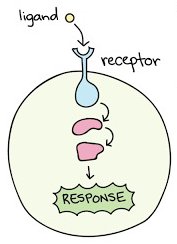
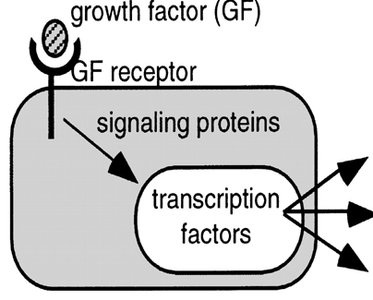
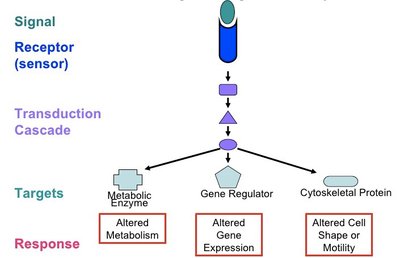
Signal transduction pathways are a series of steps by which a signal on a cell’s surface is converted into a specific cellular response. The process consists of three main steps:
Reception: The target cell detects a signaling molecule that binds to a receptor protein on the cell surface.
Transduction: The binding of the signaling molecule alters the receptor and initiates a cascade of relay molecules, often involving protein phosphorylation.
Response: The transduced signal triggers a specific response in the target cell.
Types of Cellular Signaling
Local and Long-Distance Signaling
Cells communicate using different types of signals depending on the distance between the signaling and target cells:
Local regulators: Molecules that travel only short distances, such as neurotransmitters and growth factors.
Paracrine signaling: Cells signal nearby cells by releasing local regulators.
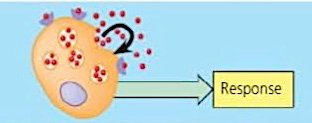
Autocrine signaling: Cells signal to themselves by releasing molecules that bind to their own receptors.
Endocrine signaling: Involves hormones that travel through the bloodstream to reach distant target cells.
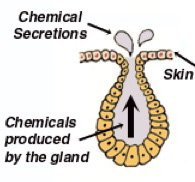
Exocrine signaling: Involves secretion of chemicals outside the body or into body cavities.
Pharmaceutical Applications
Many pharmaceutical drugs are natural or artificial signaling molecules that mimic or block cellular communication pathways, affecting cell behavior and physiology.
Mechanisms of Signal Transduction
Protein Phosphorylation Cascades
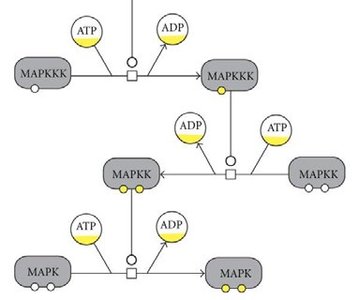
Transduction often involves a cascade of protein phosphorylations, where protein kinases add phosphate groups and protein phosphatases remove them. This acts as a molecular switch, turning activities on and off, and allows amplification of the signal.
Amplification: A few signaling molecules can produce a large cellular response.
Regulation: Multiple steps provide opportunities for regulation and integration of signals.
Second Messengers
Second messengers are small, nonprotein, water-soluble molecules or ions that spread throughout a cell by diffusion. The extracellular signal is the “first messenger.”
Common second messengers: Cyclic AMP (cAMP), calcium ions (Ca2+), and inositol triphosphate (IP3).
Adenylyl cyclase: An enzyme in the plasma membrane that converts ATP to cAMP in response to an extracellular signal.
Cellular Responses to Signals
Types of Cellular Responses
Signal transduction pathways lead to regulation of one or more cellular activities. Responses may occur in the cytoplasm or nucleus and include:
Synthesis of enzymes
Enzyme activity
Cellular transport
Cell metabolism
Cell behavior
Cell division
Specificity of Cellular Responses
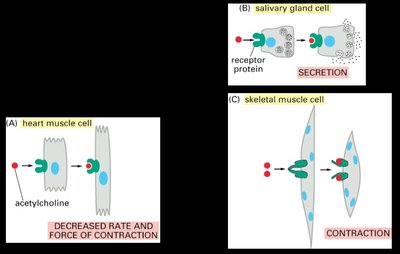
Not all cells have the same collection of proteins, so the effects of a signal can differ depending on the cell type. This specificity allows for diverse responses to the same signaling molecule.
Cell Death: Apoptosis and Necrosis
Apoptosis
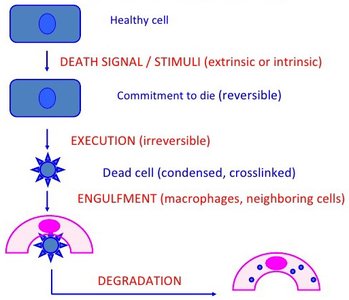
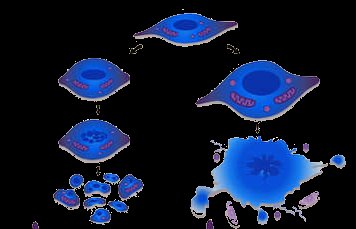
Apoptosis is programmed or controlled cell suicide. Components of the cell are chopped up and packaged into vesicles that are digested by scavenger cells, preventing damage to neighboring cells. Apoptosis is essential for development and maintenance in animals and may be involved in diseases such as Parkinson’s, Alzheimer’s, and some cancers.
Necrosis
Necrosis is premature death of living cells, usually due to loss of membrane integrity. It results in inflammation and can potentially lead to gangrene.
Key Vocabulary and Concepts
Transduction: The process of converting a signal from outside the cell to a functional response inside the cell.
Ligand: A molecule that binds to a receptor to initiate a signal.
Paracrine: Signaling to nearby cells.
Hormone: A signaling molecule used in long-distance communication.
Autocrine: Signaling to the same cell that releases the signal.
Cyclic AMP (cAMP): A common second messenger.
Term | Definition |
|---|---|
Kinase | Enzyme that adds phosphate groups to proteins (phosphorylation) |
Phosphatase | Enzyme that removes phosphate groups from proteins (dephosphorylation) |
First Messenger | Extracellular signaling molecule |
Second Messenger | Intracellular signaling molecule (e.g., cAMP) |
Necrosis | Premature cell death, often causing inflammation |
Apoptosis | Programmed cell death, prevents damage to neighboring cells |
Study Guide Questions
Describe how single-celled organisms (such as bacteria and yeast) require cellular communication for survival.
Describe the 3 steps of signal transduction pathways.
Name types of signals (ligands) that work locally vs. long distance. Distinguish local from long-distance.
Describe the nature of a ligand-receptor interaction and state how such interactions initiate a signal-transduction system. Consider intracellular and extracellular receptors.
List two advantages of a multistep pathway in the transduction stage of cell signaling.
Give examples that occur during the transduction cascade. How does this stage amplify cellular signals? Give examples of second messengers.
Explain why different types of cells may respond differently to the same signal molecule.
Describe the 2 primary ways that cells die.
