 Back
Cellular Components and Organization in General Biology
Study Guide - Smart Notes
 Tailored notes based on your materials, expanded with key definitions, examples, and context.
Cellular Components
Introduction to Cell Structure
Cells are the fundamental units of life, and all living organisms are composed of one or more cells. The structure and organization of cells are essential for understanding biological processes. Cells can be classified into two main types: prokaryotic and eukaryotic, each with distinct features and internal organization.
The Three Domains of Life
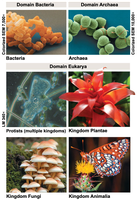
All life is classified into three domains based on cellular characteristics and genetic differences:
Bacteria: Prokaryotic cells without a nucleus.
Archaea: Prokaryotic cells, often found in extreme environments, genetically distinct from bacteria.
Eukarya: Eukaryotic cells with a membrane-bound nucleus and organelles; includes protists, plants, fungi, and animals.
Prokaryotic vs. Eukaryotic Cells
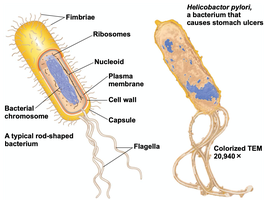
Prokaryotic Cells
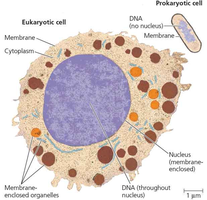
Prokaryotes are simpler, smaller cells that lack a membrane-bound nucleus and organelles. Their DNA is located in a region called the nucleoid.
Size: 1–10 μm
Key Features: No nucleus, single circular chromosome, no membrane-bound organelles, cell wall present in most species.
Eukaryotic Cells
Eukaryotes are larger and more complex, with internal compartments called organelles, including a nucleus that houses DNA.
Size: 10–100 μm
Key Features: Membrane-bound nucleus, multiple linear chromosomes, specialized organelles, cytoskeleton for structure and movement.
Comparative Table: Prokaryotes vs. Eukaryotes
Feature | Prokaryotes | Eukaryotes |
|---|---|---|
Nucleus | No | Yes |
Organelles | No | Yes |
Chromosomes | Single, circular | Multiple, linear |
Size | 1–10 μm | 10–100 μm |
Cell Membranes and the Fluid Mosaic Model
Structure and Function
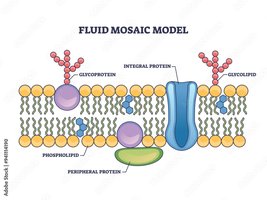
The cell membrane, or plasma membrane, is a selectively permeable barrier composed of a phospholipid bilayer with embedded proteins, carbohydrates, and cholesterol. It separates the cell's interior from the external environment and regulates the movement of substances in and out of the cell.
Phospholipid Bilayer: Hydrophilic heads face outward; hydrophobic tails face inward.
Proteins: Integral and peripheral proteins serve as channels, receptors, and enzymes.
Carbohydrates: Attached to proteins and lipids, involved in cell recognition.
Cholesterol: Maintains membrane fluidity.
Cellular Organelles and Their Functions
Nucleus and Ribosomes
The nucleus is the control center of the cell, containing genetic material (DNA) and directing gene expression. Ribosomes, composed of RNA and proteins, are the sites of protein synthesis and can be free in the cytoplasm or bound to the endoplasmic reticulum.
Nucleus: Surrounded by a double membrane, contains nucleolus (site of rRNA synthesis).
Ribosomes: Not membrane-bound, translate mRNA into proteins.
Endomembrane System
The endomembrane system is a network of membranes and organelles that work together to modify, package, and transport lipids and proteins.
Rough Endoplasmic Reticulum (ER): Studded with ribosomes, site of protein synthesis and folding.
Smooth ER: Lacks ribosomes, synthesizes lipids, detoxifies chemicals, stores calcium ions.
Golgi Apparatus: Modifies, sorts, and packages proteins and lipids for delivery.
Lysosomes: Contain digestive enzymes, break down waste and cellular debris.
Vacuoles: Storage organelles; central vacuole in plants maintains turgor pressure.
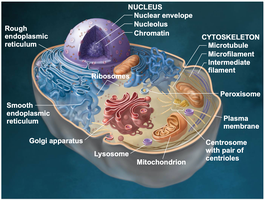
Mitochondria and Chloroplasts
Mitochondria are the powerhouses of the cell, generating ATP through cellular respiration. Chloroplasts, found in plants and algae, perform photosynthesis to convert solar energy into chemical energy. Both organelles are believed to have originated from endosymbiotic bacteria.
Mitochondria: Double membrane, own DNA, site of ATP production.
Chloroplasts: Three membranes, contain thylakoids, site of photosynthesis.
Cytoskeleton
The cytoskeleton is a network of protein filaments that provides structural support, enables cell movement, and facilitates intracellular transport.
Microtubules: Hollow tubes, maintain cell shape, enable movement of organelles.
Intermediate Filaments: Provide mechanical support.
Microfilaments: Thin filaments, involved in cell movement and division.
Cell Walls and Extracellular Structures
Plant Cell Walls
Plant cells have a rigid cell wall made of cellulose that provides structural support and protection. The cell wall, along with the central vacuole, helps maintain turgor pressure. Plasmodesmata are channels between plant cells that allow for communication and transport of materials.
Summary Table: Major Eukaryotic Organelles and Functions
Organelle | Main Function |
|---|---|
Nucleus | Stores genetic material, controls gene expression |
Ribosome | Protein synthesis |
Rough ER | Protein folding and modification |
Smooth ER | Lipid synthesis, detoxification |
Golgi Apparatus | Protein and lipid modification, sorting, packaging |
Lysosome | Digestion and recycling of cellular material |
Vacuole | Storage, turgor pressure in plants |
Mitochondrion | ATP production |
Chloroplast | Photosynthesis (plants and algae) |
Cytoskeleton | Structural support, movement |
Additional info:
Endosymbiont theory explains the origin of mitochondria and chloroplasts as formerly free-living bacteria engulfed by ancestral eukaryotic cells.
Cell size is limited by the surface area-to-volume ratio; larger cells require specialized organelles for efficient transport and waste removal.
