 Back
BackCellular Metabolism, Enzyme Function, and Membrane Transport: Core Concepts in Cellular Biology
Study Guide - Smart Notes
 Tailored notes based on your materials, expanded with key definitions, examples, and context.
Cellular Work and Metabolism
Types of Cellular Work
Cells must perform various types of work to sustain life, including movement, membrane transport, and chemical synthesis. These processes are powered by the transformation of energy and are tightly regulated to meet cellular needs.
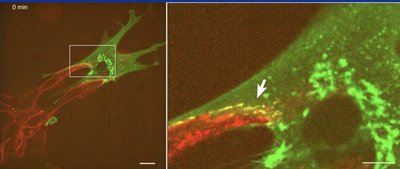
Movement: Involves the transport of organelles, vesicles, and even entire cells. Motor proteins such as kinesin, dynein, and myosin move along cytoskeletal tracks (microtubules and microfilaments).
Membrane Transport: Movement of molecules or ions across membranes is essential for nutrient uptake, waste excretion, nerve signaling, and muscle contraction.
Chemical Synthesis: Cells synthesize macromolecules (e.g., polysaccharides, proteins, nucleic acids) from monomer subunits.
Metabolism is the collection of chemical reactions that transform matter and energy in a cell, enabling work. Metabolic pathways can be catabolic (breaking down molecules to release energy) or anabolic (building molecules, requiring energy input), and these pathways are often coupled and regulated by enzymes.
Thermodynamics and Free Energy in Cells
First and Second Laws of Thermodynamics
First Law: Energy cannot be created or destroyed, only transformed or transferred.
Second Law: Every energy transfer increases the disorder (entropy) of the universe. Cells maintain order by releasing heat, increasing the entropy of their surroundings.
Free Energy and Spontaneity
Free Energy (G): The energy available to do work. Reactions are spontaneous if the free energy of products is lower than that of reactants (ΔG < 0; exergonic).
Endergonic reactions (ΔG > 0) are nonspontaneous and require energy input, often coupled to exergonic reactions.
Cells maintain metabolic disequilibrium by linking reactions in pathways, preventing equilibrium and allowing continuous work.
ATP: The Energy Currency of the Cell
Structure and Function of ATP
ATP (adenosine triphosphate) consists of an adenine base, ribose sugar, and three phosphate groups. Hydrolysis of ATP releases energy (ΔG ≈ –30 kJ/mol), which is used to drive endergonic reactions by transferring a phosphate group to other molecules, making them more reactive.
ATP Cycle: Catabolic pathways generate ATP from ADP and Pi; ATP hydrolysis powers cellular work.
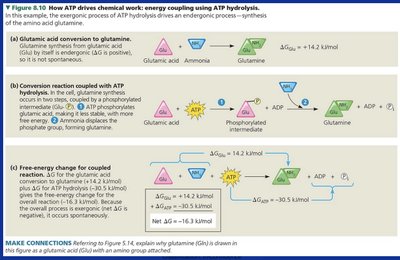
Enzymes: Catalysts of Cellular Reactions
Properties and Mechanisms
Enzymes are biological catalysts that speed up chemical reactions by lowering activation energy (EA). They are highly specific for their substrates and reactions, and their activity is tightly regulated.
Active Site: The region where the substrate binds. Enzymes may use a lock-and-key or induced fit model for substrate binding.
Mechanisms to Lower EA:
Orienting substrates correctly
Straining substrate bonds
Providing a favorable microenvironment
Forming temporary covalent bonds with substrates
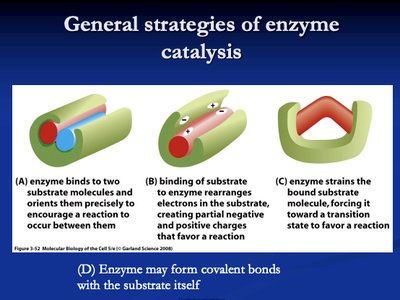
Example: Lysozyme Catalytic Cycle
Lysozyme, found in tears, breaks down bacterial cell walls by hydrolyzing oligosaccharides. The enzyme-substrate complex undergoes a series of steps, including covalent bond formation and hydrolysis, to yield the final products.
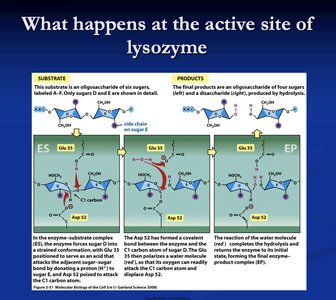
Factors Affecting Enzyme Activity
Temperature: Low temperatures slow reactions; high temperatures denature enzymes.
pH: Deviations from the optimal pH alter amino acid ionization, reducing activity.
Cofactors: Non-protein helpers (inorganic ions or organic coenzymes) required for some enzymes.
Enzyme Regulation
Inhibition
Irreversible Inhibitors: Bind covalently, permanently inactivating the enzyme (e.g., penicillin).
Reversible Inhibitors:
Competitive: Compete with substrate for the active site.
Non-competitive: Bind elsewhere, altering enzyme shape and reducing activity.
Allosteric Regulation and Feedback Inhibition
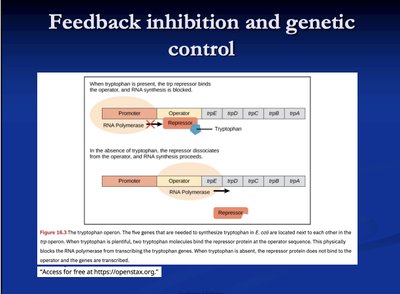
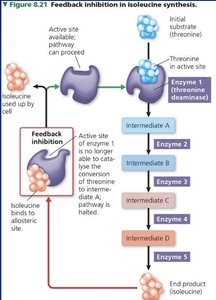
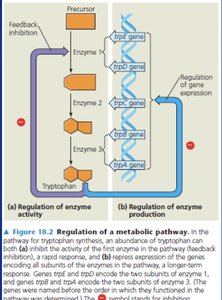
Allosteric regulators bind to sites other than the active site, stabilizing either the active or inactive form of the enzyme. Feedback inhibition occurs when the end product of a pathway inhibits an early enzyme, preventing overproduction.
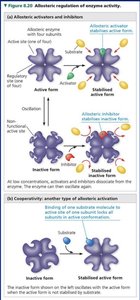
Other Regulatory Mechanisms
Genetic Control: Regulates enzyme production at the gene expression level.
Covalent Modification: Enzymes can be activated or deactivated by phosphorylation (kinases add phosphate; phosphatases remove phosphate).
Compartmentalization: Localization of enzymes to specific cellular compartments for regulation.
Cellular Respiration: Harvesting Energy from Glucose
Overview and Stages
Aerobic respiration is a redox process that breaks down glucose using O2, producing CO2, H2O, and ATP. The overall equation is:
Glycolysis: Occurs in the cytosol; glucose is split into 2 pyruvate, yielding 2 ATP and 2 NADH.
Pyruvate Oxidation: Pyruvate is converted to acetyl CoA in the mitochondrial matrix, producing NADH and CO2.
Citric Acid Cycle: Acetyl CoA enters the cycle, generating NADH, FADH2, ATP, and CO2.
Electron Transport Chain (ETC): Electrons from NADH and FADH2 move through complexes, creating a proton gradient used by ATP synthase to produce ATP (oxidative phosphorylation).
In the absence of oxygen, fermentation regenerates NAD+ and yields only 2 ATP per glucose.
Photosynthesis: Converting Light Energy to Chemical Energy
Overview and Equations
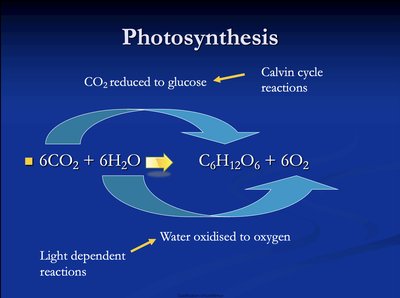
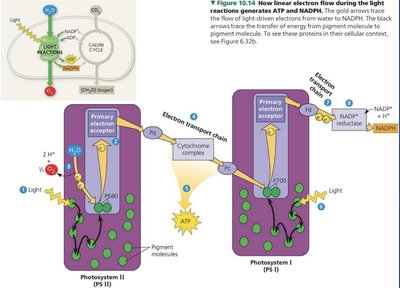
Photosynthesis transforms light energy into chemical energy, producing glucose and oxygen from CO2 and H2O. The process occurs in two stages: light-dependent reactions and the Calvin cycle.

Light Reactions
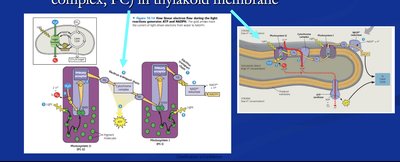
Occur in the thylakoid membranes of chloroplasts.
Photosystems I and II contain pigments that absorb light, exciting electrons that are transferred through an electron transport chain.
Water provides replacement electrons, releasing O2 as a byproduct.
ATP and NADPH are produced to power the Calvin cycle.
Calvin Cycle
Occurs in the stroma of chloroplasts.
CO2 is fixed by Rubisco, reduced to sugar, and the cycle regenerates its starting molecule.
Rubisco activity is tightly regulated and can also catalyze oxygenation, leading to photorespiration.
C4 and CAM plants have adaptations to minimize photorespiration and water loss.
Membrane Structure and Transport
Membrane Composition and Protein Function
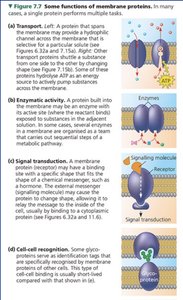
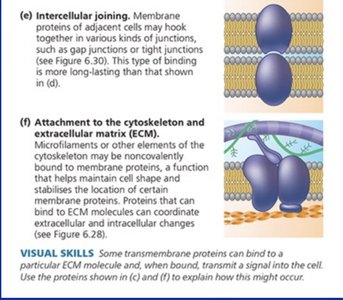
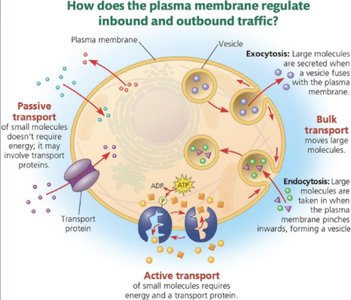
Biological membranes are composed of a phospholipid bilayer with embedded proteins. The amphipathic nature of phospholipids creates a hydrophobic interior, while proteins serve various functions such as transport, enzymatic activity, signal transduction, cell-cell recognition, intercellular joining, and attachment to the cytoskeleton and extracellular matrix.
Mechanisms of Membrane Transport
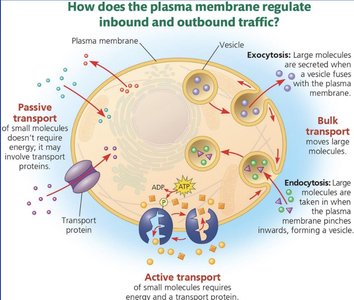
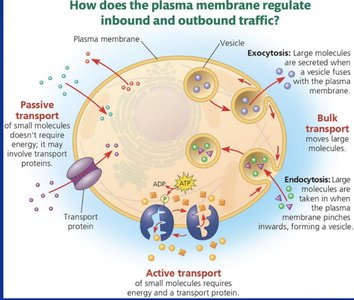
Passive Transport: Molecules move down their concentration gradient without energy input (simple diffusion, facilitated diffusion via channels or carriers).
Active Transport: Molecules move against their gradient, requiring energy (e.g., Na+/K+ ATPase).
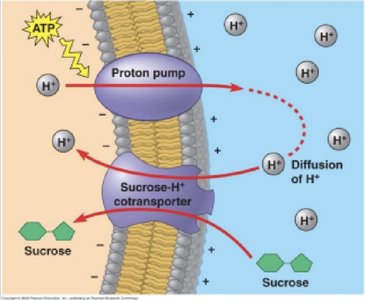
Secondary Active Transport: Uses ion gradients established by primary active transport to drive the movement of other solutes (symporters and antiporters).
Bulk Transport: Movement of large molecules via exocytosis and endocytosis.
Selective Permeability
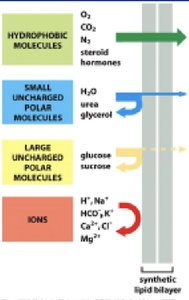
The lipid bilayer is selectively permeable. Small nonpolar molecules pass freely, while ions and large polar molecules require transport proteins.
Ion Channels and Membrane Potential
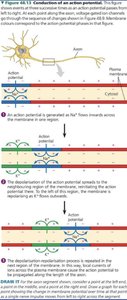
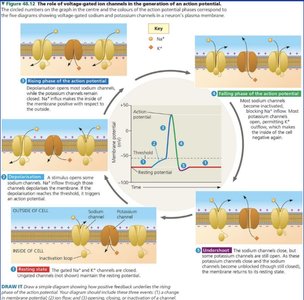
Ion channels are specific and gated, allowing rapid movement of ions and generating electrical impulses (membrane potential).
Na+/K+ ATPase maintains ion gradients; K+ leak channels set the resting membrane potential (~–60 mV).
Action potentials are rapid changes in membrane potential, essential for nerve impulses.
Synaptic Transmission
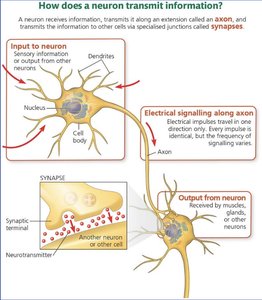
Nerve impulses are transmitted between cells via neurotransmitter release at synapses, involving voltage-gated Ca2+ channels and ligand-gated channels on the postsynaptic cell.
Summary Table: Types of Membrane Transport
Transport Type | Energy Requirement | Direction | Example |
|---|---|---|---|
Simple Diffusion | No | Down gradient | O2, CO2 |
Facilitated Diffusion | No | Down gradient | Glucose via GLUT4 |
Active Transport | Yes (ATP) | Against gradient | Na+/K+ ATPase |
Secondary Active Transport | Indirect (ion gradient) | Against gradient (for one solute) | Na+-glucose symporter |
Bulk Transport | Yes (ATP) | Vesicular | Endocytosis, Exocytosis |
Additional info: This guide integrates foundational concepts from cellular metabolism, enzyme function, and membrane transport, providing a comprehensive overview suitable for exam preparation in introductory college biology.
