 Back
Cellular Metabolism, Enzyme Function, and Photosynthesis: Study Guide
Study Guide - Smart Notes
 Tailored notes based on your materials, expanded with key definitions, examples, and context.
Enzymes and Metabolic Reactions
Enzyme Function and Activation Energy
Enzymes are biological catalysts that accelerate metabolic reactions by lowering the activation energy (Ea) required for a reaction to proceed. Although some reactions are spontaneous, they may occur very slowly without enzymatic assistance.
Activation Energy (Ea): The minimum energy required to initiate a chemical reaction.
Catalyst: A substance that increases the rate of a reaction without being consumed.
Enzyme: A protein macromolecule that acts as a catalyst in biological systems.
Substrate: The reactant that an enzyme acts upon.
Induced Fit: The enzyme changes shape to better fit the substrate, enhancing catalysis.
Example: Hydrolysis of sucrose is spontaneous but slow; an enzyme speeds up the process.
Enzyme Regulation and Inhibition
Enzyme activity can be regulated by environmental factors (temperature, pH) and by specific chemicals (cofactors, inhibitors).
Cofactors: Nonprotein helpers (inorganic or organic) required for enzyme function.
Competitive Inhibitors: Resemble the substrate and bind to the active site, blocking substrate access.
Noncompetitive Inhibitors: Bind elsewhere on the enzyme, altering its shape and reducing activity.
Allosteric Regulation: Regulatory molecules bind at one site and affect function at another.
Irreversible Inhibition: Inhibitors form covalent bonds, permanently disabling the enzyme (e.g., toxins).
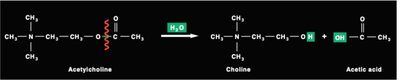
Example: Acetylcholine breakdown by enzyme action prevents chemical chaos in cells.
Metabolic Pathways and Feedback Regulation
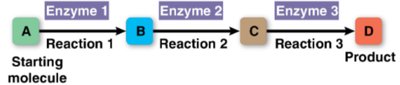
Metabolic pathways consist of a series of enzyme-catalyzed reactions. Cells regulate these pathways by controlling enzyme activity and gene expression.
Feedback Inhibition: The end product of a pathway inhibits an earlier step, preventing overproduction.
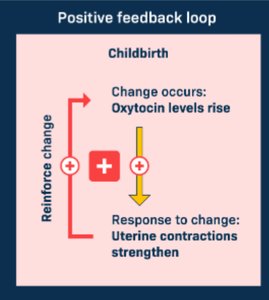
Positive Feedback: Amplifies changes (e.g., oxytocin in childbirth).
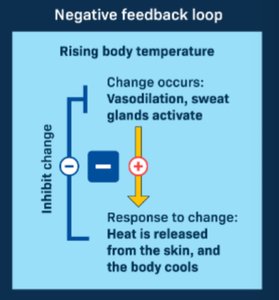
Negative Feedback: Reduces changes to maintain stability (e.g., temperature regulation).
ATP and Cellular Respiration
The ATP Cycle
ATP (adenosine triphosphate) is the primary energy currency of the cell. It is regenerated from ADP and phosphate using energy from catabolic reactions.
Catabolic Pathways: Break down complex molecules, releasing energy.
ATP Synthesis: Energy from exergonic reactions is used to phosphorylate ADP.
Redox Reactions in Cellular Respiration
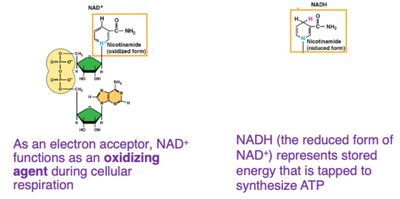
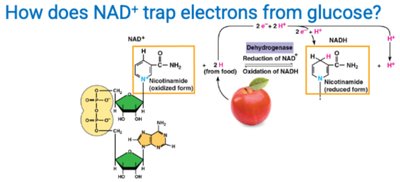
Cellular respiration involves oxidation-reduction (redox) reactions, where electrons are transferred from fuel molecules to oxygen.
Oxidation: Loss of electrons (e.g., glucose is oxidized).
Reduction: Gain of electrons (e.g., oxygen is reduced).
Reducing Agent: Electron donor.
Oxidizing Agent: Electron acceptor.
Example: Formation of table salt: sodium is oxidized, chlorine is reduced.
Electron Transport Chain and Energy Release
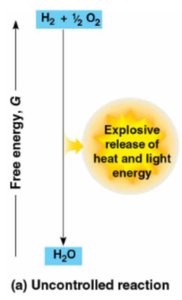
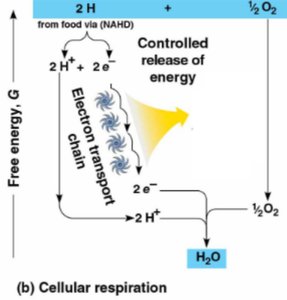
Electrons from NADH and FADH2 are transferred through the electron transport chain, releasing energy in steps and creating a proton gradient for ATP synthesis.
Electron Transport Chain: Series of protein complexes in the inner mitochondrial membrane.
Proton-Motive Force: The gradient of H+ ions across the membrane drives ATP synthesis.
Stages of Cellular Respiration
Overview of Cellular Respiration
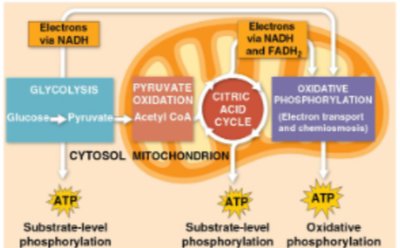
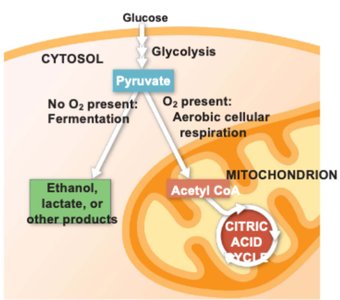
Cellular respiration consists of three main stages: glycolysis, pyruvate oxidation and the citric acid cycle, and oxidative phosphorylation.
Glycolysis: Occurs in the cytosol; breaks glucose into pyruvate.
Pyruvate Oxidation and Citric Acid Cycle: Occur in mitochondria; complete glucose breakdown.
Oxidative Phosphorylation: Electron transport chain and chemiosmosis produce most ATP.
Glycolysis
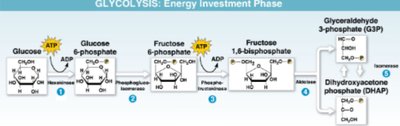
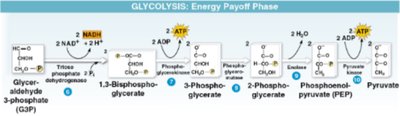
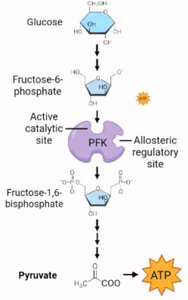
Glycolysis is the first stage of cellular respiration, breaking down glucose into two molecules of pyruvate and generating ATP and NADH.
Energy Investment Phase: 2 ATP are consumed.
Energy Payoff Phase: 4 ATP and 2 NADH are produced.
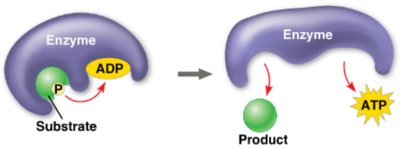
Substrate-Level Phosphorylation: ATP is formed by direct transfer of a phosphate group to ADP.
Regulation of Glycolysis
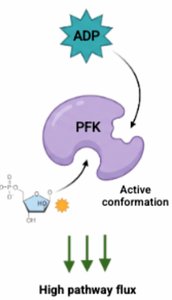
Phosphofructokinase (PFK) is a key regulatory enzyme in glycolysis, controlled by allosteric regulation.
Allosteric Activator: ADP stimulates PFK, increasing glycolysis.
Allosteric Inhibitor: ATP inhibits PFK, decreasing glycolysis.
Feedback Inhibition: Prevents overproduction of ATP.
Pyruvate Oxidation and Citric Acid Cycle
Pyruvate Oxidation
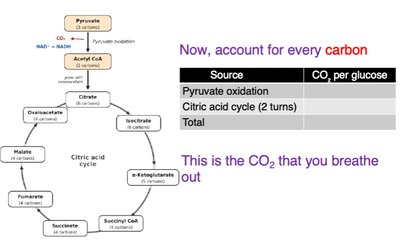
Pyruvate is transported into the mitochondria and oxidized to acetyl CoA, which enters the citric acid cycle.
CO2 is released during pyruvate oxidation.
NADH is produced as electrons are transferred to NAD+.
Citric Acid Cycle
The citric acid cycle completes the breakdown of glucose, releasing CO2 and transferring electrons to NADH and FADH2.
Acetyl CoA combines with oxaloacetate to form citrate.
Each turn of the cycle produces ATP, NADH, FADH2, and CO2.
Oxidative Phosphorylation and Fermentation
Electron Transport Chain and Chemiosmosis
Electrons from NADH and FADH2 are passed through the electron transport chain, creating a proton gradient that powers ATP synthesis via ATP synthase.
Oxygen: Final electron acceptor, forming water.
ATP Yield: About 32 ATP per glucose molecule.
Fermentation
In the absence of oxygen, cells use fermentation to regenerate NAD+ and produce ATP.
Alcohol Fermentation: Pyruvate is converted to ethanol, releasing CO2.
Lactic Acid Fermentation: Pyruvate is reduced to lactate; no CO2 is released.
Photosynthesis
Overview and Redox Process
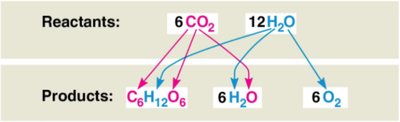
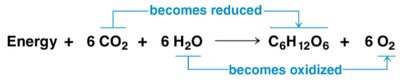
Photosynthesis converts light energy into chemical energy, producing glucose and oxygen from CO2 and water. It is the reverse of cellular respiration.
Autotrophs: Organisms that produce organic molecules from inorganic sources.
Photosynthesis Equation:
Redox Process: H2O is oxidized, CO2 is reduced.
Light Reactions
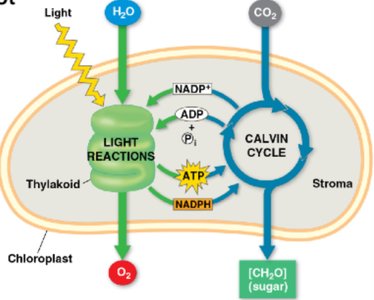
Light reactions occur in the thylakoid membranes, splitting water, releasing O2, and generating ATP and NADPH.
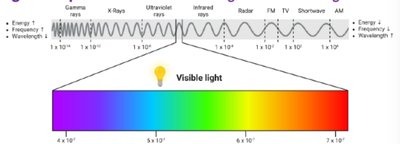
Electromagnetic Spectrum: Visible light (380–740 nm) drives photosynthesis.
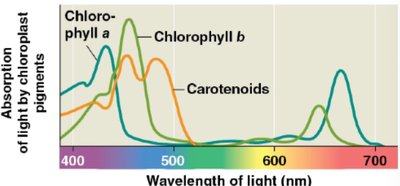
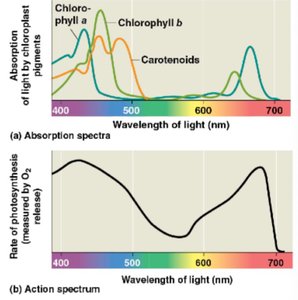
Pigments: Chlorophyll a, chlorophyll b, and carotenoids absorb light.
Photosystems and Electron Flow
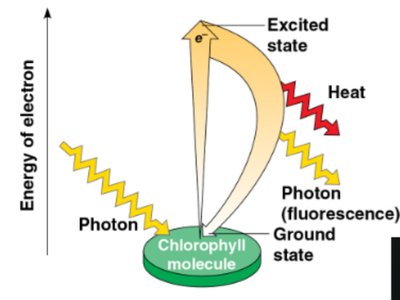
Photosystems I and II work together to generate ATP and NADPH through linear electron flow. Excited electrons are transferred through an electron transport chain, creating a proton gradient for ATP synthesis.
Photosystem II: Splits water, releases O2, and transfers electrons.
Photosystem I: Transfers electrons to NADP+, forming NADPH.
Calvin Cycle
The Calvin cycle uses ATP and NADPH to fix CO2 and produce glyceraldehyde 3-phosphate (G3P), a precursor to glucose.
Carbon Fixation: CO2 is incorporated into organic molecules by rubisco.
Reduction: 3-phosphoglycerate is converted to G3P.
Regeneration: RuBP is regenerated to continue the cycle.
ATP and NADPH Consumption: 9 ATP and 6 NADPH per G3P synthesized.
Photosynthetic Adaptations
Plants have evolved mechanisms to minimize photorespiration, especially in hot, arid climates.
C3 Plants: Use rubisco for CO2 fixation, forming a three-carbon compound.
C4 Plants: Fix CO2 in mesophyll cells, Calvin cycle in bundle-sheath cells.
CAM Plants: Fix CO2 at night, Calvin cycle during the day in the same cells.
Example: C4 and CAM pathways allow plants to conserve water and reduce photorespiration.
----------------------------------------
