 Back
Cellular Organization and Structure: Study Notes for General Biology
Study Guide - Smart Notes
 Tailored notes based on your materials, expanded with key definitions, examples, and context.
Cellular Organization
Atoms and Molecules of the Cell
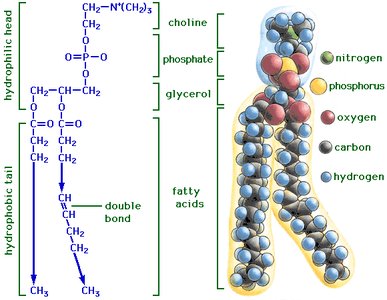
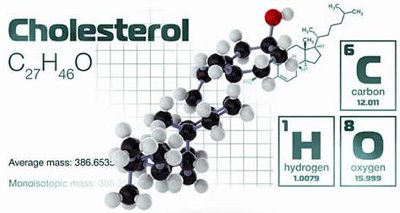
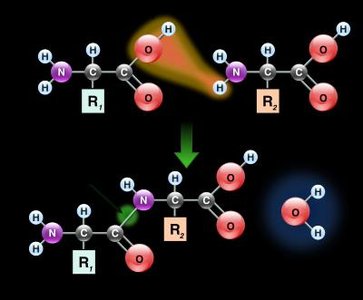
Cells are composed of organic molecules, which are themselves made up of atoms. The fundamental atoms involved in biological molecules include carbon, hydrogen, oxygen, nitrogen, phosphorus, and sulfur. These atoms combine to form molecules such as proteins, lipids, carbohydrates, and nucleic acids, which are essential for cellular structure and function.
Organic molecules are the building blocks of cells.
Atoms form the basis of all matter, including living organisms.
Examples: Amino acids (proteins), phospholipids (membranes), nucleotides (DNA/RNA).
Cell Theory
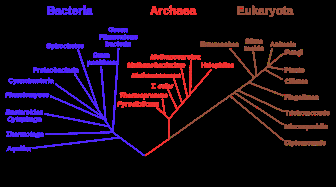
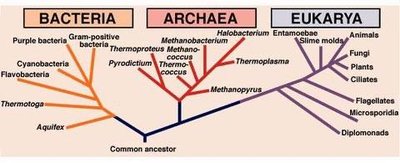
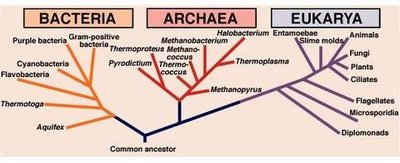
The cell theory is a unifying concept in biology, stating that cells are the basic units of life. All living organisms are composed of cells, which may be unicellular or multicellular. Cells arise only from pre-existing cells, and all living cells share a common evolutionary ancestor.
Cells are the smallest scale of organization and function in living organisms.
All vital functions of organisms occur within cells.
Cells transmit heredity information to the next generation.
Cells exchange material and energy with the environment.
Homeostasis
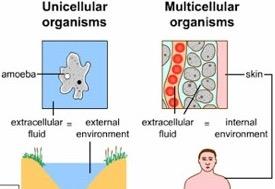
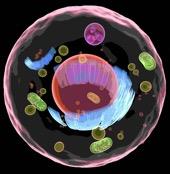
Homeostasis refers to the maintenance of a balanced internal environment within cells. Eukaryotic cells achieve homeostasis through specialized organelles and internal membranes that compartmentalize functions.
Homeostasis is essential for cell survival and function.
Eukaryotic organelles help maintain homeostasis by regulating internal conditions.
Plasma Membrane and Surface Area-to-Volume Ratio
Plasma Membrane
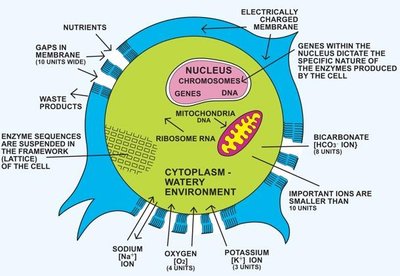
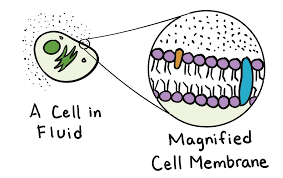
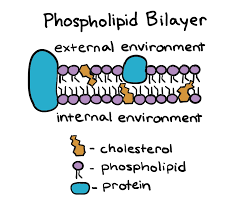
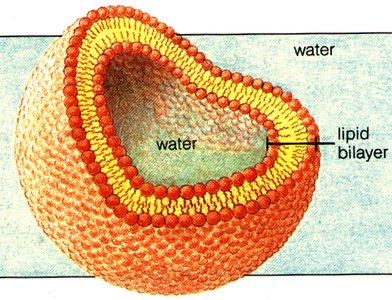
The plasma membrane, or cell membrane, surrounds all cells and separates the internal environment from the external environment. It is selectively permeable, allowing the exchange of materials while maintaining internal conditions.
Structure: Composed of a phospholipid bilayer with embedded proteins and cholesterol.
Function: Maintains homeostasis, facilitates material exchange, and provides structural support.
Surface Area-to-Volume Ratio
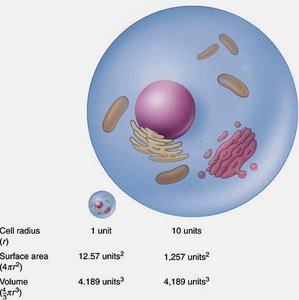
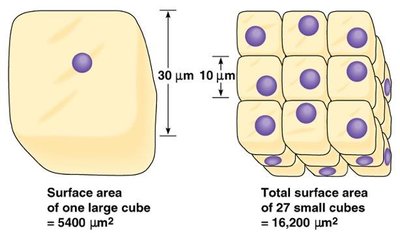
The surface area-to-volume ratio is a critical factor in determining cell size. As a cell grows, its volume increases faster than its surface area, limiting the efficiency of material exchange with the environment.
Small cells have a higher surface area-to-volume ratio, allowing efficient exchange of materials.
Formula: For a sphere, surface area = , volume = .
Example: Many small cells are more efficient than one large cell.
Prokaryotic Cells vs Eukaryotic Cells
Prokaryotic Cells
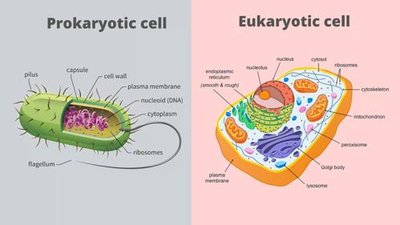
Prokaryotic cells lack internal membrane-bound organelles and a true nucleus. Their DNA is located in a nucleoid region, and they possess a cell wall, ribosomes, and sometimes flagella for movement.
Examples: Bacteria and Archaea.
Characteristics: No nucleus, circular DNA, no membrane-bound organelles.
Eukaryotic Cells
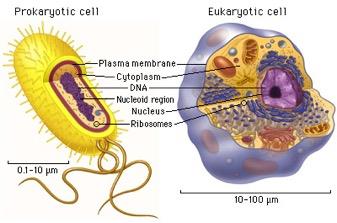
Eukaryotic cells contain membrane-bound organelles, including a true nucleus. Their DNA is linear and enclosed within the nuclear envelope. Eukaryotes include plants, animals, fungi, and protists.
Characteristics: Nucleus, linear DNA, membrane-bound organelles.
Examples: Plant and animal cells.
Comparison Table: Prokaryotes vs Eukaryotes
Feature | Prokaryotes | Eukaryotes |
|---|---|---|
Plasma Membrane | Yes | Yes |
Nucleus | No | Yes |
Membrane-bound Organelles | No | Yes |
DNA Molecules | Circular | Linear |
Cellular Organelles
Organelles in Eukaryotes
Eukaryotic cells contain specialized organelles that perform distinct functions. These include the nucleus, ribosomes, endoplasmic reticulum (smooth and rough), Golgi complex, lysosomes, vacuoles, mitochondria, and chloroplasts.
Nucleus: Control center, contains DNA.
Ribosomes: Site of protein synthesis.
Endoplasmic Reticulum (ER): Rough ER (protein synthesis), Smooth ER (lipid synthesis).
Golgi Complex: Processes and packages proteins.
Lysosomes: Digestive enzymes (animal cells).
Vacuoles: Storage (plant cells).
Mitochondria: Site of aerobic respiration.
Chloroplasts: Site of photosynthesis (plants).
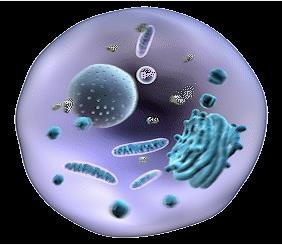
Endomembrane System
The endomembrane system includes the nuclear envelope, endoplasmic reticulum, Golgi apparatus, lysosomes, vesicles, vacuoles, and plasma membrane. It regulates protein traffic and performs metabolic functions.
Functions: Protein synthesis, transport, metabolism, detoxification.
Components: Nuclear envelope, ER, Golgi, lysosomes, vesicles, vacuoles, plasma membrane.
Energy Converting Organelles
Mitochondria and chloroplasts are organelles responsible for energy conversion. Mitochondria are found in all eukaryotic cells and are the site of aerobic respiration, while chloroplasts are found in photosynthetic eukaryotes and are the site of photosynthesis.
Mitochondria: Convert glucose to ATP via aerobic respiration.
Chloroplasts: Convert light energy to chemical energy via photosynthesis.
ATP: Organic compound used for energy transfer in cells.
Endosymbiotic Theory
The endosymbiotic theory proposes that mitochondria and chloroplasts originated as prokaryotic cells that were engulfed by ancestral eukaryotic cells. Evidence includes their double membranes, autonomous reproduction, circular DNA, and prokaryote-like ribosomes.
Double membrane structure.
Autonomous reproduction within host cells.
Circular genome similar to bacteria.
Prokaryote-specific antibiotics can poison them.
Own ribosomes resembling prokaryotic ribosomes.
Cytoskeleton and Cell Wall
The cytoskeleton is an internal framework of fibers that gives cells strength, shape, and the ability to move. The cell wall provides structural support and is found in most bacteria, archaea, fungi, and plants.
Cytoskeleton: Found in both prokaryotic and eukaryotic cells; aids in cell division.
Cell wall: Provides structural support; plant cell walls contain cellulose.
Plant Cells vs Animal Cells
Comparing Plant and Animal Cells
Both plant and animal cells are eukaryotic, but they have distinct differences. Plant cells contain chloroplasts, a cell wall, and a large central vacuole, while animal cells lack these structures but contain lysosomes.
Feature | Animal Cell | Plant Cell |
|---|---|---|
Nucleus | Yes | Yes |
Plasma Membrane | Yes | Yes |
Cell Wall | No | Yes |
Mitochondria | Yes | Yes |
Chloroplast | No | Yes |
Central Vacuole | No | Yes |
Lysosome | Yes | No |
Eukaryotic | Yes | Yes |
Summary Table: Cellular Organization
Topic | Key Points |
|---|---|
Atoms & Molecules | Organic molecules, atoms, proteins, lipids, nucleic acids |
Cell Theory | Basic unit of life, all organisms have cells, cells from cells |
Homeostasis | Balanced internal environment, organelles maintain homeostasis |
Plasma Membrane | Phospholipid bilayer, selective permeability, material exchange |
Surface Area-to-Volume Ratio | Limits cell size, efficient material exchange in small cells |
Prokaryotes vs Eukaryotes | No nucleus vs nucleus, circular vs linear DNA, organelles |
Cellular Organelles | Nucleus, ribosomes, ER, Golgi, lysosomes, vacuoles, mitochondria, chloroplasts |
Plant vs Animal Cells | Cell wall, chloroplasts, central vacuole (plants); lysosomes (animals) |
Additional info: Academic context was added to clarify the functions and comparisons of cellular structures, as well as to provide self-contained explanations suitable for exam preparation.
