 Back
Cellular Respiration and Fermentation: Chapter 7 Study Notes
Study Guide - Smart Notes
 Tailored notes based on your materials, expanded with key definitions, examples, and context.
Cellular Respiration and Fermentation
Overview of Cellular Respiration
Cellular respiration is a fundamental metabolic process by which cells extract energy from organic molecules, primarily glucose, to produce ATP. This process is essential for powering cellular work and maintaining life. It involves a series of catabolic pathways, including glycolysis, pyruvate oxidation, the citric acid cycle, and oxidative phosphorylation.
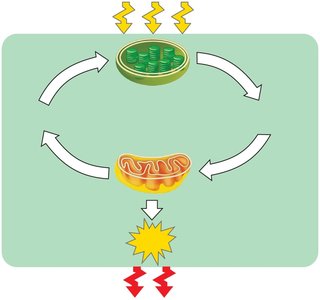
Energy Flow: Energy enters ecosystems as sunlight, is stored in organic molecules via photosynthesis, and is released as heat during cellular respiration.
ATP Production: ATP is the main energy currency of the cell, regenerated during cellular respiration.
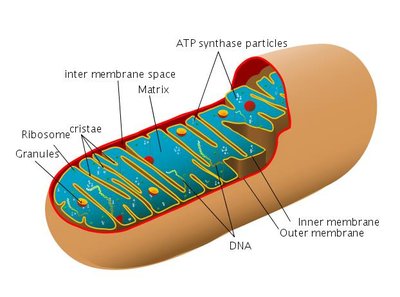
Location: Most steps occur in the mitochondria of eukaryotic cells.

Energy Flow and Chemical Recycling in Ecosystems
Photosynthesis and cellular respiration are interconnected processes that sustain life. Photosynthesis generates oxygen and organic molecules, which are used as fuel for cellular respiration. Cellular respiration releases carbon dioxide and water, completing the cycle.
Photosynthesis: Converts light energy to chemical energy in organic molecules.
Cellular Respiration: Breaks down organic molecules to release energy for ATP synthesis.
Chemical Recycling: CO2 and H2O produced by respiration are reused in photosynthesis.
Catabolic Pathways and ATP Production
Types of Catabolic Pathways
Catabolic pathways break down organic molecules to release energy. Cellular respiration includes both aerobic (with O2) and anaerobic (without O2) processes. Fermentation is a partial degradation of sugars without O2.
Aerobic Respiration: Consumes organic molecules and O2, yielding ATP.
Anaerobic Respiration: Uses compounds other than O2 as electron acceptors.
Fermentation: Occurs without O2, producing less ATP.
Redox Reactions: Oxidation and Reduction
Redox reactions are central to cellular respiration, involving the transfer of electrons between molecules. These reactions release energy used to synthesize ATP.
Oxidation: Loss of electrons from a substance.
Reduction: Gain of electrons by a substance.
Reducing Agent: Electron donor.
Oxidizing Agent: Electron acceptor.

Summary Equation for Cellular Respiration
The overall equation for aerobic cellular respiration is:

Stepwise Energy Harvest: NAD+ and Electron Transport Chain
NAD+ as an Electron Shuttle
Electrons from organic compounds are transferred to NAD+, forming NADH. NADH stores energy and transfers electrons to the electron transport chain, facilitating ATP synthesis.
Dehydrogenases: Enzymes that transfer electrons and hydrogen ions to NAD+.
NADH: Reduced form of NAD+, carries electrons to the electron transport chain.

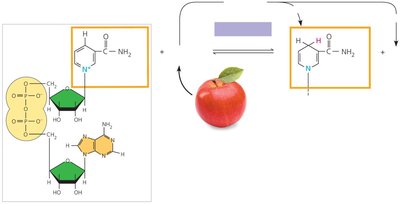
Electron Transport Chain
The electron transport chain consists of a series of protein complexes in the inner mitochondrial membrane. Electrons are passed through these complexes, releasing energy in small steps, which is used to regenerate ATP.
Controlled Energy Release: Prevents explosive energy loss, stores energy for ATP synthesis.
Final Electron Acceptor: Oxygen, forming water as a by-product.
Stages of Cellular Respiration
Three Main Stages
Cellular respiration occurs in three main stages:
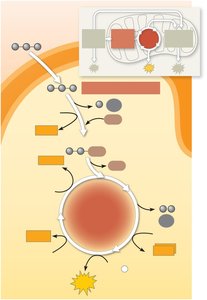
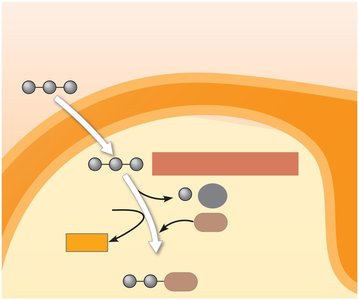
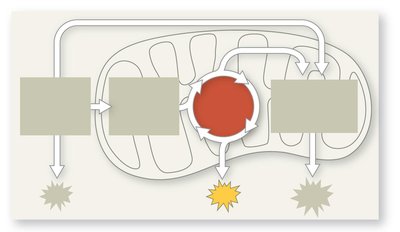
Glycolysis: Breaks down glucose into two pyruvate molecules in the cytosol.
Pyruvate Oxidation and Citric Acid Cycle: Completes glucose breakdown in the mitochondrial matrix.
Oxidative Phosphorylation: Accounts for most ATP synthesis, occurs in the inner mitochondrial membrane.

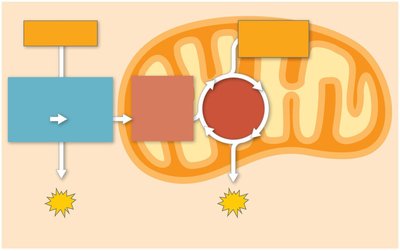
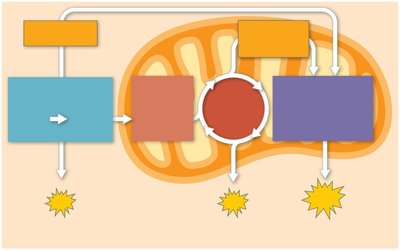
Glycolysis
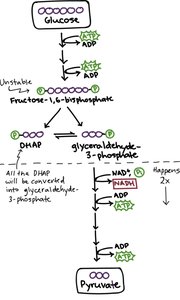
Glycolysis is an ancient pathway found in most organisms. It consists of 10 steps and occurs in the cytosol. It can be divided into two phases:
Energy Investment Phase: Glucose is rearranged and phosphorylated, consuming 2 ATP.
Energy Payoff Phase: Produces 4 ATP and 2 NADH, yielding a net gain of 2 ATP and 2 NADH per glucose.
Pyruvate Oxidation
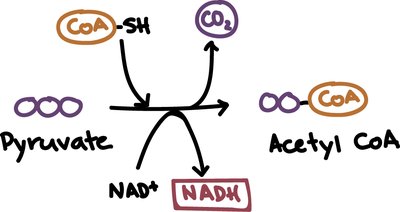
Pyruvate produced by glycolysis is transported into the mitochondrial matrix, where it is converted to acetyl CoA. This process releases CO2 and produces NADH.
Location: Mitochondrial matrix in eukaryotes, cytoplasm in prokaryotes.
Products: Acetyl CoA, NADH, CO2.
Citric Acid Cycle (Krebs Cycle)
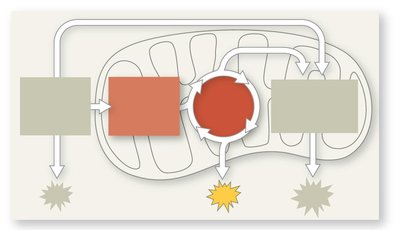
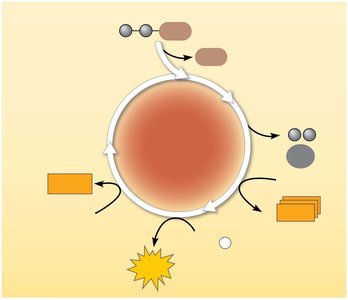
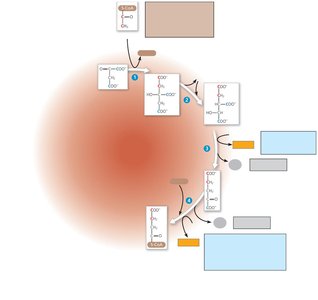
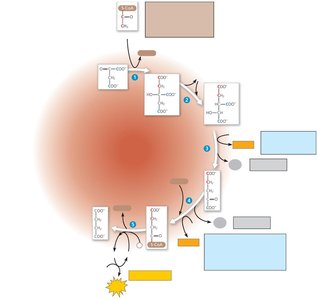
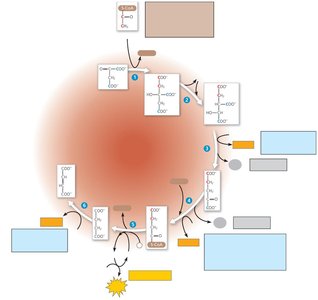
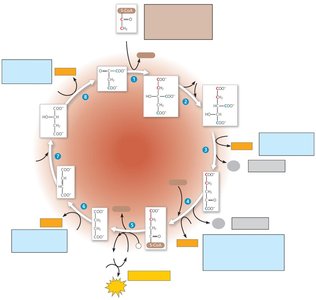
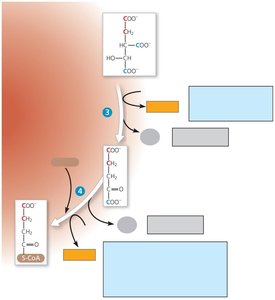
The citric acid cycle completes the breakdown of pyruvate to CO2. Each turn of the cycle oxidizes molecules derived from one pyruvate, generating ATP, NADH, and FADH2.
Turns: Two per glucose molecule.
Products per glucose: 2 ATP, 6 NADH, 2 FADH2.
Citric Acid Cycle Steps
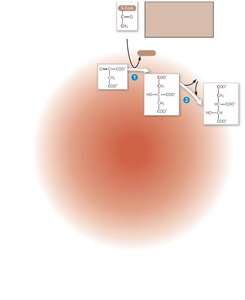
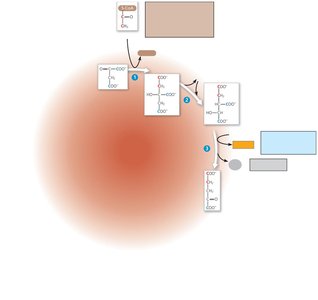
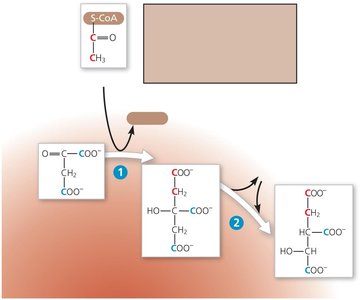
The citric acid cycle has eight steps, each catalyzed by a specific enzyme. The acetyl group of acetyl CoA combines with oxaloacetate to form citrate, which is then decomposed back to oxaloacetate.
Electron Carriers: NADH and FADH2 relay electrons to the electron transport chain.
Cycle: Regenerates oxaloacetate, making the process cyclical.
Oxidative Phosphorylation and Chemiosmosis
Electron Transport Chain and ATP Synthesis
NADH and FADH2 donate electrons to the electron transport chain, which powers ATP synthesis via oxidative phosphorylation. The chain is located in the inner mitochondrial membrane and consists of protein complexes and cytochromes.
Electron Flow: Electrons move from less to more electronegative carriers, releasing energy.
Final Electron Acceptor: Oxygen, forming water.
Chemiosmosis: The Energy-Coupling Mechanism
The energy released by electron transfer is used to pump H+ into the intermembrane space, creating a gradient. H+ flows back into the matrix through ATP synthase, driving ATP production.
ATP Synthase: Protein complex that synthesizes ATP from ADP and inorganic phosphate.
Proton-Motive Force: The H+ gradient across the membrane, used to do cellular work.
Fermentation and Anaerobic Respiration
Fermentation Pathways
Fermentation enables cells to produce ATP without oxygen. It consists of glycolysis plus reactions that regenerate NAD+ for use in glycolysis. Two common types are alcohol fermentation and lactic acid fermentation.
Alcohol Fermentation: Pyruvate is converted to ethanol, releasing CO2 and regenerating NAD+.
Lactic Acid Fermentation: Pyruvate is converted directly to lactate, regenerating NAD+ without CO2 production.
Comparison of Fermentation, Anaerobic, and Aerobic Respiration
Process | Final Electron Acceptor | ATP Yield |
|---|---|---|
Fermentation | Organic molecule (e.g., pyruvate) | 2 ATP per glucose |
Anaerobic Respiration | Inorganic molecule (e.g., sulfate) | Variable, more than fermentation |
Aerobic Respiration | Oxygen | ~32 ATP per glucose |
Metabolic Pathways and Catabolic Versatility
Connections to Other Metabolic Pathways
Glycolysis and the citric acid cycle are central hubs for catabolic and anabolic pathways. Various organic molecules, including carbohydrates, proteins, and fats, can enter these pathways for energy extraction or biosynthesis.
Proteins: Digested to amino acids, deaminated before entering glycolysis or citric acid cycle.
Fats: Digested to glycerol and fatty acids; fatty acids undergo beta oxidation to yield acetyl CoA.
Biosynthesis: Small molecules from food or metabolic intermediates are used to build new organic molecules.
Chapter Review: Key Inputs and Outputs
Glycolysis
Inputs: Glucose
Outputs: 2 Pyruvate, 2 ATP, 2 NADH
Citric Acid Cycle
Inputs: 2 Pyruvate, 2 Acetyl CoA, 2 Oxaloacetate
Outputs: 2 ATP, 6 NADH, 2 FADH2, 4 CO2
Electron Transport Chain and ATP Synthase
Inputs: NADH, FADH2, O2
Outputs: H2O, ATP
Summary Table: ATP Yield per Molecule of Glucose
Stage | ATP Yield |
|---|---|
Glycolysis | 2 ATP (substrate-level phosphorylation) |
Citric Acid Cycle | 2 ATP (substrate-level phosphorylation) |
Oxidative Phosphorylation | ~26-28 ATP (oxidative phosphorylation) |
Total | ~30-32 ATP per glucose |
Additional info: The exact ATP yield varies depending on the shuttle mechanism for NADH and the use of proton-motive force for other cellular work.
