 Back
BackCellular Respiration and Fermentation: Energy Harvesting in Cells
Study Guide - Smart Notes
 Tailored notes based on your materials, expanded with key definitions, examples, and context.
Cellular Respiration and Fermentation
Introduction to Cellular Respiration
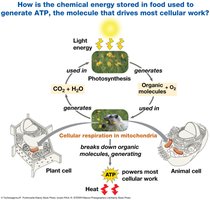
Cellular respiration is the process by which cells extract energy from organic molecules, primarily glucose, to produce ATP, the main energy currency of the cell. This process occurs in both plant and animal cells and involves a series of metabolic pathways that convert chemical energy in food into usable cellular energy.
ATP (Adenosine Triphosphate): The molecule that powers most cellular work.
Energy Flow: Energy enters ecosystems as light, is stored in organic molecules via photosynthesis, and is released as heat during cellular respiration.
Chemical Recycling: Essential elements are recycled between photosynthesis and cellular respiration.
Catabolic Pathways and ATP Production
Overview of Catabolic Pathways
Catabolic pathways break down complex molecules into simpler ones, releasing energy. Cellular respiration is a catabolic process that includes both aerobic (with oxygen) and anaerobic (without oxygen) pathways.
Fermentation: Partial degradation of sugars without oxygen.
Aerobic Respiration: Consumes organic molecules and oxygen, yielding the most ATP.
Anaerobic Respiration: Uses electron acceptors other than oxygen.
Glucose: The primary molecule traced in cellular respiration, though fats and proteins can also be used.
Redox Reactions in Cellular Respiration
Oxidation and Reduction
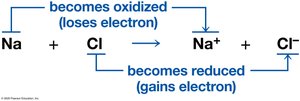
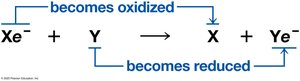
Redox reactions involve the transfer of electrons between molecules, releasing energy that is harnessed to synthesize ATP.
Oxidation: Loss of electrons from a substance.
Reduction: Gain of electrons by a substance.
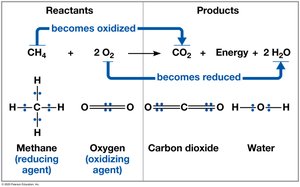
Reducing Agent: Electron donor.
Oxidizing Agent: Electron acceptor.
Redox in Cellular Respiration
During cellular respiration, glucose is oxidized and oxygen is reduced. The transfer of electrons from glucose to oxygen releases energy used to form ATP.
General Equation:

Electron Carriers and the Electron Transport Chain
NAD+ and FAD as Electron Shuttles
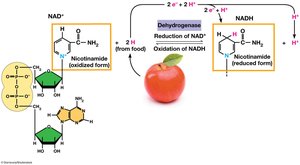
Electrons from organic molecules are transferred to coenzymes such as NAD+ and FAD, which carry them to the electron transport chain.
NAD+ (Nicotinamide Adenine Dinucleotide): Functions as an oxidizing agent, accepting electrons and becoming NADH.
FAD (Flavin Adenine Dinucleotide): Another electron carrier, reduced to FADH2.
Dehydrogenases: Enzymes that facilitate the transfer of electrons to NAD+ or FAD.

Electron Transport Chain (ETC)
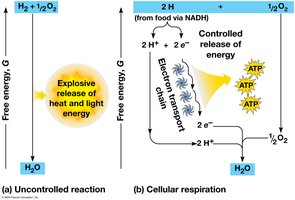
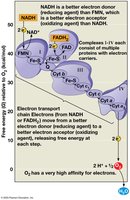
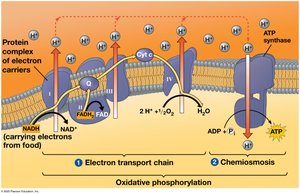
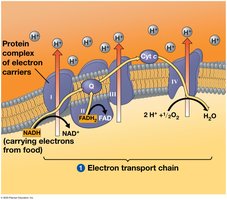
The ETC is a series of protein complexes in the inner mitochondrial membrane that transfer electrons from NADH and FADH2 to oxygen, releasing energy in small steps to produce ATP.
Controlled Release of Energy: Prevents explosive release and allows efficient ATP synthesis.
Stages of Cellular Respiration
Overview of the Three Main Stages
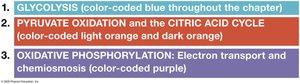
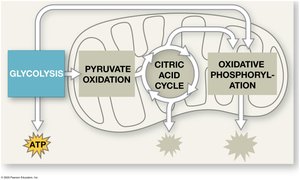
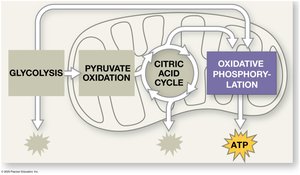
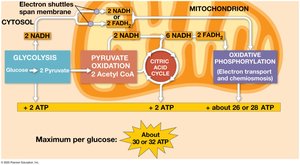
Cellular respiration consists of three main stages: glycolysis, pyruvate oxidation and the citric acid cycle, and oxidative phosphorylation.
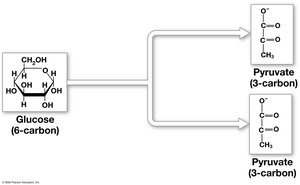
Glycolysis: Splits glucose into two pyruvate molecules in the cytosol.
Pyruvate Oxidation and Citric Acid Cycle: Completes the breakdown of glucose in the mitochondrial matrix.
Oxidative Phosphorylation: Includes the electron transport chain and chemiosmosis, producing most of the ATP.
Glycolysis
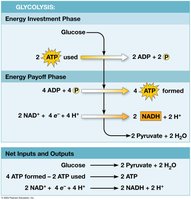
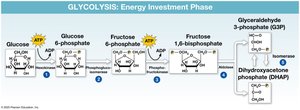
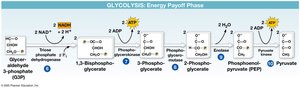
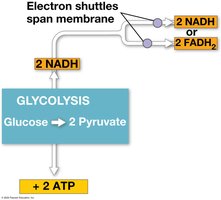
Glycolysis is the first stage of cellular respiration, occurring in the cytosol and breaking down glucose into two molecules of pyruvate.
Energy Investment Phase: 2 ATP are used to phosphorylate glucose.
Energy Payoff Phase: 4 ATP and 2 NADH are produced.
Net Yield: 2 ATP and 2 NADH per glucose.
Pyruvate Oxidation and the Citric Acid Cycle
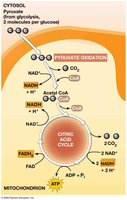
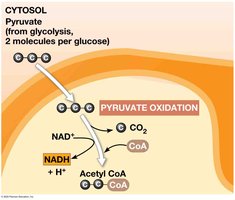
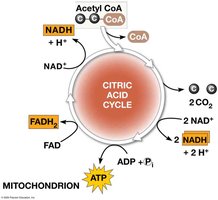
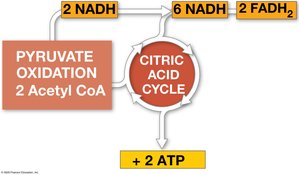
Pyruvate produced in glycolysis is transported into the mitochondrion (in eukaryotes), where it is oxidized to acetyl CoA. Acetyl CoA enters the citric acid cycle, which completes the oxidation of glucose derivatives.
Pyruvate Oxidation: Each pyruvate yields 1 NADH and 1 CO2.
Citric Acid Cycle: Each turn produces 3 NADH, 1 FADH2, 1 ATP, and 2 CO2 per acetyl CoA.
Location: Mitochondrial matrix (eukaryotes) or cytosol (prokaryotes).
Oxidative Phosphorylation
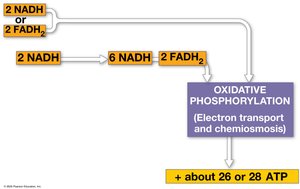
Oxidative phosphorylation is the final stage of cellular respiration, where most ATP is generated. It involves the electron transport chain and chemiosmosis.
Electron Transport Chain: Transfers electrons from NADH and FADH2 to oxygen, forming water.
Proton Gradient: Electron transfer pumps protons (H+) across the inner mitochondrial membrane, creating a gradient.
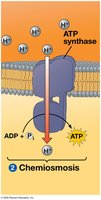
ATP Synthase: Protons flow back through ATP synthase, driving the phosphorylation of ADP to ATP.
ATP Yield: About 26–28 ATP per glucose from oxidative phosphorylation.
ATP Yield from Cellular Respiration
The complete oxidation of one glucose molecule yields a maximum of about 30–32 ATP molecules. The exact number varies due to differences in shuttle mechanisms and the use of the proton-motive force for other work.
ATP Accounting: Glycolysis (2 ATP), Citric Acid Cycle (2 ATP), Oxidative Phosphorylation (26–28 ATP).
Efficiency: About 34% of the energy in glucose is transferred to ATP; the rest is lost as heat.
Fermentation and Anaerobic Respiration
Fermentation
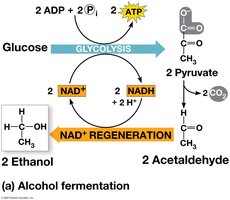
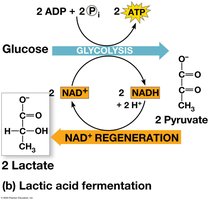
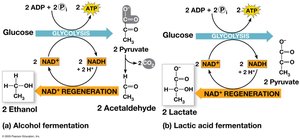
Fermentation is an anaerobic process that allows cells to produce ATP without oxygen. It consists of glycolysis plus reactions that regenerate NAD+ for glycolysis to continue.
Alcohol Fermentation: Pyruvate is converted to ethanol, releasing CO2 and regenerating NAD+.
Lactic Acid Fermentation: Pyruvate is reduced to lactate, regenerating NAD+ without releasing CO2.
ATP Yield: Only 2 ATP per glucose, much less than aerobic respiration.
Anaerobic Respiration
Anaerobic respiration uses an electron transport chain with a final electron acceptor other than oxygen, such as sulfate. It is less efficient than aerobic respiration but more efficient than fermentation.
Comparison of Pathways
Process | Final Electron Acceptor | ATP Yield (per glucose) |
|---|---|---|
Aerobic Respiration | O2 | ~30–32 |
Anaerobic Respiration | Other than O2 (e.g., SO42−) | Varies, less than aerobic |
Fermentation | Organic molecule (e.g., pyruvate, acetaldehyde) | 2 |
Metabolic Integration and Evolution
Connections to Other Pathways
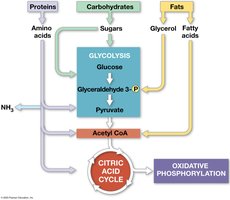
Glycolysis and the citric acid cycle are central hubs for catabolic and anabolic pathways. Other macromolecules such as proteins and fats can enter these pathways at various points after appropriate modifications.
Proteins: Deaminated and converted to intermediates of glycolysis or the citric acid cycle.
Fats: Glycerol enters glycolysis; fatty acids undergo beta oxidation to form acetyl CoA.
Biosynthesis: Intermediates are used to synthesize amino acids, nucleotides, and other essential molecules.
Evolutionary Significance of Glycolysis
Glycolysis is a universal metabolic pathway, suggesting it evolved early in the history of life, before the presence of oxygen in Earth's atmosphere and before the evolution of mitochondria.
Summary Table: Inputs and Outputs of Major Pathways
Pathway | Inputs | Outputs |
|---|---|---|
Glycolysis | Glucose, 2 NAD+, 2 ADP + 2 Pi | 2 Pyruvate, 2 NADH, 2 ATP |
Pyruvate Oxidation | 2 Pyruvate, 2 NAD+, 2 CoA | 2 Acetyl CoA, 2 NADH, 2 CO2 |
Citric Acid Cycle | 2 Acetyl CoA, 6 NAD+, 2 FAD, 2 ADP + 2 Pi | 4 CO2, 6 NADH, 2 FADH2, 2 ATP |
Oxidative Phosphorylation | NADH, FADH2, O2, ADP + Pi | ATP (about 26–28), H2O, NAD+, FAD |
