 Back
BackCellular Respiration and Fermentation: Mechanisms of Energy Harvest in Cells
Study Guide - Smart Notes
 Tailored notes based on your materials, expanded with key definitions, examples, and context.
Cellular Respiration and Fermentation
Overview of Cellular Respiration
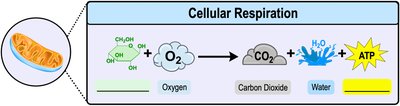
Cellular respiration is a series of metabolic processes by which cells extract energy from glucose and other organic molecules. This process is essential for the production of adenosine triphosphate (ATP), the primary energy currency of the cell. Cellular respiration can be aerobic (requiring oxygen) or anaerobic (not requiring oxygen), with aerobic respiration yielding significantly more ATP.
Aerobic respiration involves glycolysis, pyruvate oxidation, the Krebs cycle, and the electron transport chain (ETC) with chemiosmosis.
Anaerobic processes include fermentation and anaerobic respiration, which occur when oxygen is not available.
Redox Reactions in Cellular Respiration
Oxidation-Reduction (Redox) Reactions
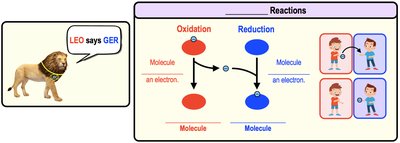
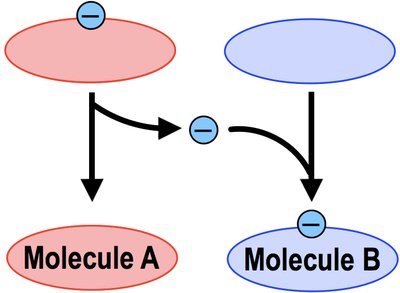
Redox reactions are chemical processes that involve the transfer of electrons between molecules. These reactions are fundamental to cellular respiration, as they allow the cell to harvest energy from organic molecules.
Oxidation: The loss of one or more electrons from a molecule.
Reduction: The gain of one or more electrons by a molecule (overall charge is reduced).
Oxidation and reduction always occur together ("LEO the Lion says GER": Lose Electrons = Oxidation, Gain Electrons = Reduction).
Examples of Redox Reactions
During cellular respiration, glucose is oxidized and oxygen is reduced. Electron carriers such as NAD+ and FAD play crucial roles in shuttling electrons between reactions.
When glucose donates electrons to NAD+, glucose is oxidized and NAD+ is reduced to NADH.
Electron Carriers: NADH and FADH2
Role of Electron Carriers
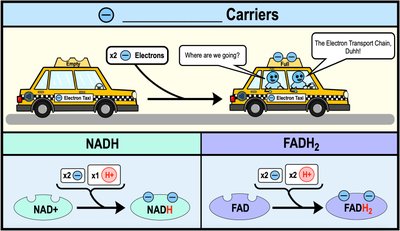
Electron carriers are molecules that transport electrons during cellular respiration. The main carriers are NADH and FADH2, which are reduced forms of NAD+ and FAD, respectively. These carriers deliver electrons to the electron transport chain, where most ATP is generated.
NADH and FADH2 each carry two electrons.
NAD+ and FAD are the oxidized forms; NADH and FADH2 are the reduced forms.
Stages of Aerobic Cellular Respiration
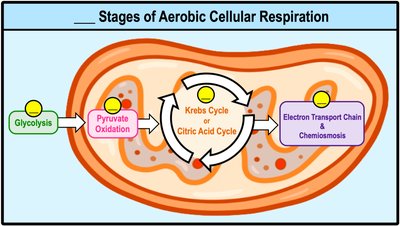
Overview of the Four Main Stages
Aerobic cellular respiration consists of four main stages, each with distinct roles and locations within the cell:
Glycolysis: Occurs in the cytoplasm; breaks down glucose into pyruvate.
Pyruvate Oxidation: Converts pyruvate into acetyl-CoA in the mitochondrial matrix.
Krebs Cycle (Citric Acid Cycle): Completes the oxidation of acetyl-CoA, generating NADH and FADH2.
Electron Transport Chain & Chemiosmosis: Uses electrons from NADH and FADH2 to generate a proton gradient and produce ATP.
Chemical Equation for Aerobic Cellular Respiration
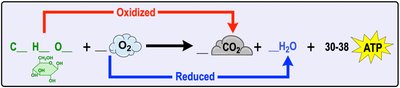
The overall reaction for aerobic cellular respiration is:
Glucose is oxidized to carbon dioxide.
Oxygen is reduced to water.
Types of Phosphorylation
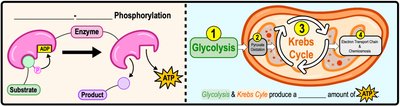
Substrate-Level Phosphorylation
ATP can be synthesized directly in metabolic pathways by transferring a phosphate group from a substrate to ADP. This process is called substrate-level phosphorylation and occurs during glycolysis and the Krebs cycle.
Produces a small amount of ATP compared to oxidative phosphorylation.
Oxidative Phosphorylation
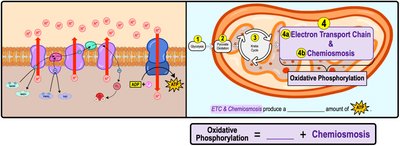
Most ATP during cellular respiration is produced by oxidative phosphorylation, which involves the electron transport chain and chemiosmosis. Energy from electrons is used to create a proton gradient, which drives ATP synthesis via ATP synthase.
Occurs in the inner mitochondrial membrane.
Produces the majority of ATP in aerobic respiration.
Glycolysis
Process and Phases of Glycolysis
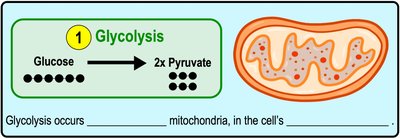
Glycolysis is the first step of cellular respiration, breaking down one molecule of glucose (6 carbons) into two molecules of pyruvate (3 carbons each). It occurs in the cytoplasm and does not require oxygen.
"Glyco" means sugar; "lysis" means to split.
Consists of 10 reactions grouped into two phases:
Energy Investment Phase: Uses 2 ATP to phosphorylate glucose.
Energy Harvest Phase: Produces 4 ATP (net gain 2 ATP) and 2 NADH.
Net products per glucose: 2 pyruvate, 2 NADH, 2 ATP.
Pyruvate Oxidation
Conversion of Pyruvate to Acetyl-CoA
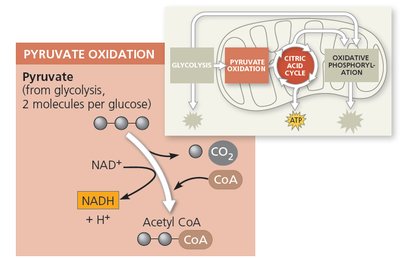
Pyruvate oxidation is the second step of cellular respiration, linking glycolysis to the Krebs cycle. Each pyruvate is transported into the mitochondrial matrix and converted into acetyl-CoA, producing NADH and releasing CO2.
For each glucose: 2 pyruvate → 2 acetyl-CoA, 2 NADH, 2 CO2
Occurs in the mitochondrial matrix.
Krebs Cycle (Citric Acid Cycle)
Steps and Products of the Krebs Cycle
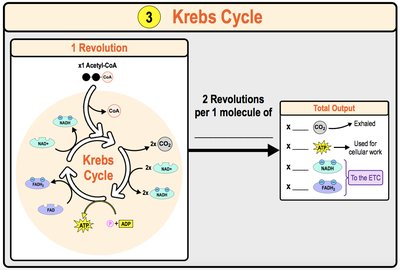
The Krebs cycle is the third stage of aerobic cellular respiration. It completes the oxidation of acetyl-CoA, generating NADH, FADH2, ATP, and CO2. The cycle occurs in the mitochondrial matrix and runs twice per glucose molecule (once per acetyl-CoA).
Key phases: Acetyl-CoA entry, citrate oxidation, and oxaloacetate regeneration.
Products per glucose (2 cycles): 6 NADH, 2 FADH2, 2 ATP, 4 CO2
Electron Transport Chain and Chemiosmosis
Electron Transport Chain (ETC)
The ETC is a series of protein complexes in the inner mitochondrial membrane. Electrons from NADH and FADH2 are transferred through the chain, releasing energy used to pump protons (H+) into the intermembrane space, creating a proton gradient.
Oxygen is the final electron acceptor, forming water.
Chemiosmosis and ATP Synthase
The proton gradient generated by the ETC drives protons back into the mitochondrial matrix through ATP synthase, synthesizing ATP from ADP and inorganic phosphate. This process is called chemiosmosis.
Most ATP from glucose oxidation is produced during this stage.
Fermentation and Anaerobic Respiration
Fermentation
When oxygen is not available, cells can regenerate NAD+ through fermentation, allowing glycolysis to continue. Fermentation produces much less ATP than aerobic respiration.
Lactic acid fermentation: Pyruvate is reduced to lactic acid (in muscle cells and some bacteria).
Alcohol fermentation: Pyruvate is reduced to ethanol and CO2 (in yeast and some plants).
Anaerobic Respiration
Some organisms use molecules other than oxygen (e.g., nitrate, sulfate, CO2) as the final electron acceptor in the ETC. Anaerobic respiration produces more ATP than fermentation but less than aerobic respiration.
Summary Table: Products of Aerobic Cellular Respiration
Stage | ATP (net) | NADH | FADH2 | CO2 |
|---|---|---|---|---|
Glycolysis | 2 | 2 | 0 | 0 |
Pyruvate Oxidation | 0 | 2 | 0 | 2 |
Krebs Cycle | 2 | 6 | 2 | 4 |
ETC & Chemiosmosis | ~26-34 | 0 | 0 | 0 |
Total | 30-38 | 10 | 2 | 6 |
Additional info: The exact ATP yield varies depending on the cell type and shuttle systems used for transporting electrons into mitochondria.
