 Back
BackCellular Respiration and Fermentation: Mechanisms of Energy Harvest in Cells
Study Guide - Smart Notes
 Tailored notes based on your materials, expanded with key definitions, examples, and context.
Cellular Respiration and Fermentation
Overview of Cellular Respiration
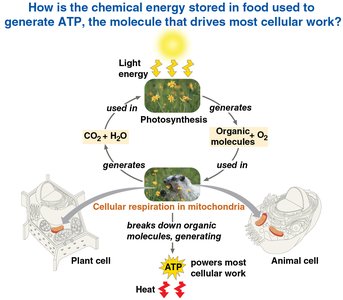
Cellular respiration is a series of metabolic processes by which cells harvest energy from organic molecules, primarily glucose, to produce ATP, the main energy currency of the cell. This process occurs in both plant and animal cells and involves the mitochondria. The energy stored in food is transformed into ATP, with some energy lost as heat.
Photosynthesis converts light energy into chemical energy, producing organic molecules and O2.
Cellular respiration uses O2 and organic molecules to generate ATP, releasing CO2 and H2O as waste.
Energy enters ecosystems as light and exits as heat, while chemical elements are recycled.
Catabolic Pathways and ATP Production
Catabolic pathways break down complex molecules, releasing stored energy. Electron transfer plays a central role in these pathways, especially in cellular respiration.
Fermentation: Partial degradation of sugars without oxygen.
Aerobic respiration: Consumes organic molecules and O2, yielding ATP.
Anaerobic respiration: Similar to aerobic but uses electron acceptors other than O2.
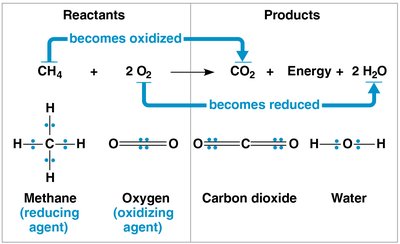
General equation for aerobic respiration:

Redox Reactions in Cellular Respiration
Oxidation and Reduction
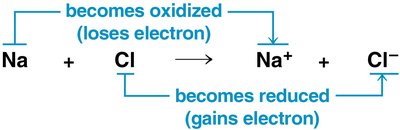
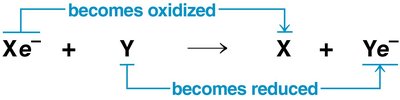
Redox reactions involve the transfer of electrons between reactants. The substance losing electrons is oxidized, while the one gaining electrons is reduced. These reactions are fundamental to energy extraction in cells.
Oxidizing agent: Electron acceptor.
Reducing agent: Electron donor.
Some redox reactions involve changes in electron sharing rather than complete transfer.
Electron Carriers: NAD+ and NADH
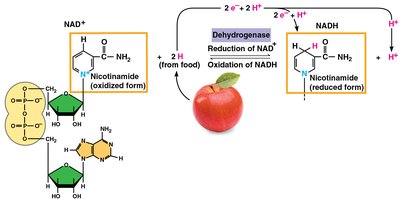
During cellular respiration, electrons from organic molecules are usually transferred to NAD+, forming NADH. This coenzyme acts as an electron carrier, storing energy that will be used to generate ATP.
Enzymes called dehydrogenases remove hydrogen atoms from substrates, transferring electrons to NAD+.
NADH represents stored energy used to synthesize ATP.
Electron Transport Chain (ETC)
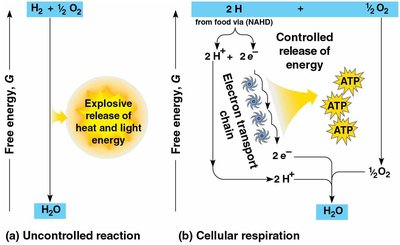
The ETC is a series of molecules embedded in the inner mitochondrial membrane (or plasma membrane in prokaryotes). Electrons from NADH and FADH2 are passed through the chain in a series of redox reactions, releasing energy in small steps to form ATP.
O2 is the final electron acceptor, forming H2O.
The ETC allows controlled release of energy, preventing explosive reactions.
Stages of Cellular Respiration
Three Main Stages
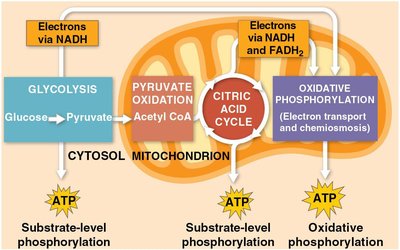
Cellular respiration consists of three main stages: glycolysis, pyruvate oxidation and the citric acid cycle, and oxidative phosphorylation.
Glycolysis: Breaks down glucose into two pyruvate molecules in the cytoplasm.
Pyruvate Oxidation and Citric Acid Cycle: Completes the breakdown of glucose to CO2 in the mitochondrial matrix.
Oxidative Phosphorylation: Electron transport and chemiosmosis produce most of the cell’s ATP.
ATP Synthesis Mechanisms
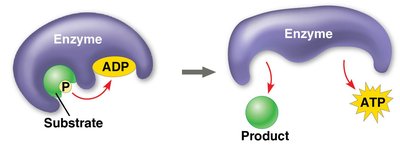
Substrate-level phosphorylation: Enzyme transfers a phosphate group directly from a substrate to ADP, forming ATP.
Oxidative phosphorylation: ATP is synthesized using energy from the electron transport chain and chemiosmosis.
Glycolysis
Pathway and Energy Yield
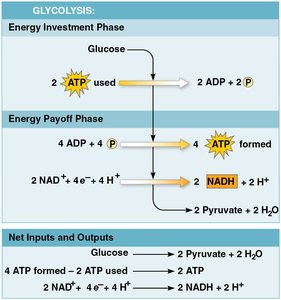
Glycolysis is the first step in cellular respiration, occurring in the cytoplasm. It consists of two phases: the energy investment phase and the energy payoff phase.
Energy investment: 2 ATP are used to split glucose.
Energy payoff: 4 ATP are produced (net gain of 2 ATP), 2 NADH are generated, and 2 pyruvate molecules are formed.
No CO2 is released during glycolysis.
Pyruvate Oxidation and the Citric Acid Cycle
Conversion of Pyruvate to Acetyl CoA
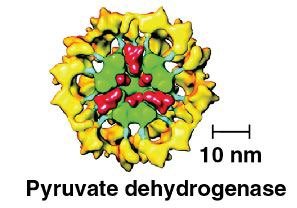
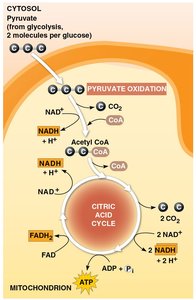
Before entering the citric acid cycle, pyruvate is converted to acetyl coenzyme A (acetyl CoA) by the enzyme pyruvate dehydrogenase. This process links glycolysis to the citric acid cycle.
Pyruvate’s carboxyl group is oxidized, releasing CO2.
NAD+ is reduced to NADH.
The remaining two-carbon fragment combines with coenzyme A to form acetyl CoA.
The Citric Acid Cycle (Krebs Cycle)
The citric acid cycle completes the breakdown of glucose by oxidizing acetyl CoA to CO2. Each turn of the cycle generates 1 ATP, 3 NADH, and 1 FADH2 (per acetyl CoA).
For each glucose molecule, the cycle runs twice (once per pyruvate).
NADH and FADH2 produced carry electrons to the electron transport chain.
Oxidative Phosphorylation and Chemiosmosis
Electron Transport Chain and ATP Synthesis
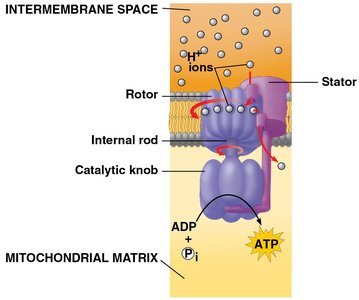
Oxidative phosphorylation occurs in the inner mitochondrial membrane. Electrons from NADH and FADH2 are transferred through the electron transport chain, releasing energy used to pump H+ ions across the membrane, creating a proton gradient.
ATP synthase uses the energy stored in the H+ gradient (proton-motive force) to synthesize ATP from ADP and inorganic phosphate.
This process is called chemiosmosis.
ATP Yield
Up to 32 ATP molecules are produced per glucose molecule during cellular respiration.
Exact ATP yield varies due to differences in shuttle mechanisms and use of the proton-motive force for other work.
Fermentation and Anaerobic Respiration
Fermentation Pathways
Fermentation allows ATP production in the absence of oxygen by regenerating NAD+ from NADH. Two common types are alcohol fermentation and lactic acid fermentation.
Alcohol fermentation: Pyruvate is converted to ethanol, releasing CO2 and regenerating NAD+.
Lactic acid fermentation: Pyruvate is reduced to lactate, regenerating NAD+ without releasing CO2.
Comparison of Fermentation, Anaerobic, and Aerobic Respiration
Process | Final Electron Acceptor | ATP Yield (per glucose) |
|---|---|---|
Fermentation | Organic molecule (e.g., pyruvate) | 2 |
Anaerobic Respiration | Inorganic molecule (not O2) | Varies (less than aerobic) |
Aerobic Respiration | O2 | Up to 32 |
Metabolic Integration and Regulation
Catabolic Versatility
Cellular respiration can utilize carbohydrates, fats, and proteins as fuel. These macromolecules enter the pathway at various points after being broken down into their monomers.
Proteins are deaminated before entering glycolysis or the citric acid cycle.
Fats are broken down into glycerol and fatty acids; fatty acids undergo beta oxidation to form acetyl CoA.
Regulation of Cellular Respiration
Feedback inhibition regulates cellular respiration, ensuring efficient energy production and preventing waste. High ATP levels inhibit key enzymes, slowing respiration, while low ATP levels stimulate it.
