Back
BackCellular Respiration and Fermentation: Mechanisms of Energy Harvest in Cells
Study Guide - Smart Notes
 Tailored notes based on your materials, expanded with key definitions, examples, and context.
Cellular Respiration and Fermentation
Introduction to Cellular Respiration
Cellular respiration is a series of metabolic processes by which cells harvest energy from organic molecules, primarily glucose. This process can occur with or without oxygen and is essential for the production of ATP, the energy currency of the cell.
Fermentation: Partial degradation of sugars without oxygen.
Aerobic respiration: Consumes organic molecules and oxygen, yielding ATP.
Anaerobic respiration: Similar to aerobic, but uses electron acceptors other than oxygen.
Breaking down organic molecules is overall an exergonic reaction (releases energy).
Redox Reactions in Cellular Respiration
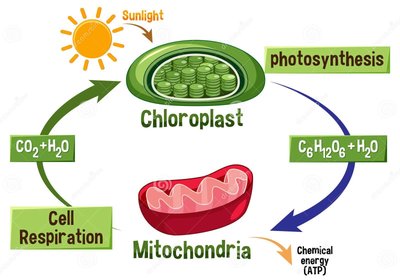
Energy is released from glucose as electrons are transferred to oxygen through a series of redox reactions. These reactions involve the transfer of electrons and protons, often as hydrogen atoms, to electron carriers before reaching oxygen.
Oxidation: Loss of electrons.
Reduction: Gain of electrons.
Mnemonic: OIL RIG (Oxidation Is Loss, Reduction Is Gain).

NAD+ and Electron Carriers
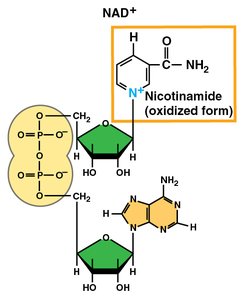
Nicotinamide adenine dinucleotide (NAD+) is a coenzyme that acts as an electron carrier. Enzymes called dehydrogenases remove hydrogen atoms from substrates, transferring electrons to NAD+ to form NADH, which is later used to generate ATP.
NAD+ accepts two electrons and one proton to become NADH.
The other proton is released into the solution as H+.
Electron Transport Chain (ETC)
The electron transport chain is a series of protein complexes embedded in the inner mitochondrial membrane. NADH and FADH2 donate electrons to the chain, which are passed through a series of redox reactions, releasing energy used to pump protons and generate ATP.
O2 is the final electron acceptor, forming H2O.
The ETC breaks the fall of electrons to O2 into several energy-releasing steps.
Stages of Cellular Respiration
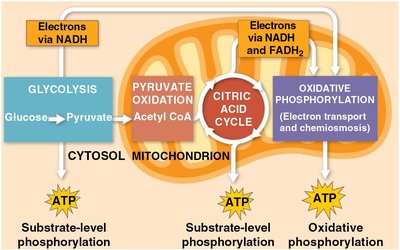
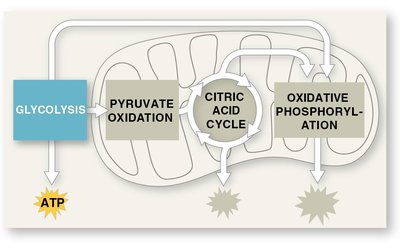
Cellular respiration consists of three main stages, each contributing to the overall production of ATP from glucose.
Glycolysis: Occurs in the cytoplasm; splits glucose into two pyruvate molecules.
Pyruvate Oxidation and Citric Acid Cycle (Krebs Cycle): Completes the breakdown of glucose to CO2.
Oxidative Phosphorylation: Electron transport chain and chemiosmosis produce most ATP.
Glycolysis
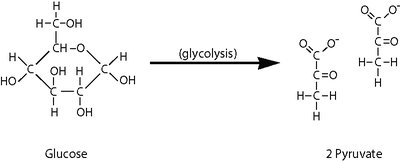
Glycolysis is the first step in cellular respiration, breaking down glucose into two molecules of pyruvate. It consists of two phases: energy investment and energy payoff.
Energy investment: 2 ATP are used to split glucose.
Energy payoff: 4 ATP are produced, 2 NAD+ are reduced to NADH, and 2 pyruvate are formed.
Net gain: 2 ATP per glucose by substrate-level phosphorylation.
Occurs with or without O2; no CO2 is released.
Pyruvate Oxidation
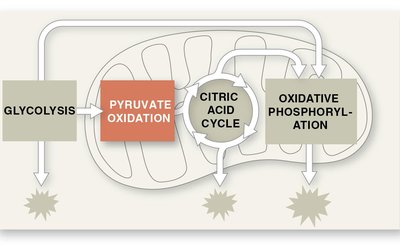
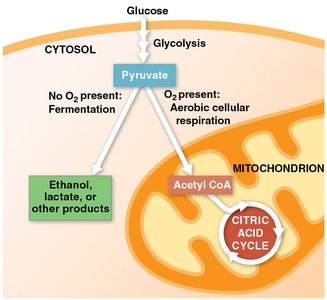
Pyruvate produced in glycolysis is transported into the mitochondria, where it is converted to acetyl CoA before entering the citric acid cycle.
Pyruvate dehydrogenase catalyzes three reactions: releases CO2, forms acetyl CoA, and reduces NAD+ to NADH.
Citric Acid Cycle (Krebs Cycle)
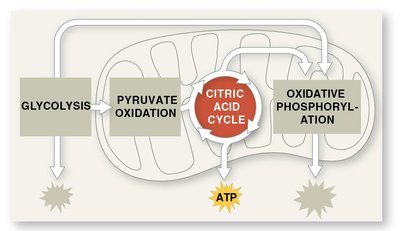
The citric acid cycle completes the breakdown of glucose by oxidizing acetyl CoA to CO2. Each turn of the cycle generates ATP, NADH, FADH2, and CO2.
Per cycle: 1 ATP, 3 NADH, 1 FADH2, 2 CO2.
Eight steps, each catalyzed by a specific enzyme.
NADH and FADH2 carry electrons to the ETC.
Oxidative Phosphorylation and Chemiosmosis
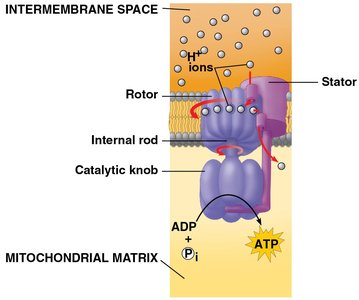
Oxidative phosphorylation includes the electron transport chain and chemiosmosis. Electrons from NADH and FADH2 move through the ETC, releasing energy to pump H+ ions, creating a proton gradient used by ATP synthase to generate ATP.
ATP synthase uses the H+ gradient to catalyze ADP phosphorylation.
This process is called chemiosmosis.
ATP Yield and Efficiency
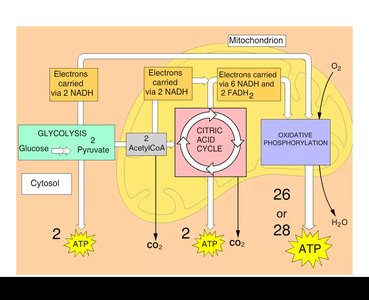
For each glucose molecule, cellular respiration produces about 28–38 ATP, though the exact number varies due to several factors.
About 34% of glucose energy is transferred to ATP; the rest is lost as heat.
ATP yield depends on the coupling efficiency, electron carrier used, and other cellular work driven by the proton-motive force.
Anaerobic Respiration and Fermentation
When oxygen is not available, cells can generate ATP through anaerobic respiration or fermentation. Anaerobic respiration uses an electron transport chain with a final electron acceptor other than oxygen. Fermentation allows glycolysis to continue by regenerating NAD+.
Alcohol fermentation: Pyruvate is converted to ethanol and CO2; NAD+ is regenerated.
Lactic acid fermentation: Pyruvate is reduced to lactate; NAD+ is regenerated without CO2 release.
Applications of Fermentation
Fermentation is used in various industries and biological processes:
Alcohol fermentation by yeast is used in brewing, winemaking, and baking.
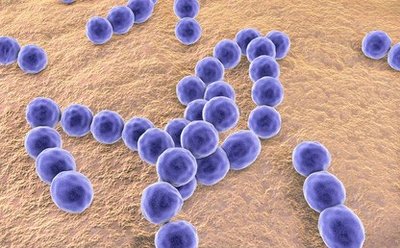
Lactic acid fermentation by bacteria and fungi is used to make cheese and yogurt.
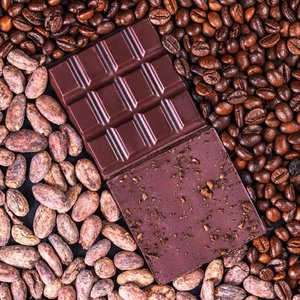
Fermentation and aerobic respiration in yeasts and bacteria are involved in chocolate production from cacao beans.



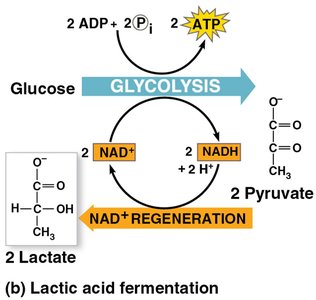
Recent Insights: Lactate Production in Muscle
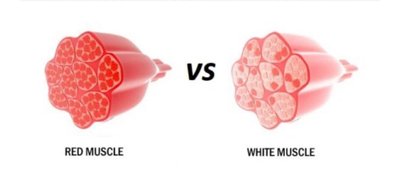
Recent research shows that human muscle cells can produce lactate even under aerobic conditions, especially in white muscle fibers, challenging the traditional view that lactate is only produced anaerobically.
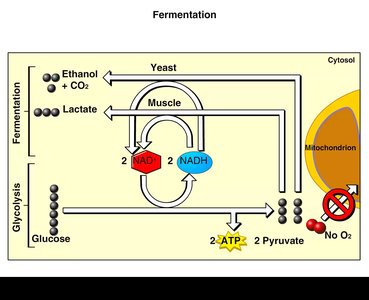
Comparing Fermentation and Respiration
Both fermentation and respiration use glycolysis to produce ATP and reduce NAD+ to NADH. However, their final electron acceptors and ATP yields differ significantly.
Process | Final Electron Acceptor | ATP Yield |
|---|---|---|
Fermentation | Organic molecule (e.g., pyruvate or acetaldehyde) | 2 ATP (per glucose) |
Respiration | Oxygen (aerobic) or other molecules (anaerobic) | 28–38 ATP (per glucose) |
Facultative and Obligate Anaerobes
Organisms differ in their ability to use oxygen:
Obligate anaerobes: Only survive via fermentation or anaerobic respiration; oxygen is toxic.
Facultative anaerobes: Can switch between fermentation and respiration depending on oxygen availability.
Pyruvate acts as a metabolic branch point for these pathways.
Versatility of Catabolic Pathways
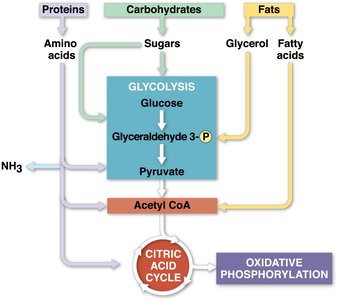
Cellular respiration is not limited to glucose; other macromolecules can also be used as fuel.
Carbohydrates, proteins, and fats can enter glycolysis or the citric acid cycle at various points.
Fats yield more than twice as much ATP per gram as carbohydrates.
Feedback Regulation of Cellular Respiration
Cellular respiration is tightly regulated by feedback inhibition to prevent wasteful overproduction of ATP.
If ATP levels drop, respiration speeds up; if ATP is abundant, respiration slows down.
Key enzymes are regulated at strategic points in the pathway.