 Back
Cellular Respiration and Fermentation: Metabolic Pathways and Energy Production
Study Guide - Smart Notes
 Tailored notes based on your materials, expanded with key definitions, examples, and context.
Cellular Respiration: Central Role in Metabolism
Overview of Cellular Respiration
Cellular respiration is a fundamental metabolic pathway that enables cells to extract energy from high-energy molecules, primarily glucose, to produce ATP. This process is essential for maintaining cellular functions and homeostasis.
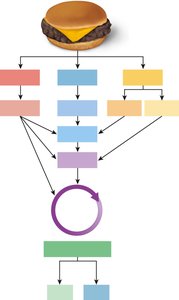
Cellular respiration is a set of catabolic reactions that break down carbohydrates, fats, and proteins to generate ATP.
All energy-yielding nutrients can be converted to acetyl CoA, which enters the citric acid cycle.
Hydrogen atoms released during these reactions are carried by coenzymes (NADH, FADH2) to the electron transport chain.
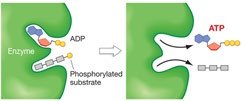
ATP is synthesized through substrate-level and oxidative phosphorylation.
Metabolic Pathways and Interconnections
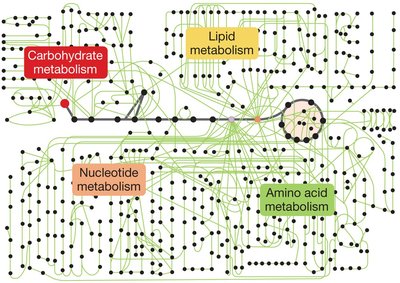
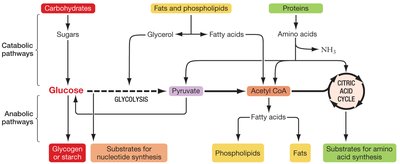
Metabolism comprises thousands of interconnected chemical reactions, organized into catabolic and anabolic pathways. Cellular respiration interacts with these pathways to maintain homeostasis.
Catabolic pathways break down molecules to release energy and produce waste.
Anabolic pathways use intermediates from catabolism to synthesize macromolecules.
Intermediates from glycolysis, acetyl CoA, and the citric acid cycle are used for nucleotide, lipid, and amino acid synthesis.
Stages of Cellular Respiration
Four Main Steps
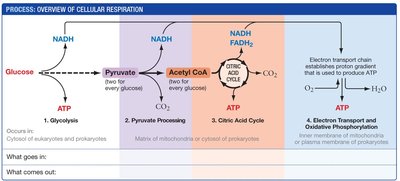
Cellular respiration consists of four sequential processes, each with distinct reactants, products, and cellular locations.
Glycolysis: Glucose is broken down into two pyruvate molecules in the cytosol.
Pyruvate Processing: Pyruvate is oxidized to acetyl CoA in the mitochondrial matrix (eukaryotes).
Citric Acid Cycle: Acetyl CoA is oxidized to CO2 through a cyclic series of reactions.
Electron Transport and Oxidative Phosphorylation: Electrons are transferred through protein complexes, generating a proton gradient used to synthesize ATP.
Energy Yield and Free Energy Changes
Energy Extraction from Glucose
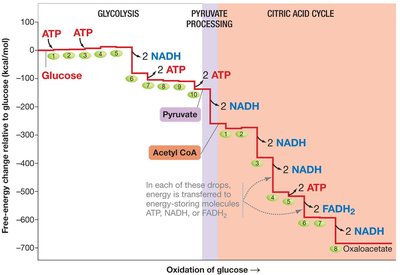
Energy is released gradually during cellular respiration, allowing cells to efficiently capture it in ATP, NADH, and FADH2. The largest free energy changes occur during specific steps in glycolysis, pyruvate processing, and the citric acid cycle.
Each step transfers energy to ATP, NADH, or FADH2.
Complete oxidation of glucose yields CO2, ATP, NADH, and FADH2.
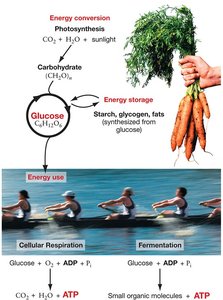
Glucose Oxidation: Cellular Respiration vs. Fermentation
Comparison of Pathways
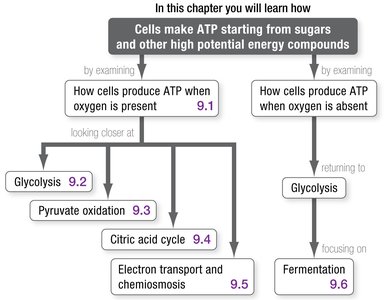
Cells can oxidize glucose via cellular respiration or fermentation, depending on oxygen availability. Cellular respiration is more efficient, fully oxidizing glucose and producing more ATP, while fermentation is less efficient and produces reduced organic molecules as waste.
Cellular respiration: Glucose + O2 → CO2 + H2O + ATP
Fermentation: Glucose → small organic molecules + ATP
Fermentation regenerates NAD+ to allow glycolysis to continue in the absence of oxygen.
Catabolic Pathways: Breakdown of Nutrients
Substrate Utilization
Cells utilize carbohydrates, fats, and proteins for ATP production. Each nutrient is broken down into intermediates that enter cellular respiration at different points.
Carbohydrates: Broken down to glucose, which enters glycolysis.
Fats: Triglycerides are split into glycerol (enters glycolysis) and fatty acids (converted to acetyl CoA).
Proteins: Broken down to amino acids; amino groups are removed (deamination), and carbon skeletons enter glycolysis or the citric acid cycle.
Regulation of Cellular Respiration
Enzyme Regulation
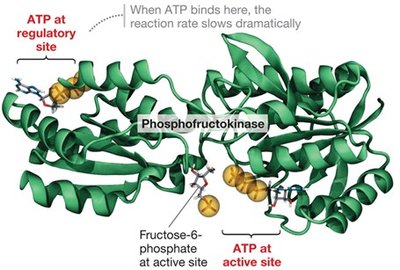
Cellular respiration is tightly regulated to maintain energy balance. Key enzymes such as phosphofructokinase are subject to feedback inhibition by ATP, ensuring that glycolysis proceeds only when energy is needed.
Phosphofructokinase: Inhibited by high ATP levels; ATP binds to a regulatory site, slowing the reaction rate.
Low ATP levels allow ATP to bind to the active site, promoting glycolysis.
Fermentation Pathways
Lactic Acid and Alcohol Fermentation
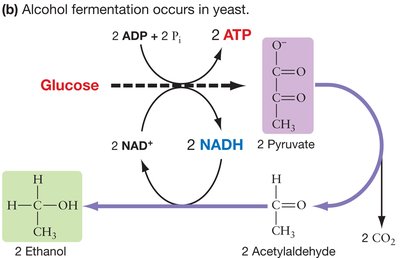
Fermentation allows cells to produce ATP in the absence of oxygen by regenerating NAD+. Two main types are lactic acid fermentation (in humans) and alcohol fermentation (in yeast).
Lactic acid fermentation: Pyruvate accepts electrons from NADH, forming lactate.
Alcohol fermentation: Pyruvate is converted to acetaldehyde, which accepts electrons from NADH, forming ethanol and CO2.

Processing Pyruvate to Acetyl CoA
Aerobic Pathway
In the presence of oxygen, pyruvate is transported into the mitochondrial matrix and converted to acetyl CoA by pyruvate dehydrogenase. This step produces NADH and CO2 and is regulated by feedback inhibition.
High levels of NADH, acetyl CoA, or ATP inhibit pyruvate dehydrogenase via phosphorylation.
The Citric Acid Cycle (Krebs Cycle)
Oxidation of Acetyl CoA
The citric acid cycle completes the oxidation of glucose, producing CO2, NADH, FADH2, and GTP (converted to ATP). The cycle turns twice for each glucose molecule.
Regulated by feedback inhibition: ATP and NADH slow the cycle, while scarcity speeds it up.
Intermediates are used for biosynthesis of amino acids and other macromolecules.
Electron Transport Chain and Chemiosmosis
ATP Production via Oxidative Phosphorylation
Electrons from NADH and FADH2 are transferred through protein complexes, creating a proton gradient across the mitochondrial membrane. ATP synthase uses this gradient to produce ATP.
Oxygen is the final electron acceptor, forming water.
Actual ATP yield per glucose is lower than theoretical due to other mitochondrial activities.
Uncoupling proteins in brown fat tissue dissipate the proton gradient as heat instead of ATP.
Summary Table: Cellular Respiration Steps
Step | Location | Reactants | Products | Energy Yield |
|---|---|---|---|---|
Glycolysis | Cytosol | Glucose, ATP, NAD+ | Pyruvate, ATP, NADH | 2 ATP, 2 NADH |
Pyruvate Processing | Mitochondrial matrix | Pyruvate, NAD+, CoA | Acetyl CoA, CO2, NADH | 2 NADH |
Citric Acid Cycle | Mitochondrial matrix | Acetyl CoA, NAD+, FAD, GDP | CO2, NADH, FADH2, GTP | 6 NADH, 2 FADH2, 2 GTP |
Electron Transport & Oxidative Phosphorylation | Inner mitochondrial membrane | NADH, FADH2, O2 | ATP, H2O | ~25 ATP |
Key Equations
Overall equation for aerobic cellular respiration:
ATP synthesis:
Conclusion
Cellular respiration is a highly regulated, interconnected process that enables cells to efficiently extract energy from nutrients and maintain metabolic balance. Understanding its steps, regulation, and integration with other metabolic pathways is essential for comprehending cellular energy production and homeostasis.
