Back
Cellular Respiration and Metabolic Pathways: Study Guide
Study Guide - Smart Notes
 Tailored notes based on your materials, expanded with key definitions, examples, and context.
Cellular Respiration
Overview of Metabolism
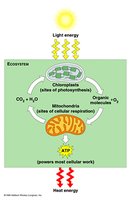
Metabolism encompasses all chemical reactions that occur within living organisms to maintain life. Cellular respiration is a central metabolic pathway that converts biochemical energy from nutrients into ATP, the energy currency of the cell, and releases waste products.
Key Point 1: Cellular respiration involves the breakdown of glucose and other molecules to produce ATP.
Key Point 2: The process is tightly regulated by hormones such as insulin and glucagon.
Key Point 3: Phosphorylation occurs via two mechanisms: substrate-level phosphorylation and oxidative phosphorylation.
Example: Glucose metabolism:
Glucose Metabolism
Major Fuel and Regulation
Glucose is the primary fuel for cellular respiration. Its metabolism is regulated by hormones and feedback mechanisms to ensure energy homeostasis.
Key Point 1: Insulin promotes glucose uptake and storage, while glucagon stimulates glucose release.
Key Point 2: Substrate-level phosphorylation directly transfers a phosphate group to ADP, forming ATP.
Key Point 3: Oxidative phosphorylation uses the electron transport chain to generate ATP.
How to Study Metabolism
Key Questions
To understand metabolic pathways, consider the following:
What substrates are used?
What products are formed?
Where does the process occur?
What is the net energy yield?
Glycolysis
Pathway and Products
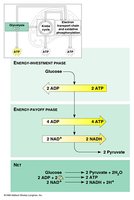
Glycolysis is the first step in cellular respiration, occurring in the cytosol. It consists of 10 enzymatic steps that convert glucose into pyruvate.
Key Point 1: Net products: 2 pyruvate, 2 ATP, and 2 NADH per glucose molecule.
Key Point 2: Glycolysis does not require oxygen (anaerobic).
Example:
TCA Cycle (Krebs Cycle)
Pathway and Products
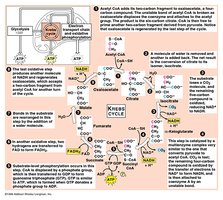
The Krebs cycle occurs in the mitochondrial matrix and is a series of 8 steps that further oxidize the products of glycolysis.
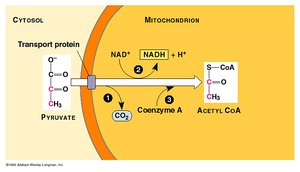
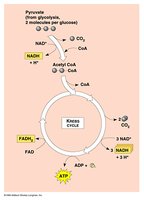
Key Point 1: Pyruvate is converted to Acetyl CoA, producing NADH and CO2.
Key Point 2: Acetyl CoA enters the cycle, yielding 2 CO2, 3 NADH, 1 FADH2, and 1 ATP per turn.
Example:
ATP Accounting
Energy Yield from Cellular Respiration
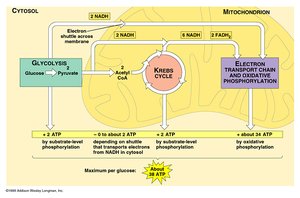
ATP is produced at various stages of cellular respiration. The total yield per glucose molecule is calculated by summing contributions from glycolysis, the intermediate step, and the Krebs cycle.
Key Point 1: Glycolysis: 2 ATP (substrate-level), 2 NADH
Key Point 2: Intermediate step: 2 NADH
Key Point 3: Krebs cycle: 2 ATP, 6 NADH, 2 FADH2
Key Point 4: Total ATP yield: 38 ATP per glucose (theoretical maximum)
Electron Transport Chain (ETC)
Mechanism and Function
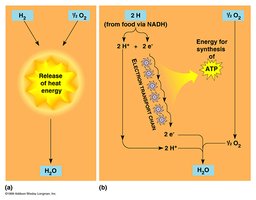
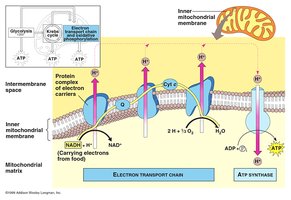
The ETC is located on the inner mitochondrial membrane and consists of four respiratory complexes. It receives electrons from NADH and FADH2, transferring them to oxygen, the final electron acceptor.
Key Point 1: ETC is coupled to oxidative phosphorylation, generating ATP.
Key Point 2: The process liberates protons, creating a gradient used by ATP synthase.
Key Point 3: Oxygen is essential as the final electron acceptor.
Oxidative Phosphorylation
ATP Production
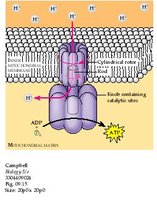
Oxidative phosphorylation is the process by which ATP is synthesized using the energy from the proton gradient generated by the ETC.
Key Point 1: Occurs on the inner mitochondrial membrane.
Key Point 2: ATP synthase uses the proton gradient to convert ADP to ATP.
Key Point 3: Coupled to electron transport for efficient energy conversion.
Fermentation
Anaerobic Pathways
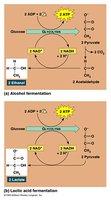
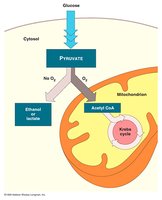
Fermentation is an anaerobic extension of glycolysis, allowing cells to generate ATP without oxygen. It occurs via substrate-level phosphorylation.
Key Point 1: Two main types: alcohol fermentation and lactic acid fermentation.
Key Point 2: Regenerates NAD+ for glycolysis.
Example: Alcohol fermentation: Lactic acid fermentation:
Alternative Energy Sources
Fat, Protein, and Nucleic Acids
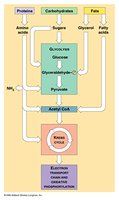
Cells can utilize alternative energy sources when glucose is scarce. Fats undergo beta oxidation to produce Acetyl CoA, proteins are broken down into amino acids that enter various points in the respiratory cycle, and nucleic acids are rarely used.
Key Point 1: Fatty acids are converted to Acetyl CoA via beta oxidation.
Key Point 2: Amino acids feed into glycolysis or the Krebs cycle.
Key Point 3: Nucleic acids are not a significant energy source.
Regulation of Respiration
Allosteric Regulation and Feedback
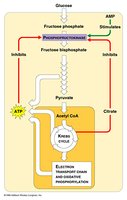
Cellular respiration is regulated by allosteric enzymes and negative feedback mechanisms. Phosphofructokinase is a key regulatory enzyme in glycolysis, inhibited by ATP and citrate, and activated by AMP.
Key Point 1: Allosteric regulation ensures efficient energy production.
Key Point 2: Negative feedback prevents overproduction of ATP.
Key Point 3: Phosphofructokinase is a central control point.