 Back
Cellular Respiration and Metabolic Pathways: Study Notes
Study Guide - Smart Notes
 Tailored notes based on your materials, expanded with key definitions, examples, and context.
Cellular Respiration and Metabolism
Overview of Cellular Respiration
Cellular respiration is a fundamental biological process by which cells extract energy from organic molecules, primarily glucose, to produce ATP, the cell's energy currency. This process involves a series of metabolic pathways that occur in different cellular compartments and is essential for sustaining life.
Catabolism and Anabolism: Catabolic pathways break down molecules to release energy, while anabolic pathways build molecules using energy.
ATP Production: ATP is generated through substrate-level phosphorylation and oxidative phosphorylation.
Key Pathways: Glycolysis, Pyruvate Oxidation, Citric Acid Cycle, and Oxidative Phosphorylation.
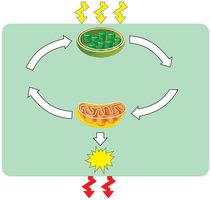
ATP: The Energy Currency
ATP (adenosine triphosphate) is the molecule that powers most cellular work. It is produced during cellular respiration and consumed during cellular activities.
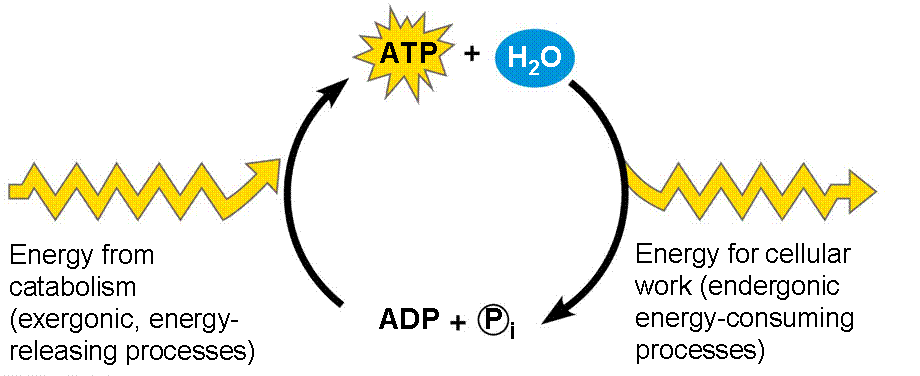
ATP Cycle: Energy from catabolic reactions is used to phosphorylate ADP to ATP. ATP hydrolysis releases energy for cellular work.
Equation:
Redox Reactions in Cellular Respiration
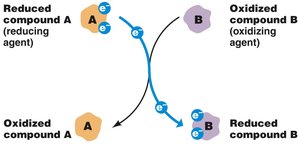
Cellular respiration involves oxidation-reduction (redox) reactions, where electrons are transferred from one molecule to another.
Oxidation: Loss of electrons from a molecule.
Reduction: Gain of electrons by a molecule.
Glucose Oxidation: Glucose is oxidized, and oxygen is reduced to form carbon dioxide and water.
Equation:

Stepwise Energy Release
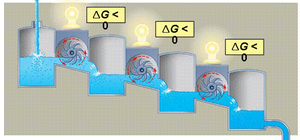
Cellular respiration releases energy in a stepwise manner, preventing excessive heat and allowing efficient ATP production.
Pathway Compartmentalization: Different steps occur in the cytosol and mitochondria.
Free Energy Change: Each step has a negative free energy change (), making the process exergonic.
Major Pathways of Cellular Respiration
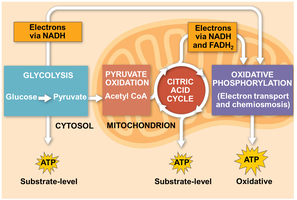
Cellular respiration consists of three main pathways: Glycolysis, Citric Acid Cycle, and Oxidative Phosphorylation.
Glycolysis: Occurs in the cytosol; breaks down glucose into pyruvate.
Pyruvate Oxidation: Converts pyruvate to Acetyl CoA in mitochondria.
Citric Acid Cycle: Completes the breakdown of glucose; produces NADH and FADH2.
Oxidative Phosphorylation: Uses electron transport chain and chemiosmosis to generate most ATP.
Glycolysis
Summary of Glycolysis
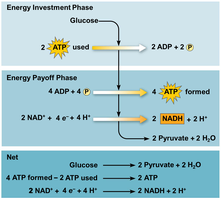
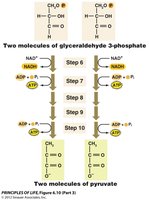
Glycolysis is the first step in cellular respiration, occurring in the cytosol. It converts one molecule of glucose into two molecules of pyruvate, producing ATP and NADH.
Energy Investment Phase: 2 ATP are used to phosphorylate glucose.
Energy Payoff Phase: 4 ATP and 2 NADH are produced.
Net Yield: 2 ATP, 2 NADH, 2 pyruvate per glucose.
Key Steps in Glycolysis
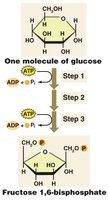
Glycolysis consists of ten steps, each catalyzed by a specific enzyme. The third step, catalyzed by phosphofructokinase (PFK), is the committed and irreversible step, regulated by ATP levels.
Step 1-3: Glucose is phosphorylated to fructose 1,6-bisphosphate.
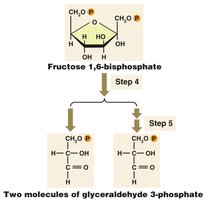
Step 4-5: Fructose 1,6-bisphosphate is split into two molecules of glyceraldehyde 3-phosphate.
Step 6-10: Glyceraldehyde 3-phosphate is converted to pyruvate, producing ATP and NADH.
Pyruvate Oxidation
Conversion of Pyruvate to Acetyl CoA
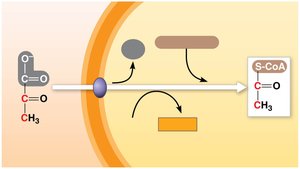
After glycolysis, pyruvate is transported into the mitochondrion and oxidized to Acetyl CoA. This step links glycolysis to the citric acid cycle.
Location: Mitochondrial matrix.
Products: Acetyl CoA, NADH, and CO2.
Transport: Pyruvate crosses the mitochondrial membrane via a transport protein.
Citric Acid Cycle (Krebs Cycle)
Overview of the Citric Acid Cycle
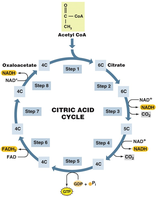
The citric acid cycle completes the oxidation of glucose, generating high-energy electron carriers NADH and FADH2, as well as ATP (or GTP).
Location: Mitochondrial matrix.
Steps: Eight enzyme-catalyzed reactions.
Yield per glucose: 6 NADH, 2 FADH2, 2 ATP (or GTP), and CO2.
Regulation: NADH inhibits several enzymes; oxaloacetate is regenerated in the last step.
Oxidative Phosphorylation
Electron Transport Chain and Chemiosmosis
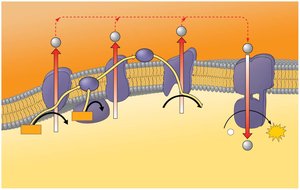
Oxidative phosphorylation is the final stage of cellular respiration, where most ATP is produced. It involves the electron transport chain (ETC) and chemiosmosis.
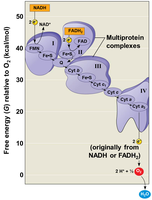
Electron Transport Chain: Electrons from NADH and FADH2 are transferred through protein complexes, releasing energy to pump protons across the mitochondrial membrane.
Chemiosmosis: The proton gradient drives ATP synthesis via ATP synthase.
Oxygen: Acts as the terminal electron acceptor, forming water.
Fermentation
Fermentation Pathways
When oxygen is unavailable, cells undergo fermentation to regenerate NAD+ and allow glycolysis to continue.
Lactic Acid Fermentation: Pyruvate is reduced to lactate, regenerating NAD+.
Alcohol Fermentation: Pyruvate is converted to ethanol and CO2, regenerating NAD+.
Purpose: Maintain ATP production in anaerobic conditions.
Metabolic Integration
Catabolism of Other Molecules
Besides glucose, cells can metabolize proteins and fats for energy.
Proteins: Broken down into amino acids, which enter glycolysis or the citric acid cycle.
Fats: Glycerol enters glycolysis; fatty acids are converted to Acetyl CoA via beta-oxidation.
Carbohydrates: Enter glycolysis as sugars.
Regulation of Cellular Respiration
Regulatory Mechanisms
Cellular respiration is tightly regulated to meet the cell's energy needs.
Phosphofructokinase: Key regulatory enzyme in glycolysis; inhibited by ATP and citrate, stimulated by AMP.
Feedback Inhibition: High levels of ATP inhibit glycolysis and the citric acid cycle.
Regulator | Effect on Glycolysis |
|---|---|
ATP | Inhibits |
AMP | Stimulates |
Citrate | Inhibits |
Example: When cellular ATP levels are high, glycolysis slows down; when ATP is low, glycolysis speeds up. Additional info: These notes cover the core concepts of cellular respiration, including glycolysis, pyruvate oxidation, citric acid cycle, oxidative phosphorylation, fermentation, metabolic integration, and regulation, as outlined in General Biology college courses.
