 Back
BackCellular Respiration and Photosynthesis: Core Concepts and Laboratory Applications
Study Guide - Smart Notes
 Tailored notes based on your materials, expanded with key definitions, examples, and context.
Cellular Respiration
Overview of Cellular Respiration
Cellular respiration is a catabolic pathway that releases energy by breaking down complex molecules, such as glucose, into simpler molecules. This process is essential for the production of ATP, the energy currency of the cell.
General Equation:
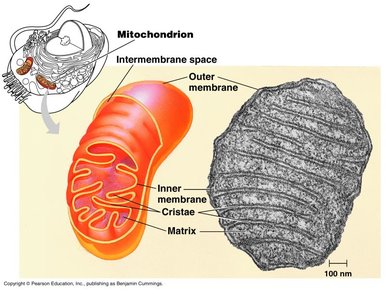
Location: Cellular respiration occurs in both the cytosol and mitochondria of eukaryotic cells.
Metabolic Steps of Cellular Respiration
1. Glycolysis
Glycolysis is the first step of cellular respiration and takes place in the cytosol. It involves the breakdown of one glucose molecule into two pyruvate molecules, producing a net gain of 2 ATP and 2 NADH.
Location: Cytosol
Products: 2 Pyruvate, 2 ATP, 2 NADH
2. Citric Acid Cycle (Krebs Cycle)
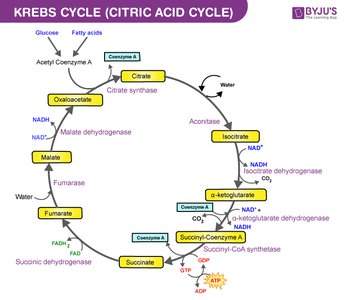
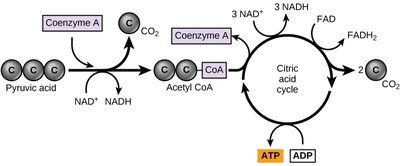
The citric acid cycle occurs in the mitochondrial matrix. It completes the oxidation of glucose derivatives, generating CO2, NADH, FADH2, and ATP.
Location: Mitochondrial matrix
Products per glucose: 6 CO2, 6 NADH, 2 FADH2, 2 ATP
3. Oxidative Phosphorylation
Oxidative phosphorylation occurs in the inner mitochondrial membrane and consists of the electron transport chain (ETC) and chemiosmosis. NADH and FADH2 donate electrons to the ETC, driving ATP synthesis.
Location: Inner mitochondrial membrane
Key Processes: Electron Transport Chain, Chemiosmosis
ATP Yield: Approximately 32 ATP per glucose molecule
Laboratory Investigation: Cellular Respiration in Beans
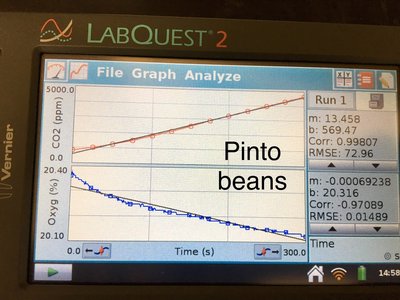
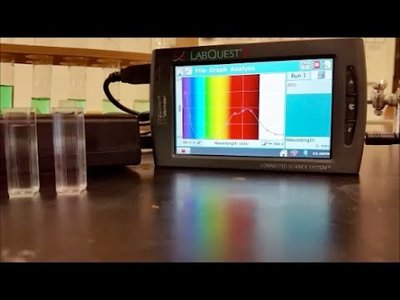
Cellular respiration can be observed experimentally by measuring CO2 production and O2 consumption in germinating beans. Sensors and data loggers (e.g., LabQuest) are used to monitor gas exchange.
CO2 Production: Indicates the rate of cellular respiration.
O2 Consumption: Reflects aerobic metabolic activity.
Photosynthesis
Overview of Photosynthesis
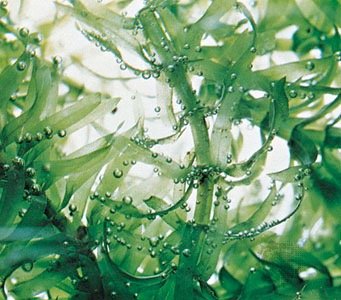
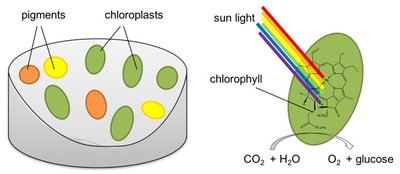
Photosynthesis is an anabolic pathway in which light energy is converted into chemical energy, producing glucose and oxygen from carbon dioxide and water. This process is fundamental for life on Earth, as it provides energy and organic molecules for most organisms.
General Equation:
Location: Chloroplasts in plant cells
Stages of Photosynthesis
1. Light Reactions
Light reactions occur in the thylakoid membranes of the chloroplast. They capture light energy to produce ATP and NADPH, releasing O2 as a byproduct.
Inputs: H2O, light energy, NADP+, ADP
Outputs: O2, ATP, NADPH
2. Calvin Cycle (Light-Independent Reactions)
The Calvin cycle occurs in the stroma of the chloroplast and uses ATP and NADPH to fix CO2 into glucose.
Inputs: CO2, ATP, NADPH
Outputs: Glucose, ADP, NADP+
Photosynthetic Pigments
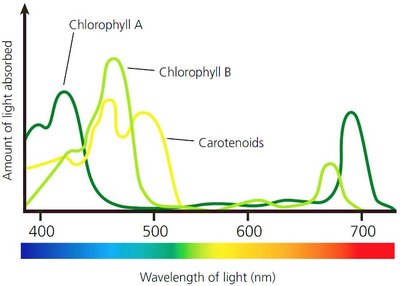
Photosynthetic pigments absorb specific wavelengths of light, enabling the capture of solar energy. The main pigment is chlorophyll a, with accessory pigments such as chlorophyll b and carotenoids broadening the spectrum of light absorption.
Chlorophyll a: Primary pigment, absorbs mainly blue-violet and red light.
Chlorophyll b: Accessory pigment, absorbs blue and orange light.
Carotenoids: Accessory pigments, absorb blue-green light and protect against photo-damage.
Visible Light Spectrum and Pigment Absorption
The visible light spectrum ranges from approximately 400 nm (violet) to 700 nm (red). Pigments absorb light at specific wavelengths, which is critical for efficient photosynthesis.
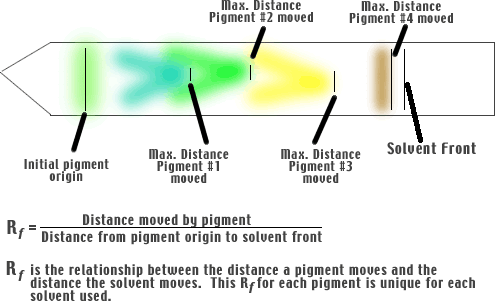
Laboratory Investigation: Photosynthetic Pigments
Two common laboratory techniques for studying photosynthetic pigments are absorption spectroscopy and chromatography.
Absorption Spectrum: Measures the wavelengths of light absorbed by pigments extracted from plant tissues (e.g., spinach, carrots).
Chromatography: Separates pigments based on their solubility and affinity for the solvent, allowing visualization of different pigments present in a sample.


Table: Comparison of Cellular Respiration and Photosynthesis
Feature | Cellular Respiration | Photosynthesis |
|---|---|---|
Type of Pathway | Catabolic | Anabolic |
Location | Cytosol & Mitochondria | Chloroplasts |
General Equation | ||
Main Purpose | ATP Production | Glucose Synthesis |
Key Organelles | Mitochondria | Chloroplasts |
Summary
Cellular respiration and photosynthesis are complementary processes essential for energy flow in living systems.
Laboratory experiments allow direct observation of gas exchange and pigment properties, reinforcing theoretical concepts.
