 Back
Cellular Respiration: Carbohydrate Oxidation and Energy Production
Study Guide - Smart Notes
 Tailored notes based on your materials, expanded with key definitions, examples, and context.
Cellular Respiration Overview
Introduction to Cellular Respiration
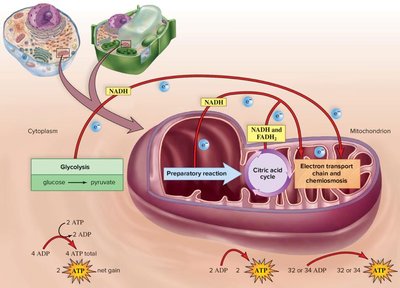
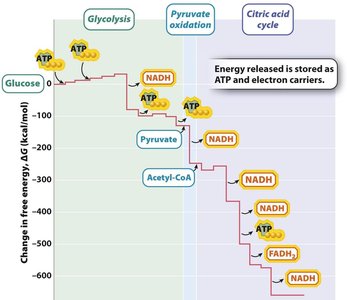
Cellular respiration is a fundamental metabolic pathway in which cells convert biochemical energy from nutrients into adenosine triphosphate (ATP), the energy currency of the cell. This process involves the oxidation of glucose and other organic molecules, resulting in the release of carbon dioxide and water. - Cellular respiration occurs in three main stages: glycolysis, pyruvate oxidation, and the citric acid cycle. - ATP is produced through substrate-level phosphorylation and oxidative phosphorylation. - NADH and FADH2 are electron carriers that transport high-energy electrons to the electron transport chain. 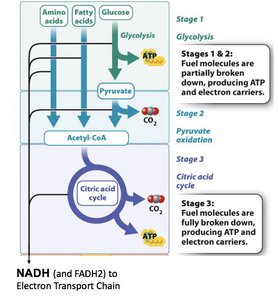
Metabolic Pathways: Glycolysis, Pyruvate Oxidation, and Citric Acid Cycle
Glycolysis
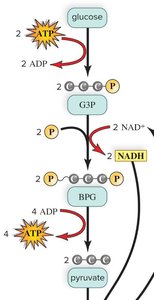
Glycolysis is the first stage of cellular respiration, occurring in the cytoplasm. It breaks down one molecule of glucose (6C) into two molecules of pyruvate (3C), generating ATP and NADH. - Inputs: 1 glucose, 2 NAD+, 2 ATP, 4 ADP, 2 Pi - Outputs: 2 pyruvate, 2 NADH, 4 ATP (net gain: 2 ATP) - Substrate-level phosphorylation produces ATP directly from metabolic intermediates. 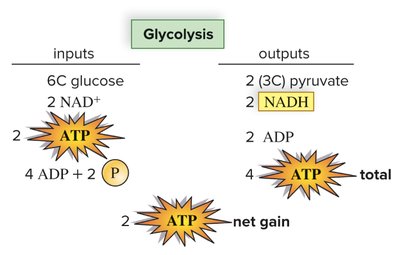
Pyruvate Oxidation
Pyruvate oxidation occurs in the mitochondrial matrix, where pyruvate is converted to acetyl-CoA, releasing CO2 and producing NADH. - Inputs: 2 pyruvate, 2 NAD+, 2 Coenzyme A - Outputs: 2 acetyl-CoA, 2 CO2, 2 NADH - Location: Mitochondrial matrix 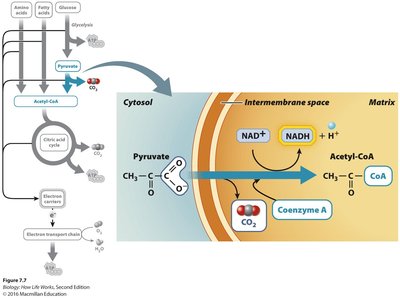
Citric Acid Cycle (Krebs Cycle)
The citric acid cycle completes the oxidation of glucose derivatives, producing CO2, NADH, FADH2, and ATP. - Inputs: 2 acetyl-CoA, 6 NAD+, 2 FAD, 2 ADP, 2 Pi - Outputs: 4 CO2, 6 NADH, 2 FADH2, 2 ATP - Location: Mitochondrial matrix
Electron Transport Chain and ATP Synthesis
Electron Transport Chain (ETC)
The ETC is the final stage of cellular respiration, where NADH and FADH2 donate electrons, leading to ATP production via oxidative phosphorylation. - Electron carriers (NADH, FADH2) transfer electrons to the ETC. - Oxygen acts as the final electron acceptor, forming water. - ATP yield: Most ATP is produced in this stage. 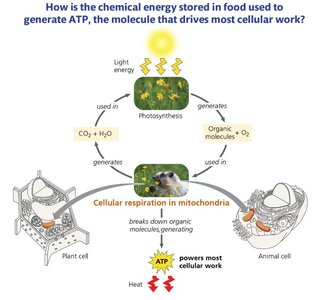
Redox Reactions in Cellular Respiration
Oxidation and Reduction
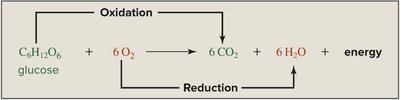
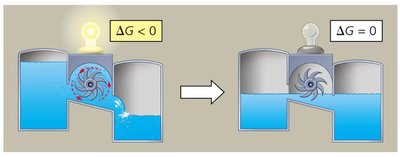
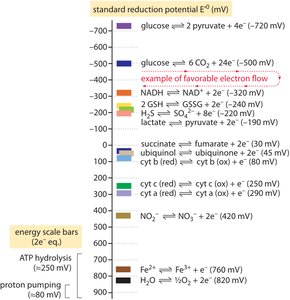
Redox reactions are central to cellular respiration, involving the transfer of electrons from one molecule to another. - Oxidation: Loss of electrons (e.g., glucose to CO2) - Reduction: Gain of electrons (e.g., O2 to H2O) - ΔG: Negative ΔG indicates energetically favorable reactions. 
Energy Flow and Metabolic Integration
Energy Conversion and Free Energy
Cellular respiration is a series of exergonic reactions, each releasing free energy that is harnessed for cellular work. - ΔG < 0: Indicates spontaneous, energy-releasing reactions. - Multistep pathway: Energy is released gradually, preventing loss as heat. 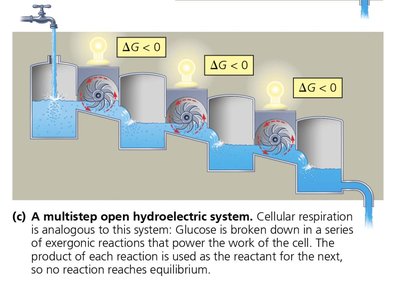
Electron Carriers: NAD+ and FAD
NAD+ and FAD Structure and Function
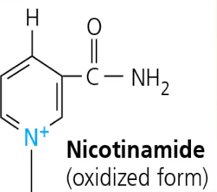
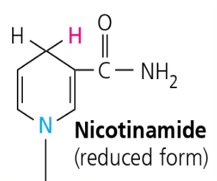
NAD+ and FAD are essential electron carriers, accepting electrons during metabolic reactions and becoming NADH and FADH2. - NAD+: Made from vitamin B3 (niacin) - FAD: Made from vitamin B2 (riboflavin) - Acetyl-CoA: Derived from vitamin B5 (pantothenic acid) 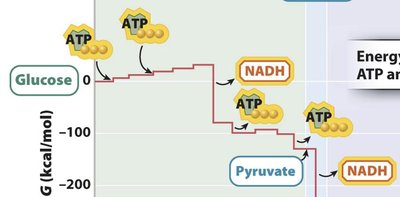
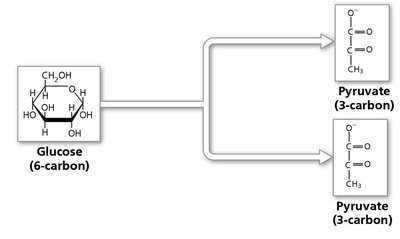
Summary Table: Cellular Respiration Pathways
Comparison of Glycolysis, Pyruvate Oxidation, and Citric Acid Cycle
Pathway | Location | Main Inputs | Main Outputs | ATP Yield |
|---|---|---|---|---|
Glycolysis | Cytoplasm | Glucose, NAD+, ATP | Pyruvate, NADH, ATP | 2 ATP (net) |
Pyruvate Oxidation | Mitochondrial Matrix | Pyruvate, NAD+, CoA | Acetyl-CoA, NADH, CO2 | 0 ATP |
Citric Acid Cycle | Mitochondrial Matrix | Acetyl-CoA, NAD+, FAD, ADP | CO2, NADH, FADH2, ATP | 2 ATP |
Photosynthesis and Cellular Respiration: Interconnected Cycles
Relationship Between Photosynthesis and Respiration
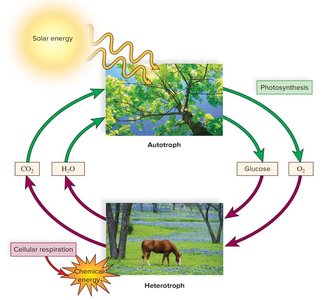
Photosynthesis and cellular respiration are interconnected processes that sustain life. Photosynthesis stores energy in glucose, while respiration releases it for cellular work. - Photosynthesis: Converts CO2 and H2O into glucose and O2 using light energy. - Cellular respiration: Breaks down glucose and O2 to produce CO2, H2O, and ATP. 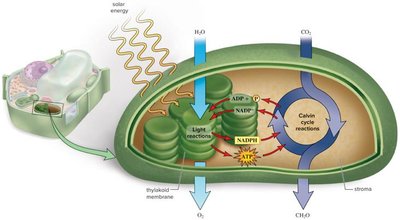
Key Equations
Overall Cellular Respiration Equation
The overall equation for cellular respiration is: 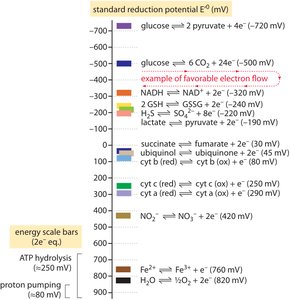
Additional info:
- The notes integrate content from General Biology chapters: Respiration, Energy and Metabolism, Biomolecules, Cell Components, and Photosynthesis. - Electron carriers (NADH, FADH2) are crucial for transferring electrons to the ETC, where most ATP is generated. - Substrate-level phosphorylation occurs in glycolysis and the citric acid cycle, while oxidative phosphorylation occurs in the ETC. - The redox tower illustrates the energetically favorable flow of electrons from high-energy donors to low-energy acceptors. ----------------------------------------
