 Back
BackCellular Respiration: Carbohydrate Oxidation and Energy Production
Study Guide - Smart Notes
 Tailored notes based on your materials, expanded with key definitions, examples, and context.
Carbohydrate Oxidation and Cellular Respiration
Overview of Cellular Respiration
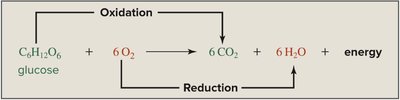
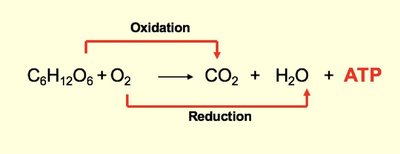
Cellular respiration is a fundamental metabolic pathway in biology, responsible for converting biochemical energy from nutrients into adenosine triphosphate (ATP), the energy currency of the cell. The process involves the oxidation of glucose and other fuel molecules, resulting in the production of carbon dioxide, water, and ATP.
Key Steps: Glycolysis, Pyruvate Oxidation, Citric Acid Cycle, Electron Transport Chain
Location: Begins in the cytoplasm (glycolysis), continues in the mitochondria (pyruvate oxidation, citric acid cycle, electron transport chain)
Overall Reaction:
Energy and Carbon Sources in Organisms
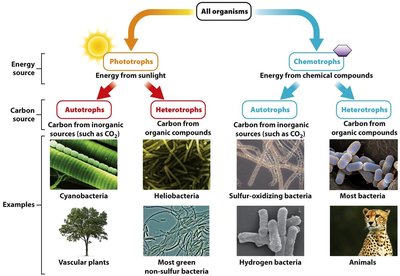
Organisms are classified based on their energy and carbon sources.
Phototrophs: Use sunlight as an energy source
Chemotrophs: Use chemical compounds as an energy source
Autotrophs: Obtain carbon from inorganic sources (e.g., CO2)
Heterotrophs: Obtain carbon from organic compounds
Stages of Cellular Respiration
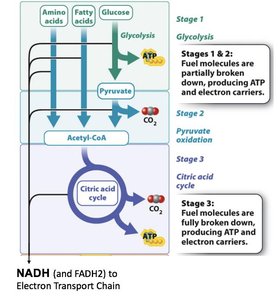
Cellular respiration occurs in three main stages, each contributing to the breakdown of fuel molecules and the production of ATP and electron carriers.
Stage 1: Glycolysis – Partial breakdown of glucose to pyruvate, producing ATP and NADH
Stage 2: Pyruvate Oxidation – Conversion of pyruvate to acetyl-CoA, producing CO2 and NADH
Stage 3: Citric Acid Cycle (Krebs Cycle) – Complete oxidation of acetyl-CoA, producing CO2, ATP, NADH, and FADH2
Glycolysis
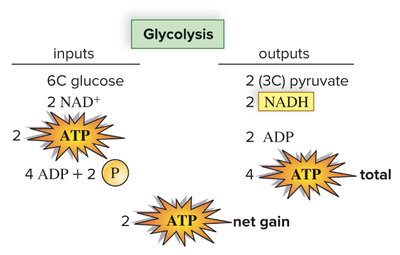
Glycolysis is the first step in cellular respiration, occurring in the cytoplasm. It breaks down one molecule of glucose (6C) into two molecules of pyruvate (3C), generating ATP and NADH.
Inputs: Glucose, NAD+, ADP, Pi
Outputs: Pyruvate, NADH, ATP
Net ATP Gain: 2 ATP per glucose
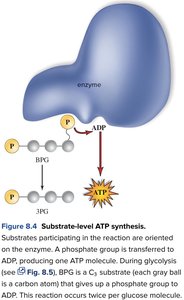
Substrate-Level Phosphorylation
Substrate-level phosphorylation is a mechanism of ATP production during glycolysis and the citric acid cycle. It involves the direct transfer of a phosphate group to ADP from a phosphorylated substrate.
Occurs: In glycolysis and citric acid cycle
Produces: A small fraction of total cellular ATP
Pyruvate Oxidation
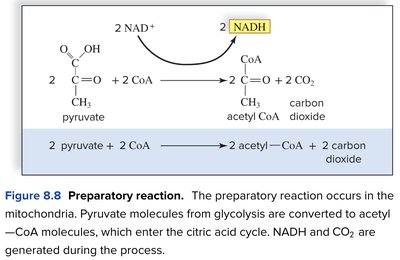
Pyruvate oxidation links glycolysis to the citric acid cycle. Pyruvate is transported into the mitochondria and converted to acetyl-CoA, producing NADH and CO2.
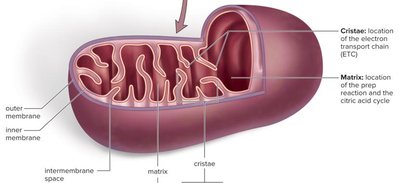
Location: Mitochondrial matrix
Inputs: Pyruvate, NAD+, CoA
Outputs: Acetyl-CoA, NADH, CO2
Citric Acid Cycle (Krebs Cycle)
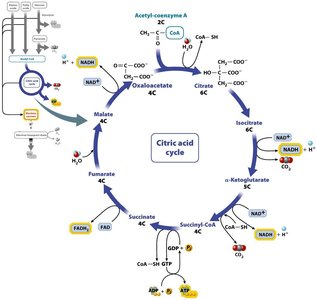
The citric acid cycle completes the oxidation of glucose derivatives, producing CO2, ATP, NADH, and FADH2. It occurs in the mitochondrial matrix and is a central hub for metabolic pathways.
Inputs: Acetyl-CoA, NAD+, FAD, ADP, Pi
Outputs: CO2, NADH, FADH2, ATP
Cycle: Starts and ends with oxaloacetate (4C)
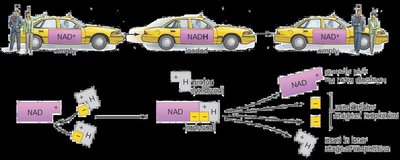
Electron Carriers: NADH and FADH2
NADH and FADH2 are reduced electron carriers generated during glycolysis, pyruvate oxidation, and the citric acid cycle. They transport high-energy electrons to the electron transport chain, where ATP is synthesized.
NAD+: Accepts electrons and is reduced to NADH
FAD: Accepts electrons and is reduced to FADH2
Role: Provide electrons for oxidative phosphorylation
ATP Yield from Cellular Respiration
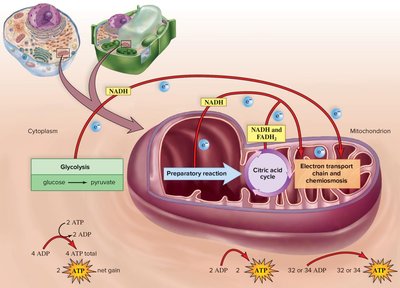
The majority of ATP is produced during oxidative phosphorylation, which utilizes the electron transport chain and chemiosmosis.
Glycolysis: 2 ATP (net gain)
Citric Acid Cycle: 2 ATP
Electron Transport Chain: 32–34 ATP
Total: 36–38 ATP per glucose molecule
Redox Reactions in Cellular Respiration
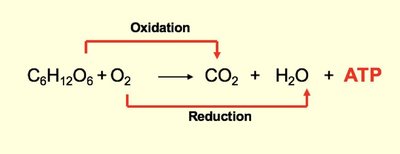
Cellular respiration involves a series of oxidation-reduction (redox) reactions.
Oxidation: Loss of electrons (e.g., glucose is oxidized to CO2)
Reduction: Gain of electrons (e.g., O2 is reduced to H2O)
Electron Flow: Electrons are transferred from fuel molecules to electron carriers, then to oxygen
Free Energy Changes During Cellular Respiration
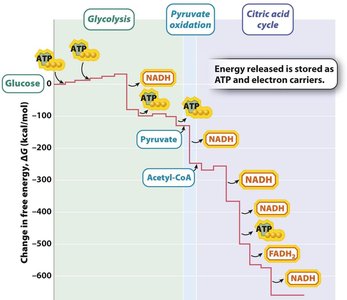
The breakdown of glucose is accompanied by a stepwise decrease in free energy, which is harnessed to produce ATP and electron carriers.
Energy Release: Each step releases energy, stored as ATP or NADH/FADH2
Importance: Efficient energy capture prevents loss as heat
Integration of Metabolic Pathways
Carbohydrate oxidation is interconnected with the metabolism of fats and proteins, all converging at acetyl-CoA and entering the citric acid cycle.
Polysaccharides, fats, proteins: Broken down to intermediates that feed into glycolysis or citric acid cycle
Acetyl-CoA: Central metabolic hub
Summary Table: Major Steps of Cellular Respiration
Step | Location | Main Inputs | Main Outputs |
|---|---|---|---|
Glycolysis | Cytoplasm | Glucose, NAD+, ADP | Pyruvate, NADH, ATP |
Pyruvate Oxidation | Mitochondrial Matrix | Pyruvate, NAD+, CoA | Acetyl-CoA, NADH, CO2 |
Citric Acid Cycle | Mitochondrial Matrix | Acetyl-CoA, NAD+, FAD, ADP | CO2, NADH, FADH2, ATP |
Electron Transport Chain | Inner Mitochondrial Membrane | NADH, FADH2, O2 | ATP, H2O |
Key Terms and Concepts
ATP (Adenosine Triphosphate): Main energy carrier in cells
NADH/FADH2: Electron carriers, reduced during metabolic reactions
Oxidation: Loss of electrons
Reduction: Gain of electrons
Substrate-level phosphorylation: Direct ATP synthesis from a substrate
Oxidative phosphorylation: ATP synthesis via electron transport chain
Example: Glucose Oxidation Equation
The overall equation for cellular respiration is:
Summary
Cellular respiration is a multi-step process that efficiently converts the energy stored in glucose and other macromolecules into ATP, using a series of redox reactions and metabolic pathways. The integration of glycolysis, pyruvate oxidation, citric acid cycle, and electron transport chain ensures maximal energy extraction and utilization in living cells.
