 Back
Cellular Respiration: Catabolic Pathways and ATP Production
Study Guide - Smart Notes
 Tailored notes based on your materials, expanded with key definitions, examples, and context.
Catabolic Pathways and Energy Production
Overview of Energy Flow in Ecosystems
Energy enters ecosystems as light and exits as heat, while essential chemical elements are recycled. Photosynthesis and cellular respiration are central to this process, converting energy and recycling matter.
Photosynthesis: Converts CO2 and H2O into organic molecules and O2.
Cellular Respiration: Uses O2 and organic molecules to produce ATP, releasing CO2 and H2O as waste.
Catabolic Pathways: Release stored energy by breaking down complex molecules, primarily through electron transfer.
Catabolic pathways are essential for cellular respiration, which includes both aerobic and anaerobic processes. The breakdown of organic molecules is exergonic, releasing energy used for cellular work.
Redox Reactions in Cellular Respiration
Oxidation and Reduction
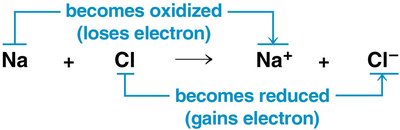
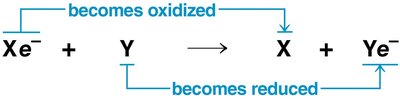
Redox reactions involve the transfer of electrons between molecules, releasing energy stored in organic compounds. These reactions are fundamental to cellular respiration.
Oxidation: Loss of electrons (often gain of oxygen or loss of hydrogen).
Reduction: Gain of electrons (often loss of oxygen or gain of hydrogen).
Oxidation and reduction always occur together. The electron donor is the reducing agent, and the electron acceptor is the oxidizing agent.
Redox in Cellular Respiration
During cellular respiration, glucose is oxidized and oxygen is reduced, releasing energy for ATP synthesis.
Organic molecules rich in hydrogen are excellent sources of high-energy electrons.
Energy is released as electrons and hydrogen are transferred to oxygen.

Stepwise Energy Harvest and Electron Carriers
NAD+ and the Electron Transport Chain
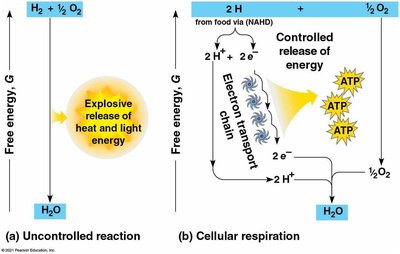
Glucose and other organic molecules are oxidized in a series of steps. Electrons are usually transferred first to electron carriers such as NAD+, forming NADH, which stores energy for later ATP synthesis.
Dehydrogenases: Enzymes that remove hydrogen atoms from substrates, transferring electrons to NAD+.
NADH represents stored energy used to synthesize ATP.

Electron Transport Chain (ETC)
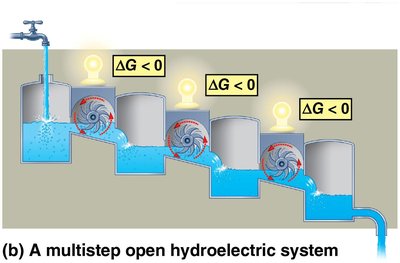
The ETC breaks the fall of electrons to O2 into several energy-releasing steps, allowing controlled energy harvest for ATP production.
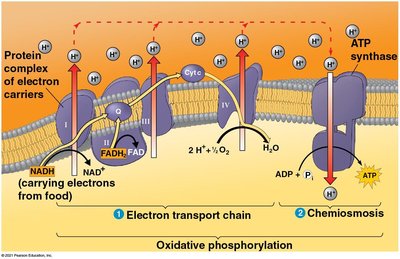
Located in the inner mitochondrial membrane (eukaryotes) or plasma membrane (prokaryotes).
Electrons are passed through a series of protein complexes, releasing energy in manageable amounts.
Stages of Cellular Respiration
Three Main Stages
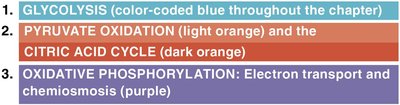
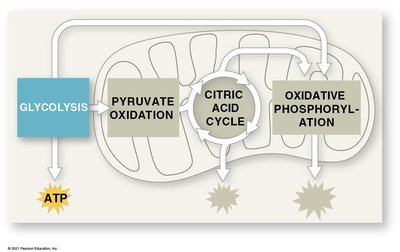
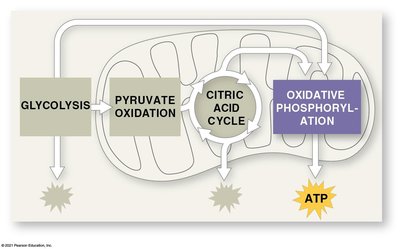
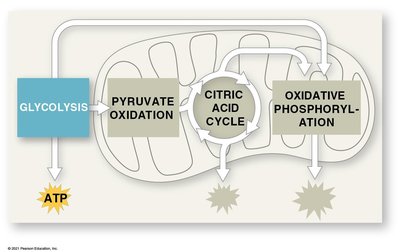
Cellular respiration occurs in three main stages:
Glycolysis: Breaks down glucose into two pyruvate molecules.
Pyruvate Oxidation and Citric Acid Cycle: Completes the breakdown of glucose to CO2.
Oxidative Phosphorylation: Electron transport and chemiosmosis produce most ATP.
ATP Production Mechanisms
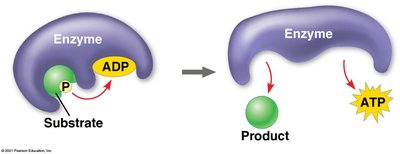
Substrate-level phosphorylation: Enzyme transfers a phosphate group directly to ADP from a substrate.
Oxidative phosphorylation: Accounts for most ATP production, powered by redox reactions in the ETC.
Glycolysis
Process and Phases
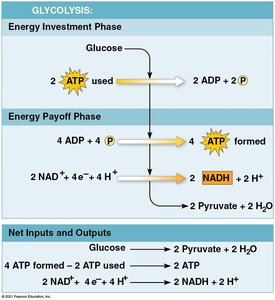
Glycolysis occurs in the cytoplasm and consists of two phases:
Energy Investment Phase: 2 ATP are used to split glucose into two three-carbon sugars.
Energy Payoff Phase: 4 ATP are produced, 2 NAD+ are reduced to NADH, and 2 pyruvate and 2 H2O are formed.
Net gain: 2 ATP and 2 NADH per glucose. Glycolysis does not require O2 and does not release CO2.
Pyruvate Oxidation and the Citric Acid Cycle
Pyruvate Oxidation
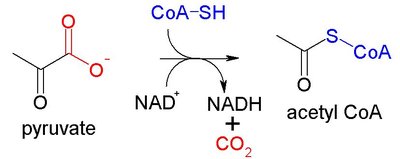
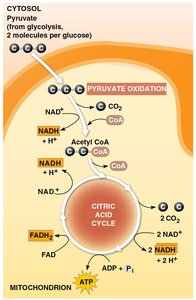
In the presence of O2, pyruvate enters the mitochondrion (eukaryotes) and is converted to acetyl CoA, which fuels the citric acid cycle.
Pyruvate dehydrogenase catalyzes three reactions: oxidation (releases CO2), reduction of NAD+ to NADH, and combination with coenzyme A.
The Citric Acid Cycle (Krebs Cycle)
The citric acid cycle completes the oxidation of organic fuel, generating ATP, NADH, and FADH2. Each cycle produces 1 ATP, 3 NADH, and 1 FADH2 per acetyl CoA, and releases 2 CO2.
Runs twice per glucose molecule (since each glucose yields 2 pyruvate).
Eight steps, each catalyzed by a specific enzyme.
Regenerates oxaloacetate, making the process cyclic.
Oxidative Phosphorylation and Chemiosmosis
Electron Transport Chain (ETC)
NADH and FADH2 donate electrons to the ETC, which is embedded in the inner mitochondrial membrane. Electrons pass through a series of protein complexes, releasing energy used to pump protons (H+) into the intermembrane space, creating a proton gradient.
ATP Synthesis by Chemiosmosis
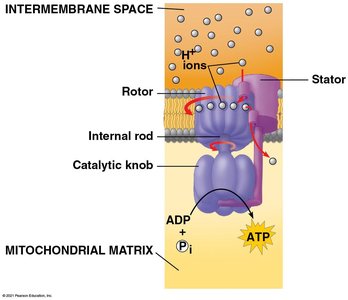
The proton gradient (proton motive force) drives protons back into the mitochondrial matrix through ATP synthase, which synthesizes ATP from ADP and inorganic phosphate.
O2 is the final electron acceptor, forming H2O.
Most ATP from glucose is produced by oxidative phosphorylation.
Anaerobic Respiration and Fermentation
ATP Production Without Oxygen
When O2 is absent, cells can use anaerobic respiration or fermentation to produce ATP. Anaerobic respiration uses an electron transport chain with a final electron acceptor other than oxygen (e.g., sulfate).
Fermentation allows glycolysis to continue by regenerating NAD+ from NADH.
Two main types: alcohol fermentation and lactic acid fermentation.
Comparison of Fermentation, Anaerobic, and Aerobic Respiration
Process | Final Electron Acceptor | ATP Yield (per glucose) |
|---|---|---|
Aerobic Respiration | O2 | ~30-32 |
Anaerobic Respiration | Other inorganic molecules (e.g., SO42-) | Varies, less than aerobic |
Fermentation | Organic molecule (e.g., pyruvate, acetaldehyde) | 2 |
Obligate anaerobes cannot survive in O2, while facultative anaerobes (e.g., yeast, many bacteria) can switch between fermentation and respiration.
Summary Table: ATP Yield from Cellular Respiration
Stage | ATP Produced |
|---|---|
Glycolysis | 2 |
Citric Acid Cycle | 2 |
Oxidative Phosphorylation | ~26-28 |
Total | ~30-32 |
Additional info: The exact ATP yield varies depending on the cell type and conditions, such as the efficiency of electron shuttles and the proton gradient.
