 Back
Cellular Respiration: Concepts and Mechanisms
Study Guide - Smart Notes
 Tailored notes based on your materials, expanded with key definitions, examples, and context.
Cellular Respiration: Concepts and Mechanisms
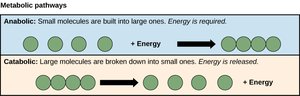
Catabolic Pathways and Energy Release
Catabolic pathways are essential metabolic routes that break down complex organic molecules into simpler ones, releasing energy that cells can use for work. These pathways are highly exergonic, meaning they result in a net release of free energy (ΔG < 0). Organic molecules possess potential chemical energy due to the arrangement of electrons in their covalent bonds.
Catabolic Pathways: Break down large molecules, releasing energy.
Exergonic Reactions: Reactions with ΔG < 0, releasing free energy.
Potential Energy: Stored in the arrangement of electrons in organic molecules.
Example: Glucose breakdown during cellular respiration.
Overview of Cellular Respiration
Cellular respiration is a series of metabolic processes that convert biochemical energy from nutrients into ATP, the energy currency of the cell. The overall reaction for aerobic cellular respiration is:
Glucose + Oxygen → Carbon Dioxide + Water + Energy (ATP)
Aerobic Respiration: Requires oxygen and yields much more ATP per glucose than fermentation.
Fermentation: Partial breakdown of glucose without oxygen, yielding less ATP.

Redox Reactions in Cellular Respiration
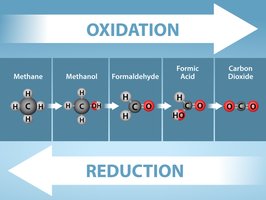
Cellular respiration involves a series of oxidation-reduction (redox) reactions, where electrons are transferred from one molecule to another. In biological systems, these transfers often involve hydrogen atoms.
Oxidation: Loss of electrons (or hydrogen), resulting in decreased potential energy.
Reduction: Gain of electrons (or hydrogen), resulting in increased potential energy.
OIL RIG: Oxidation Is Losing, Reduction Is Gaining.
Example: Glucose is oxidized to CO2, oxygen is reduced to H2O.
Electron Transfer and Energy Release
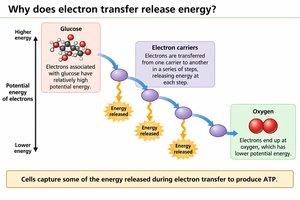
Electrons in organic fuels have high potential energy. As they are transferred to oxygen, which is highly electronegative, their potential energy decreases, releasing free energy that cells capture to produce ATP.
Electronegativity: Oxygen attracts electrons more strongly than carbon or hydrogen.
Energy Release: Electron transfer from glucose to oxygen is energetically favorable.
Electron Carriers: Molecules like NAD+ and NADH shuttle electrons between reactions.
NAD+/NADH: The Primary Electron Carrier
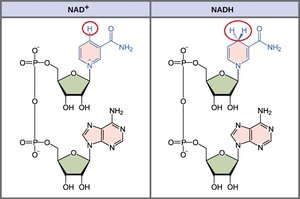
NAD+ (nicotinamide adenine dinucleotide) is a key electron carrier in cellular respiration. It cycles between oxidized (NAD+) and reduced (NADH) forms, facilitating electron transfer between metabolic reactions.
NAD+: Accepts electrons and becomes NADH.
NADH: Donates electrons to the electron transport chain.
Enzymes: Catalyze the transfer of electrons to and from NAD+/NADH.
Electron Transport Chain and Controlled Energy Release
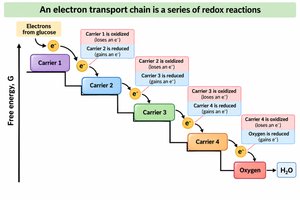
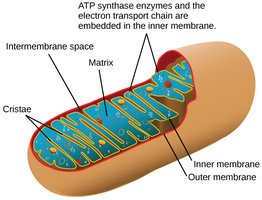
The electron transport chain (ETC) is a series of protein complexes embedded in the inner mitochondrial membrane. It transfers electrons from NADH and FADH2 to oxygen, releasing energy gradually and allowing cells to capture it efficiently for ATP synthesis.
ETC: Transfers electrons through a series of carriers, releasing energy stepwise.
Final Electron Acceptor: Oxygen, which combines with protons to form water.
ATP Production: Energy released is used to pump protons, creating a gradient for ATP synthesis.
Stages of Aerobic Cellular Respiration
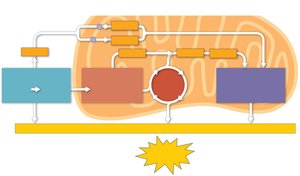
Aerobic cellular respiration consists of four major stages, each occurring in specific cellular locations:
Glycolysis: Occurs in the cytoplasm; breaks down glucose into pyruvate, producing ATP and NADH.
Pyruvate Oxidation: Converts pyruvate to acetyl-CoA, releasing CO2 and generating NADH.
Citric Acid Cycle (Krebs Cycle): Completes glucose oxidation, releases CO2, and transfers electrons to NADH and FADH2.
Oxidative Phosphorylation (OXPHOS): Electron transport and chemiosmosis produce most ATP.
ATP Production Mechanisms
ATP is produced by two mechanisms during cellular respiration:
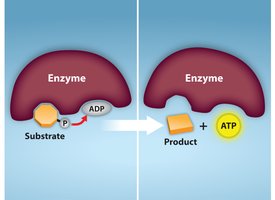
Substrate-Level Phosphorylation: Direct transfer of a phosphate group from a substrate to ADP by an enzyme.
Oxidative Phosphorylation: Uses energy from the electron transport chain and proton gradient to synthesize ATP.
Most ATP: Generated by oxidative phosphorylation (~90% of total ATP).
Summary Table: Key Steps and ATP Yield
Stage | Location | ATP Yield | Electron Carriers Produced |
|---|---|---|---|
Glycolysis | Cytoplasm | 2 ATP | 2 NADH |
Pyruvate Oxidation | Mitochondrial Matrix | 0 ATP | 2 NADH |
Citric Acid Cycle | Mitochondrial Matrix | 2 ATP | 6 NADH, 2 FADH2 |
Oxidative Phosphorylation | Inner Mitochondrial Membrane | 26-28 ATP | - |
Key Concepts Review Questions
What is a redox reaction? Explain oxidation and reduction in terms of electron transfer and describe how the transfer of hydrogen atoms can be used to track these processes in biological molecules.
Write the overall chemical equation for aerobic cellular respiration. Identify what is oxidized and what is reduced.
Where does the energy used to make ATP during cellular respiration come from? Explain how the cell releases this energy in a controlled way and describe the role of NAD+/NADH in the process.
What is the role of an electron transport chain in cellular respiration? Explain why transferring electrons through a series of carriers allows cells to capture energy more effectively than transferring them directly from glucose to oxygen.
What is an electron transport chain physically made of, and where is it located in a eukaryotic cell?
Important Equations
Aerobic Cellular Respiration:
Additional info: The electron transport chain is composed of protein complexes and electron carriers embedded in the inner mitochondrial membrane. The gradual transfer of electrons allows for efficient energy capture and ATP synthesis, preventing explosive energy release as seen in direct combustion reactions.
