 Back
Cellular Respiration, Fermentation, and Photosynthesis: Energy Harvesting in Cells
Study Guide - Smart Notes
 Tailored notes based on your materials, expanded with key definitions, examples, and context.
Cellular Respiration: Aerobic Harvesting of Energy
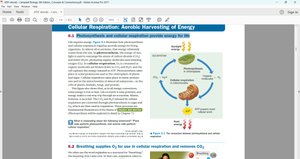
Photosynthesis and Cellular Respiration Provide Energy for Life
Photosynthesis and cellular respiration are fundamental biological processes that enable life by managing the flow of energy and matter. In photosynthesis, plants use sunlight to convert carbon dioxide (CO2) and water (H2O) into organic molecules and oxygen (O2). Cellular respiration, in contrast, is the process by which cells break down these organic molecules, consuming oxygen and releasing carbon dioxide and water, while capturing energy in the form of ATP.
Photosynthesis: Converts light energy into chemical energy stored in glucose.
Cellular Respiration: Releases energy from glucose, storing it in ATP for cellular work.
Plant Cells: Perform both photosynthesis and cellular respiration.
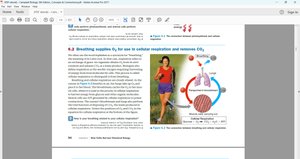
Breathing and Cellular Respiration
Breathing is the physical process of exchanging gases with the environment, supplying oxygen for cellular respiration and removing carbon dioxide. Cellular respiration is the aerobic (oxygen-requiring) process by which cells harvest energy from food molecules.
Breathing: Involves inhaling O2 and exhaling CO2.
Cellular Respiration: Uses O2 to extract energy from food, producing CO2 as a waste product.
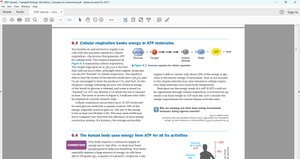
Cellular Respiration Stores Energy in ATP Molecules
Cellular respiration is an exergonic process, meaning it releases energy. The chemical energy stored in glucose is released, with about 34% captured in ATP and the rest lost as heat. Each glucose molecule can yield up to 32 ATP molecules, which are essential for cellular activities.
ATP (Adenosine Triphosphate): The main energy currency of the cell.
Energy Efficiency: About 34% of glucose's energy is stored in ATP; the rest is lost as heat.
ATP Regeneration: Cells must continually regenerate ATP to meet energy demands.
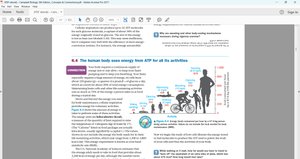
The Human Body Uses Energy from ATP for All Its Activities
The human body relies on ATP to power all activities, from basic cellular maintenance to voluntary movement. The brain alone consumes about 120 grams of glucose daily, accounting for 20% of total energy use. Most energy is used for life-sustaining activities, with the remainder supporting voluntary actions.
Energy Units: Kilocalories (kcal) measure energy; 1 kcal raises 1 kg of water by 1°C.
Energy Distribution: 75% for maintenance, 25% for voluntary activities.
Redox Reactions and Electron Carriers in Cellular Respiration
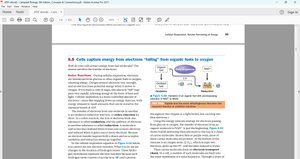
Cells Capture Energy from Electrons 'Falling' from Organic Fuels to Oxygen
During cellular respiration, electrons are transferred from glucose to oxygen in a series of oxidation-reduction (redox) reactions. Oxidation is the loss of electrons, while reduction is the gain of electrons. This transfer releases energy that is used to synthesize ATP.
Redox Reaction: Oxidation = electron loss; Reduction = electron gain ("OiL RiG").
Electron Transfer: Hydrogen atoms (each with one electron and one proton) are key in these transfers.
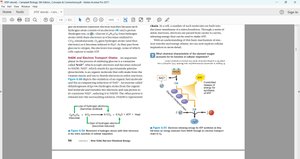
NAD+ and NADH Move Electrons to Make ATP
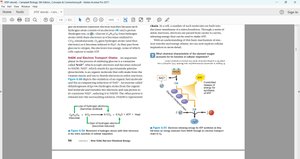
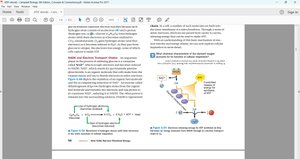
NAD+ (nicotinamide adenine dinucleotide) is a coenzyme derived from niacin (vitamin B3) that acts as an electron carrier. It is reduced to NADH when it accepts electrons and is oxidized back to NAD+ when it donates them. NADH carries electrons to the electron transport chain, facilitating ATP production.
NAD+: Electron acceptor; reduced to NADH.
NADH: Electron donor; oxidized to NAD+.
Electron Transport Chain and ATP Synthesis
Electrons from NADH and FADH2 are passed down the electron transport chain, a series of protein complexes in the mitochondrial membrane. This process releases energy used to pump protons and generate ATP through oxidative phosphorylation.
Electron Transport Chain: Series of redox reactions that transfer electrons to oxygen.
ATP Production: Energy from electron transfer is used to synthesize ATP.
Stages of Cellular Respiration
Cellular Respiration Occurs in Three Main Stages
Cellular respiration consists of three main stages: glycolysis, the citric acid cycle, and oxidative phosphorylation. Each stage plays a specific role in breaking down glucose and capturing energy in ATP.
Glycolysis: Occurs in the cytosol; splits glucose into two pyruvate molecules, producing 2 ATP and 2 NADH.
Pyruvate Oxidation: Converts pyruvate to acetyl CoA, producing NADH.
Citric Acid Cycle: Completes the breakdown of glucose, generating ATP, NADH, and FADH2.
Oxidative Phosphorylation: Produces the majority of ATP using the electron transport chain and chemiosmosis.
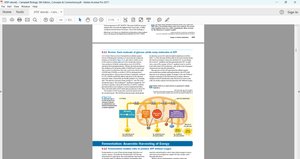
Glycolysis (Takes Place in Cytosol)
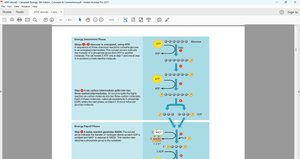
Glycolysis is the first stage of cellular respiration, occurring in the cytosol. It involves the oxidation of one six-carbon glucose molecule into two three-carbon molecules of glyceraldehyde 3-phosphate (G3P), which are further processed to yield pyruvate, ATP, and NADH.
Reactant: Glucose (6C)
Products: 2 Pyruvate (3C each), 2 ATP, 2 NADH
Location: Cytosol
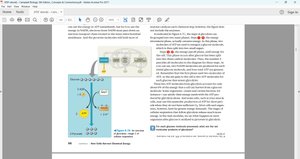
Pyruvate Oxidation and the Citric Acid Cycle
After glycolysis, pyruvate is transported into the mitochondrion, where it is oxidized to acetyl CoA. Acetyl CoA enters the citric acid cycle, which completes the oxidation of organic molecules and generates NADH and FADH2 for use in oxidative phosphorylation.
Pyruvate Oxidation: Pyruvate (3C) → Acetyl CoA (2C) + CO2 + NADH
Citric Acid Cycle: Acetyl CoA enters the cycle, producing ATP, NADH, FADH2, and CO2.
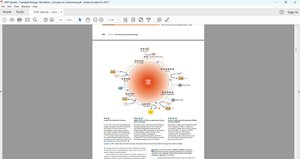
Oxidative Phosphorylation
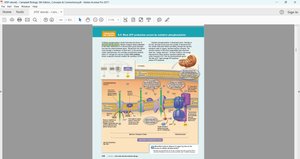
Oxidative phosphorylation is the final stage of cellular respiration, responsible for producing about 90% of the cell's ATP. It involves the electron transport chain and chemiosmosis, where the flow of protons through ATP synthase drives ATP synthesis.
Electron Transport Chain: Transfers electrons from NADH and FADH2 to oxygen.
Chemiosmosis: Uses the proton gradient to power ATP synthase.
ATP Yield: Up to 28 ATP per glucose molecule.
Fermentation: Anaerobic Harvesting of Energy
Fermentation Pathways
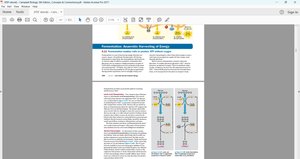
When oxygen is scarce, cells can produce ATP through fermentation. Glycolysis still occurs, but instead of entering the mitochondrion, pyruvate is converted into lactic acid or ethanol, depending on the organism. Fermentation yields only 2 ATP per glucose molecule.
Lactic Acid Fermentation: Occurs in human muscles and some microbes; produces lactic acid.
Alcohol Fermentation: Occurs in yeast; produces ethanol and CO2.
ATP Yield: 2 ATP per glucose (from glycolysis).
Connections Between Metabolic Pathways
Alternative Fuels for Cellular Respiration
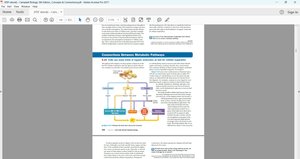
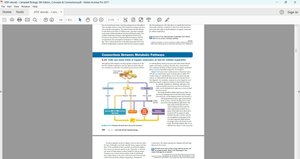
Cells can use carbohydrates, fats, and proteins as fuel for cellular respiration. Fats are hydrolyzed to glycerol and fatty acids, which enter glycolysis and the citric acid cycle. Proteins are broken down into amino acids, which can be converted into intermediates of glycolysis or the citric acid cycle.
Fats: Hydrolyzed to glycerol (enters glycolysis) and fatty acids (converted to acetyl CoA).
Proteins: Digested to amino acids; excess amino acids are converted to metabolic intermediates.
Regulation of Metabolic Pathways
Metabolic pathways are regulated by supply and demand. Feedback inhibition is a common mechanism, where the accumulation of an end product inhibits an early enzyme in the pathway. In cellular respiration, high ATP levels inhibit glycolysis, while low ATP (high ADP) activates it.
Feedback Inhibition: End product inhibits an early enzyme in the pathway.
ATP Regulation: High ATP inhibits glycolysis; high ADP stimulates it.
Summary Table: Stages of Cellular Respiration
Stage | Main Location | Key Inputs | Key Outputs | ATP Yield |
|---|---|---|---|---|
Glycolysis | Cytosol | Glucose, NAD+, ADP | Pyruvate, NADH, ATP | 2 |
Pyruvate Oxidation | Mitochondrial Matrix | Pyruvate, NAD+, CoA | Acetyl CoA, NADH, CO2 | 0 |
Citric Acid Cycle | Mitochondrial Matrix | Acetyl CoA, NAD+, FAD, ADP | CO2, NADH, FADH2, ATP | 2 |
Oxidative Phosphorylation | Inner Mitochondrial Membrane | NADH, FADH2, O2, ADP | ATP, H2O, NAD+, FAD | ~28 |
Key Equations
Overall Cellular Respiration Equation:
ATP Hydrolysis:
