 Back
Cellular Respiration, Genetic Code, and Evolutionary Processes: Study Notes for General Biology
Study Guide - Smart Notes
 Tailored notes based on your materials, expanded with key definitions, examples, and context.
Cellular Respiration and Alternatives
Cyclic Photophosphorylation
Cyclic photophosphorylation is an alternative pathway to the normal light reactions of photosynthesis. It allows plants to generate ATP without producing NADPH or oxygen.
Electron Flow: Electrons cycle back to chlorophyll after passing through the electron transport chain.
No Water Split: Water is not split, so no oxygen is released.
No NADPH Produced: Only ATP is generated.
Other Pathways: Photorespiration is another alternative pathway.
Cellular Respiration Overview
Cellular respiration is the process by which cells release energy stored in food molecules, primarily glucose. It is essentially the reverse of photosynthesis.
Equation for Cellular Respiration:
Opposite of Photosynthesis: Photosynthesis stores energy, cellular respiration releases it.
Occurs in All Cells: Both plants and animals perform cellular respiration.
Categories of Cellular Respiration
There are three main categories: aerobic, anaerobic, and fermentation.
Aerobic Respiration: Requires oxygen; produces the most ATP.
Anaerobic Respiration: Uses electron acceptors other than oxygen; common in prokaryotes.
Fermentation: Occurs when oxygen is unavailable; produces little ATP and end products like lactate or alcohol.
Stages of Aerobic Respiration
Aerobic respiration consists of three stages, each occurring in different parts of the cell.
Glycolysis: Occurs in the cytoplasm; glucose is split into two pyruvate molecules, yielding 2 ATP.
Krebs Cycle: Occurs in the mitochondria; pyruvate is converted to acetyl-CoA, then enters the cycle, producing CO2 and 2 ATP.
Electron Transport Chain & Chemiosmosis: Occurs in the mitochondria; electrons from NADH and FADH2 are transferred, oxygen is the final acceptor, and about 32 ATP are produced.
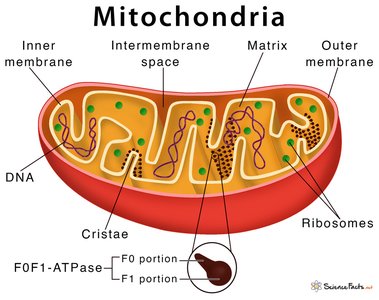
How ATP is Made:
Electrons are transferred to NAD+ and FAD, forming NADH and FADH2.
Electrons move down the electron transport chain, losing energy.
Energy is used to pump H+ ions, which flow back through ATP synthase, generating ATP.
Fermentation
Fermentation is a pathway used when oxygen is unavailable. It only involves glycolysis and produces 2 ATP per glucose.
End Products: Lactic acid in muscles, alcohol in yeast.
Limited ATP: Only 2 ATP per glucose.
Anaerobic Respiration
Anaerobic respiration uses final electron acceptors other than oxygen, common in prokaryotes.
Alternative Acceptors: Nitrate, sulfate, etc.
Not in Humans: Humans do not perform anaerobic respiration.
Metabolic Pathways
Metabolic pathways are controlled by enzymes, which are encoded by the organism's genetic code.
Enzymes: Proteins that catalyze metabolic reactions.
Genetic Code: Instructions for making enzymes are stored in DNA.
Genetic Code and Gene Expression
Genotype and DNA Structure
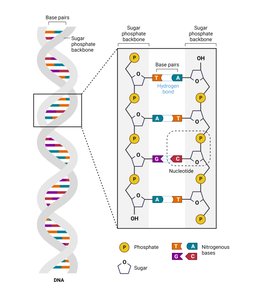
The genotype is the set of genetic instructions, often referring to specific traits. DNA contains these instructions in its structure.
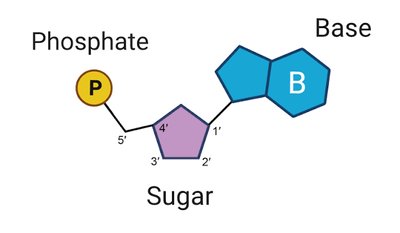
DNA: Double helix of nucleotides; each nucleotide has a phosphate, deoxyribose sugar, and a nitrogenous base (adenine, thymine, cytosine, guanine).
Genetic Code: Sequence of bases encodes information.
RNA Structure and Function
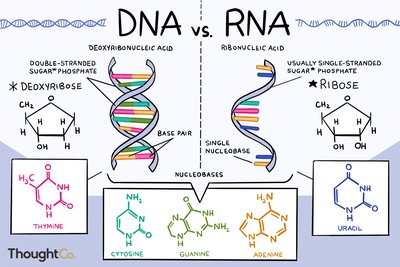
RNA carries temporary transcripts of genetic information to metabolic machinery. It differs from DNA in structure and function.
RNA Nucleotide: Contains ribose sugar and bases (adenine, uracil, cytosine, guanine).
Function: Messenger RNA (mRNA) carries genetic code from DNA to ribosomes for protein synthesis.
Genes, Alleles, and Gene Expression
A gene is a stretch of DNA coding for a functional product, often a protein. Alleles are different forms of a gene.
Gene: Codes for a specific trait or protein.
Allele: Variant form of a gene (e.g., blue vs. brown eye color).
Gene Expression: DNA is transcribed to RNA, then translated to protein.
Systematics and Evolution
Systematics
Systematics is the classification of organisms based on genetic similarity and evolutionary relationships.
Modern Systematics: Uses genetic data to infer relationships.
Evolution and Population Genetics
Evolution is the change in genetic composition of populations over time. It is driven by several mechanisms.
Population: Members of a species in a specific area.
Species: Organisms capable of interbreeding and producing fit offspring.
Genotype: Genetic instructions for metabolism and traits.
Phenotype: Observable traits, determined by genotype and environment.
Mechanisms of Evolution
Evolution is influenced by mutation, selection, drift, and migration.
Mutation: Random changes in DNA, creating new alleles and phenotypes.
Selection: Favors organisms with higher fitness; leads to adaptation.
Drift: Random changes in allele frequencies, especially in small populations.
Migration (Gene Flow): Movement of genes between populations via immigration and emigration.
Adaptation
Adaptation is a heritable change that enhances fitness. It is not the same as acclimation, and not all traits can adapt due to genetic constraints.
Selection: Often leads to adaptation, but only if genetic variation exists.
Summary Table: DNA vs. RNA
This table compares the structural and functional differences between DNA and RNA.
Feature | DNA | RNA |
|---|---|---|
Strands | Double-stranded | Single-stranded |
Sugar | Deoxyribose | Ribose |
Bases | A, T, C, G | A, U, C, G |
Function | Permanent genetic code | Temporary transcript, protein synthesis |
Additional info: DNA and RNA are central to gene expression and inheritance, and their differences are crucial for understanding molecular biology.
