 Back
BackCellular Respiration: How Cells Harvest Chemical Energy
Study Guide - Smart Notes
 Tailored notes based on your materials, expanded with key definitions, examples, and context.
How Cells Harvest Chemical Energy
Introduction to Cellular Respiration
Cellular respiration is a fundamental metabolic process in which cells break down sugar and other food molecules to generate ATP, the energy currency of the cell, and heat. Oxygen is a key reactant in this process. Some specialized cells, such as brown fat cells, can 'short circuit' cellular respiration to produce heat instead of ATP.
Photosynthesis and Cellular Respiration: Energy for Life
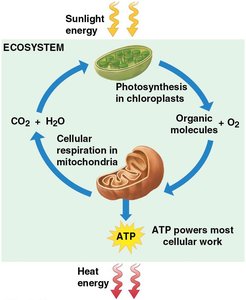
Energy flow in ecosystems is driven by photosynthesis and cellular respiration. Photosynthesis uses sunlight to convert carbon dioxide and water into organic molecules and oxygen. Cellular respiration consumes oxygen to break down these organic molecules, releasing carbon dioxide, water, and capturing energy as ATP.
Photosynthesis: Sunlight energy is used to synthesize organic molecules.
Cellular Respiration: Organic molecules are broken down, releasing energy as ATP.
Breathing and Cellular Respiration
Respiration refers to the exchange of gases: oxygen is obtained from the environment and carbon dioxide is released as a waste product. Breathing supplies oxygen for cellular respiration and removes carbon dioxide.
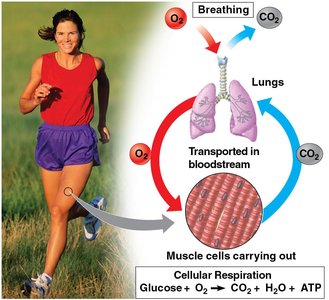
Cellular Respiration: Aerobic Harvesting of Energy
Cellular respiration is an exergonic process that transfers energy from glucose to ATP, capturing about 34% of the energy originally stored in glucose. The rest is lost as heat.

Energy Use in the Human Body
ATP produced by cellular respiration is used for body maintenance and voluntary activities. Maintaining a healthy weight requires balancing energy intake and expenditure.
Cells Capture Energy from Electrons
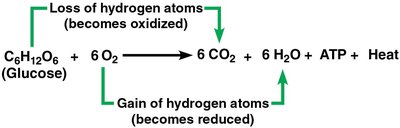
Cells extract energy from fuel molecules through the transfer of electrons. Electrons removed from fuel molecules (oxidation) are transferred to NAD+ (reduction), forming NADH. NADH passes electrons to the electron transport chain, releasing energy as electrons 'fall' to oxygen.
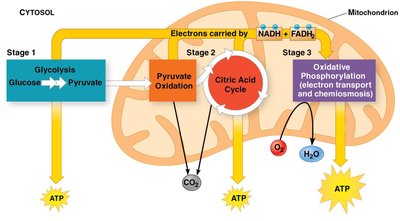
Overview: Stages of Cellular Respiration
Cellular respiration occurs in three main stages:
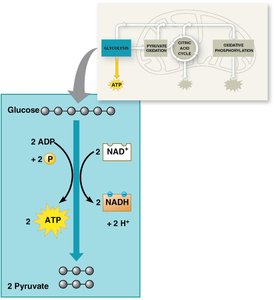
Glycolysis: Occurs in the cytosol, breaks down glucose into two molecules of pyruvate.
Pyruvate Oxidation and Citric Acid Cycle: Occur in mitochondria, complete the breakdown of glucose to carbon dioxide, and supply electrons for the next stage.
Oxidative Phosphorylation: Involves electron transport and chemiosmosis, produces most ATP.
Stage 1: Glycolysis
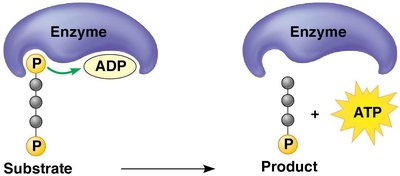
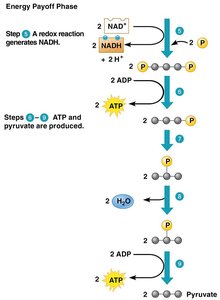
Glycolysis is the first stage of cellular respiration, occurring in the cytosol. ATP is used to prime glucose, which is split into two three-carbon intermediates and oxidized to pyruvate. The net products are 2 ATP and 2 NADH per glucose molecule. ATP is formed by substrate-level phosphorylation, where a phosphate group is transferred from an organic molecule to ADP.
Glycolysis: Energy Investment and Payoff Phases
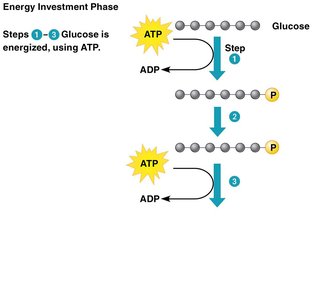
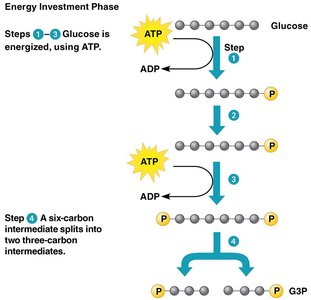
Glycolysis consists of two phases:
Energy Investment Phase: Two ATP are used to add phosphate groups to glucose, which is then split into two three-carbon sugars.
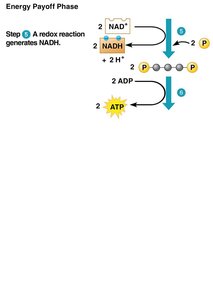
Energy Payoff Phase: Redox reactions generate NADH and ATP, and pyruvate is produced.
Stage 2: The Citric Acid Cycle
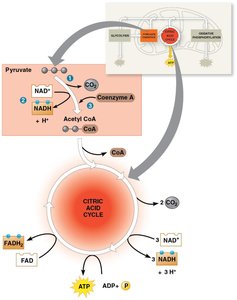
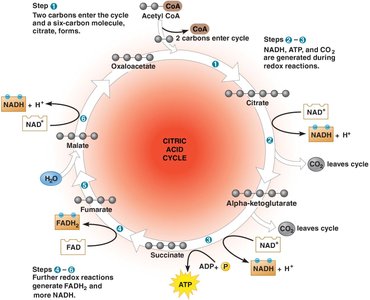
Pyruvate is oxidized to yield acetyl CoA, CO2, and NADH. The citric acid cycle completes the oxidation of organic molecules, producing CO2, NADH, FADH2, and ATP. For each turn of the cycle, two carbons from acetyl CoA are added, two CO2 are released, and three NADH and one FADH2 are produced.
Stage 3: Oxidative Phosphorylation
Most ATP production occurs by oxidative phosphorylation. Electrons from NADH and FADH2 are passed down the electron transport chain to oxygen, which forms water. Energy released by redox reactions is used to pump H+ into the intermembrane space. In chemiosmosis, the H+ gradient drives H+ back through ATP synthase, synthesizing ATP.
Brown Fat and Heat Production
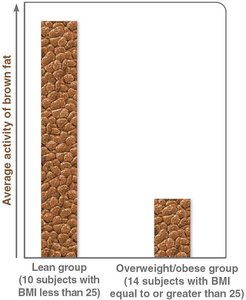
Mitochondria in brown fat can burn fuel and produce heat without making ATP. Ion channels allow H+ to flow freely, dissipating the H+ gradient and preventing ATP synthesis. All energy from fuel molecules is released as heat. Brown fat is more active in lean individuals and can be activated by cold.
ATP Yield from Glucose
Substrate-level phosphorylation and oxidative phosphorylation produce up to 32 ATP molecules for every glucose molecule oxidized in cellular respiration.
Fermentation: Anaerobic Harvesting of Energy
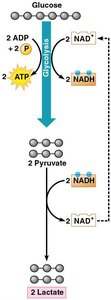
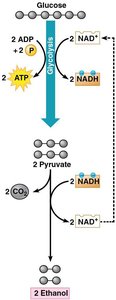
Fermentation enables cells to produce ATP without oxygen. Under anaerobic conditions, muscle cells, yeasts, and certain bacteria produce ATP by glycolysis. NAD+ is recycled from NADH as pyruvate is reduced to lactate (lactic acid fermentation) or alcohol and CO2 (alcohol fermentation).
Connections Between Metabolic Pathways
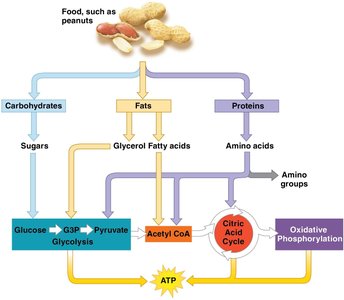
Cells use carbohydrates, fats, and proteins as fuel for cellular respiration. These molecules enter the metabolic pathway at different points, ultimately contributing to ATP production.
Biosynthesis and Regulation
Cells use intermediates from cellular respiration and ATP for biosynthesis of other organic molecules. Metabolic pathways are regulated by feedback inhibition to maintain homeostasis.
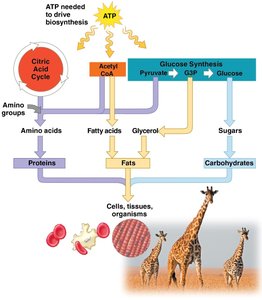
Table: Comparison of Aerobic Respiration and Fermentation
Process | Oxygen Required? | ATP Yield (per glucose) | End Products |
|---|---|---|---|
Aerobic Respiration | Yes | ~32 | CO2, H2O |
Lactic Acid Fermentation | No | 2 | Lactate |
Alcohol Fermentation | No | 2 | Ethanol, CO2 |
Key Terms and Definitions
ATP (Adenosine Triphosphate): The primary energy carrier in cells.
Glycolysis: The first stage of cellular respiration, breaking down glucose into pyruvate.
Citric Acid Cycle: A series of reactions that completes the breakdown of glucose.
Oxidative Phosphorylation: The process of ATP production using the electron transport chain and chemiosmosis.
Fermentation: Anaerobic process that allows ATP production without oxygen.
NADH/FADH2: Electron carriers involved in cellular respiration.
Important Equations
The overall equation for cellular respiration:
Substrate-level phosphorylation:
Oxidative phosphorylation:
Example: During intense exercise, muscle cells may switch to lactic acid fermentation, producing lactate and 2 ATP per glucose molecule.
Additional info: The notes include expanded explanations and context for each stage of cellular respiration, as well as the integration of metabolic pathways and biosynthesis, to ensure completeness and academic quality for exam preparation.
