 Back
BackCellular Respiration: Mechanisms and Bioenergetics
Study Guide - Smart Notes
 Tailored notes based on your materials, expanded with key definitions, examples, and context.
Cellular Respiration
Overview of Cellular Respiration
Cellular respiration is a series of metabolic processes by which cells harvest energy from organic molecules, primarily glucose, to produce ATP. This process involves multiple stages, each with specific substrates, products, and energy yields.
ATP (adenosine triphosphate) is the main energy currency of the cell.
Cellular respiration includes glycolysis, the citric acid cycle, and oxidative phosphorylation.
Redox reactions play a central role in energy transfer.
Redox Reactions: Oxidation and Reduction
Redox (reduction-oxidation) reactions involve the transfer of electrons between molecules. The molecule that loses electrons is oxidized, while the molecule that gains electrons is reduced.
Reducing agent: Electron donor (becomes oxidized)
Oxidizing agent: Electron acceptor (becomes reduced)

In cellular respiration, glucose is oxidized and oxygen is reduced:

Glucose (C6H12O6) is oxidized to CO2.
Oxygen (O2) is reduced to H2O.
Stages of Cellular Respiration
Major Stages and Locations
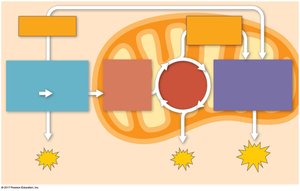
Cellular respiration occurs in three main stages, each localized in specific regions of the cell:
Glycolysis: Occurs in the cytosol; breaks down glucose into pyruvate.
Citric Acid Cycle (Krebs Cycle): Occurs in the mitochondrial matrix; completes the breakdown of glucose.
Oxidative Phosphorylation: Occurs in the inner mitochondrial membrane; produces most ATP via the electron transport chain and chemiosmosis.
Glycolysis
Glycolysis is the first step in cellular respiration, splitting glucose into two molecules of pyruvate. It consists of two phases:
Energy investment phase: 2 ATP are used to phosphorylate glucose derivatives.
Energy payoff phase: 4 ATP and 2 NADH are produced, resulting in a net gain of 2 ATP per glucose.
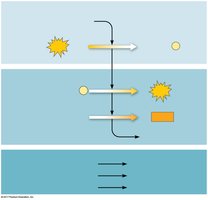
Net products of glycolysis: 2 pyruvate, 2 ATP, 2 NADH, and 2 H2O.
Pyruvate Oxidation
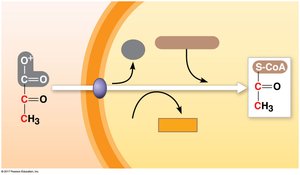
In the presence of oxygen, pyruvate is transported into the mitochondrion and converted to acetyl CoA in three steps:
Oxidation of pyruvate and release of CO2
Reduction of NAD+ to NADH
Addition of coenzyme A to form acetyl CoA
The Citric Acid Cycle (Krebs Cycle)
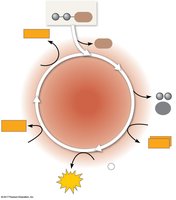
The citric acid cycle completes the breakdown of acetyl CoA to CO2. Each turn of the cycle produces:
1 ATP (by substrate-level phosphorylation)
3 NADH
1 FADH2
The cycle regenerates oxaloacetate and transfers high-energy electrons to NAD+ and FAD.
Oxidative Phosphorylation and the Electron Transport Chain (ETC)
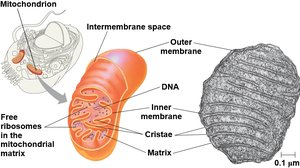
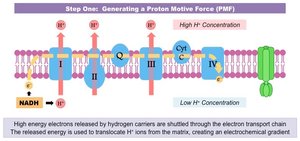
Oxidative phosphorylation is the final stage, where most ATP is generated. NADH and FADH2 donate electrons to the ETC, which is embedded in the inner mitochondrial membrane. As electrons move through the chain, energy is used to pump protons (H+) into the intermembrane space, creating a proton gradient.
Chemiosmosis and ATP Synthase
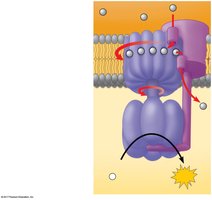
Protons flow back into the mitochondrial matrix through ATP synthase, driving the phosphorylation of ADP to ATP. This process is called chemiosmosis.
ATP synthase: Enzyme complex that synthesizes ATP using the energy from the proton gradient.
Overall ATP yield: About 30–32 ATP per glucose molecule.
Fermentation and Anaerobic Respiration
Fermentation
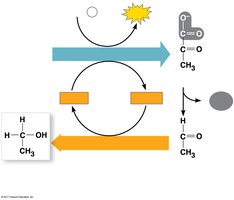
When oxygen is not available, cells can generate ATP through fermentation. Fermentation consists of glycolysis plus reactions that regenerate NAD+ from NADH, allowing glycolysis to continue.
Alcohol fermentation: Pyruvate is converted to ethanol, releasing CO2 and regenerating NAD+.
Lactic acid fermentation: Pyruvate is reduced to lactate, regenerating NAD+.
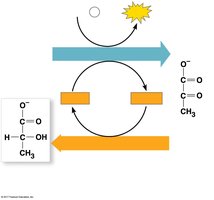
Fermentation yields only 2 ATP per glucose, compared to up to 32 ATP in aerobic respiration.
Facultative and Obligate Anaerobes
Obligate anaerobes: Can only survive using fermentation or anaerobic respiration; oxygen is toxic to them.
Facultative anaerobes: Can switch between fermentation and aerobic respiration depending on oxygen availability (e.g., yeast, muscle cells).
Other Fuels in Cellular Respiration
Metabolism of Carbohydrates, Fats, and Proteins
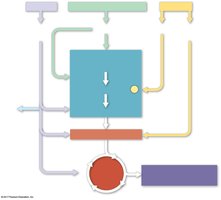
Besides glucose, other macromolecules can be used as fuel:
Carbohydrates: Broken down into sugars that enter glycolysis.
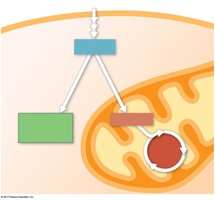
Proteins: Digested to amino acids; amino groups are removed, and carbon skeletons enter glycolysis or the citric acid cycle.
Fats: Glycerol enters glycolysis; fatty acids are converted to acetyl CoA via beta oxidation, yielding more ATP per gram than carbohydrates.
ATP: Structure, Hydrolysis, and Function
Structure of ATP
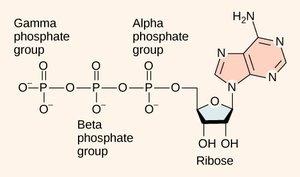
ATP consists of an adenosine molecule (adenine + ribose) and three phosphate groups. The bonds between phosphate groups are high-energy bonds.
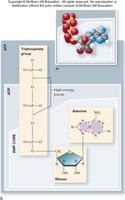
ATP Hydrolysis and Energy Coupling
Hydrolysis of ATP releases energy by breaking the terminal phosphate bond, forming ADP and inorganic phosphate (Pi):
ATP hydrolysis:
This energy is used to drive endergonic (energy-requiring) cellular processes by phosphorylation of target molecules.
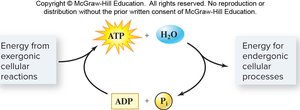
ATP Cycle
ATP is continuously regenerated from ADP and Pi by cellular respiration. The ATP cycle links catabolic and anabolic pathways, ensuring a constant supply of energy for cellular work.
Enzymes and Cellular Work
Role of Enzymes
Enzymes are biological catalysts that speed up chemical reactions by lowering activation energy. ATP powers three main types of cellular work:
Chemical work: Driving endergonic reactions (e.g., synthesis of macromolecules)
Transport work: Pumping substances across membranes against gradients
Mechanical work: Movement of cellular structures (e.g., muscle contraction)
Example: Sucrase catalyzes the hydrolysis of sucrose into glucose and fructose.
