 Back
Cellular Respiration: Metabolism, Energy, and ATP Production
Study Guide - Smart Notes
 Tailored notes based on your materials, expanded with key definitions, examples, and context.
Cellular Respiration: Fundamentals
Introduction to Cellular Respiration
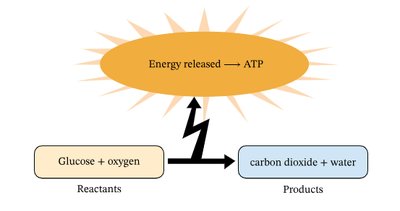
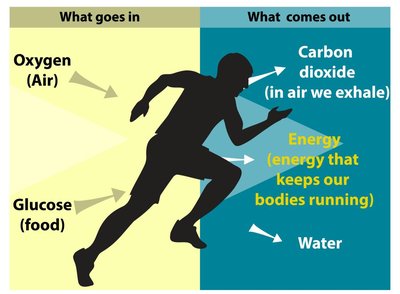
Cellular respiration is a series of metabolic pathways that convert the energy stored in glucose into ATP, the primary energy currency of the cell. This process is essential for all living organisms, as it provides the energy required for cellular functions.
Glucose is the main fuel molecule for cellular respiration.
ATP (adenosine triphosphate) is produced and used for cellular work.
Cellular respiration involves multiple steps and occurs in different locations within the cell.
Metabolism and Energy
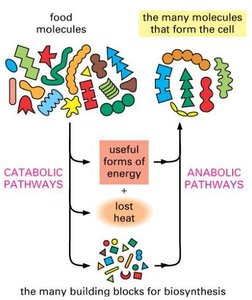
Metabolism is the sum of all chemical reactions in a cell, divided into catabolic (breaking down molecules) and anabolic (building molecules) pathways.
Catabolic reactions break down complex molecules, releasing energy.
Anabolic reactions build complex molecules, requiring energy.
Energy is stored in chemical bonds and released when these bonds are broken.
Exergonic and Endergonic Reactions
Exergonic reactions release energy; products have less energy than reactants.
Endergonic reactions require energy; products have more energy than reactants.
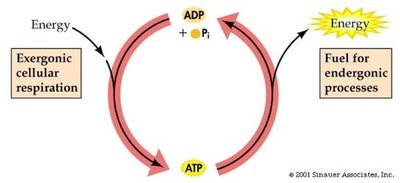
These reactions are often paired, with exergonic reactions fueling endergonic ones.
Enzymes and Metabolic Regulation
Enzyme Function and Specificity
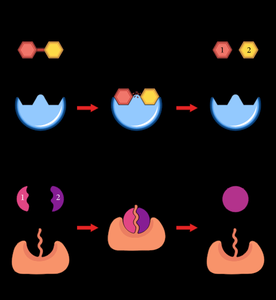
Enzymes are biological catalysts that speed up chemical reactions by lowering activation energy.
Most enzyme names end in -ase.
Enzymes are specific to their substrates due to the shape of their active site.
Enzyme-substrate complexes facilitate the conversion of substrates to products.
ATP: The Energy Currency
Structure and Function of ATP
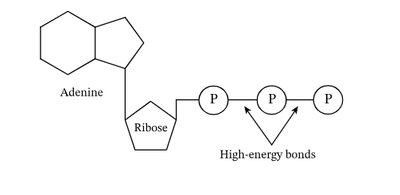
ATP (adenosine triphosphate) consists of adenine, ribose, and three phosphate groups. The high-energy bonds between phosphate groups store energy.
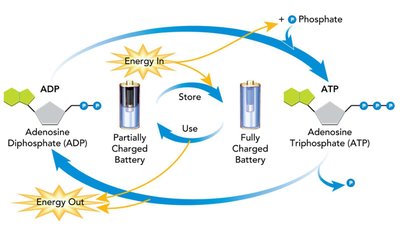
ATP is synthesized when energy is available.
ADP (adenosine diphosphate) is formed when ATP loses a phosphate group, releasing energy.
ATP hydrolysis is an exergonic reaction; ATP synthesis is endergonic.
Redox Reactions and Electron Carriers
Oxidation and Reduction
Redox reactions involve the transfer of electrons between molecules.
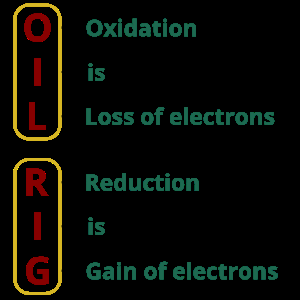
Oxidation: loss of electrons (becomes more positive).
Reduction: gain of electrons (becomes more negative).
Redox reactions are central to cellular respiration and photosynthesis.
Electron Carriers
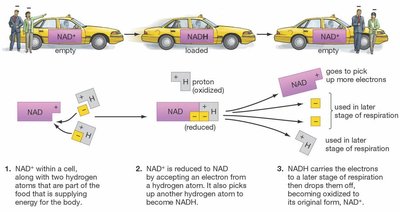
Electron carriers such as NAD+/NADH and FAD/FADH2 transport electrons during cellular respiration.
NAD+ and FAD are oxidized forms; NADH and FADH2 are reduced forms.
Electron carriers capture energy and deliver it to the electron transport chain.
Overview of Cellular Respiration
Overall Chemical Equation
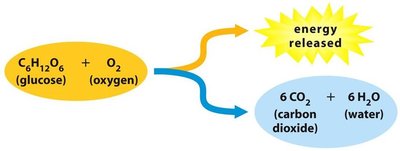
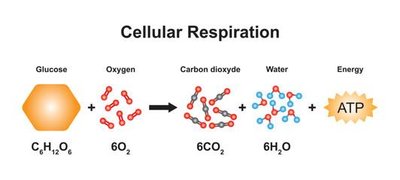
The overall equation for cellular respiration is:
Glucose and oxygen are reactants.
Carbon dioxide, water, and ATP are products.
Major Steps of Cellular Respiration
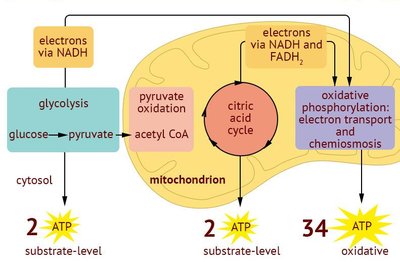
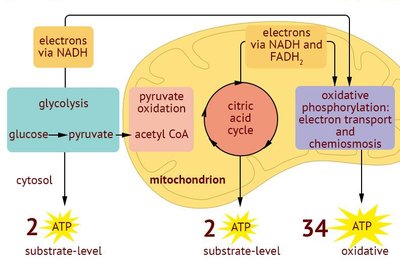
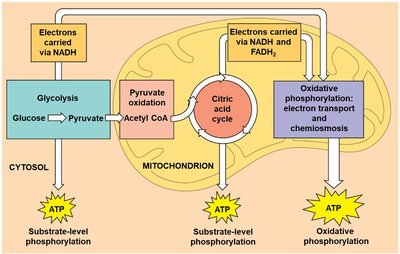
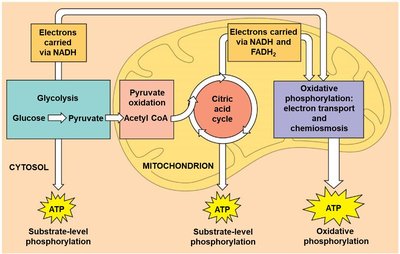
Cellular respiration consists of four main steps:
Glycolysis: Glucose is split into two pyruvate molecules in the cytoplasm.
Pyruvate Oxidation: Pyruvate is transported into the mitochondria and converted to acetyl CoA.
Citric Acid Cycle (Krebs Cycle): Acetyl CoA is broken down, releasing electrons to carriers.
Oxidative Phosphorylation: Electron transport chain and chemiosmosis generate most ATP.
Detailed Steps of Cellular Respiration
Glycolysis
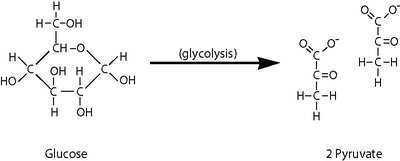
Glycolysis is the first step, breaking down glucose (6 carbons) into two pyruvate (3 carbons each).
Occurs in the cytoplasm.
Does not require oxygen (anaerobic).
Reactants: glucose, 2 ATP, 2 NAD+.
Products: 2 pyruvate, 2 NADH, 2 ATP (net).
Pyruvate Oxidation
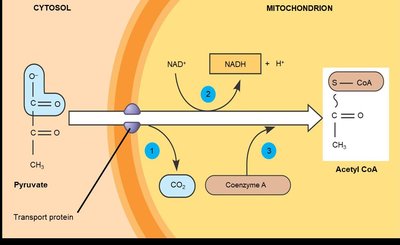
Pyruvate is transported into the mitochondria and converted to acetyl CoA.
Occurs in the mitochondrial matrix.
Reactants: 2 pyruvate, 2 NAD+, 2 Coenzyme A.
Products: 2 acetyl CoA, 2 CO2, 2 NADH.
Citric Acid Cycle (Krebs Cycle)
The Citric Acid Cycle completes the breakdown of glucose, releasing CO2 and transferring electrons to carriers.
Occurs in the mitochondrial matrix.
Reactants: 2 acetyl CoA, 6 NAD+, 2 FAD, oxaloacetate.
Products: oxaloacetate, 4 CO2, 2 ATP, 6 NADH, 2 FADH2.
Oxidative Phosphorylation
Occurs in the inner mitochondrial membrane.
Electron Transport Chain (ETC) creates a proton gradient.
ATP synthase uses the gradient to produce ATP (chemiosmosis).
Most ATP is generated in this step (~32 ATP per glucose).
Substrate-Level Phosphorylation vs. Chemiosmosis
Substrate-Level Phosphorylation
ATP is produced directly by transferring a phosphate group from a substrate to ADP.
Occurs in glycolysis and the Citric Acid Cycle.
Chemiosmosis
ATP is produced indirectly via the movement of protons through ATP synthase.
Occurs during oxidative phosphorylation.
Role of Oxygen and Fermentation
Role of Oxygen
Oxygen is the final electron acceptor in the electron transport chain. Without oxygen, electron carriers cannot be oxidized, and cellular respiration halts.
Fermentation
When oxygen is absent, cells use fermentation to regenerate NAD+, allowing glycolysis to continue.
Alcohol fermentation: Used by yeast; pyruvate is converted to ethanol.
Lactic acid fermentation: Used by bacteria, fungi, and mammals; pyruvate is converted to lactic acid.
Regulation of Cellular Respiration
Feedback Inhibition
Cellular respiration is regulated by feedback inhibition, where products inhibit enzyme activity to prevent overproduction of ATP.
High ATP levels inhibit enzymes.
Low ATP levels activate enzymes.
Other factors, such as pH changes, can also regulate enzyme activity.
Summary Table: Cellular Respiration Steps
Step | Location | Reactants | Products | ATP Produced | Electron Carriers |
|---|---|---|---|---|---|
Glycolysis | Cytoplasm | Glucose, 2 ATP, 2 NAD+ | 2 Pyruvate, 2 NADH, 2 ATP (net) | 2 | 2 NADH |
Pyruvate Oxidation | Mitochondrial Matrix | 2 Pyruvate, 2 NAD+, 2 CoA | 2 Acetyl CoA, 2 CO2, 2 NADH | 0 | 2 NADH |
Citric Acid Cycle | Mitochondrial Matrix | 2 Acetyl CoA, 6 NAD+, 2 FAD | 4 CO2, 2 ATP, 6 NADH, 2 FADH2 | 2 | 6 NADH, 2 FADH2 |
Oxidative Phosphorylation | Inner Mitochondrial Membrane | NADH, FADH2, O2 | ATP, H2O | ~32 | 0 |
Aerobic vs. Anaerobic Pathways
Process | Oxygen Requirement | Location |
|---|---|---|
Glycolysis | Anaerobic | Cytoplasm |
Fermentation | Anaerobic | Cytoplasm |
Pyruvate Oxidation | Aerobic | Mitochondrion |
Citric Acid Cycle | Aerobic | Mitochondrion |
Oxidative Phosphorylation | Aerobic | Mitochondrion |
Key Equations
Cellular Respiration
Photosynthesis (for comparison)
Additional info:
Cellular respiration is tightly regulated to ensure efficient energy production and prevent waste.
Other macromolecules (proteins, fats) can also be catabolized using similar pathways.
