 Back
BackCellular Respiration: Obtaining Energy from Food
Study Guide - Smart Notes
 Tailored notes based on your materials, expanded with key definitions, examples, and context.
Biology and Society: Getting the Most Out of Your Muscles
Glucose Utilization in the Brain and Muscles
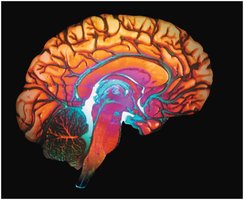
The cells of the human brain require a significant amount of glucose daily, highlighting the importance of cellular respiration in energy production. For endurance athletes, the rate at which oxygen is delivered to working muscles is a limiting factor in performance. Aerobic capacity is defined as the maximum rate at which oxygen can be taken in and used by muscle cells, determining the most strenuous exercise that can be maintained aerobically.

Aerobic vs. Anaerobic Metabolism
When exercise intensity exceeds aerobic capacity, muscle oxygen demand surpasses supply, and metabolism becomes anaerobic. Muscle cells switch to an emergency mode, breaking down glucose inefficiently and producing lactic acid as a by-product.
Energy Flow and Chemical Cycling in the Biosphere
Photosynthesis and Cellular Respiration
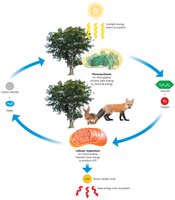
All life requires energy, which in most ecosystems originates from the sun. Photosynthesis in plants converts sunlight into chemical energy stored in sugars and other organic molecules. Animals depend on this conversion for food and energy.
Autotrophs and Heterotrophs
Autotrophs ("self-feeders") synthesize organic matter from inorganic nutrients such as carbon dioxide and water. Heterotrophs ("other-feeders"), including humans and animals, cannot make organic molecules from inorganic ones and must obtain food by consuming plants or other animals.

Producers and Consumers
Plants and other autotrophs are called producers, while heterotrophs are consumers. Most ecosystems rely entirely on photosynthesis for food.
Chemical Cycling between Photosynthesis and Cellular Respiration
Photosynthesis Ingredients and Products
The main ingredients for photosynthesis are CO2 and H2O. Chloroplasts in plant cells use light energy to rearrange these atoms, producing sugars (primarily glucose) and oxygen gas as a by-product.
Cellular Respiration Ingredients and Products
Cellular respiration uses oxygen to convert the energy stored in sugars into ATP (adenosine triphosphate). The waste products are CO2 and H2O, which are the same ingredients used in photosynthesis.
Cellular Respiration: Aerobic Harvest of Food Energy
Definition and Gas Exchange
Cellular respiration is the aerobic harvesting of chemical energy from organic fuel molecules, primarily glucose. It is the main process for converting food energy into ATP and requires oxygen. Cells exchange gases with their surroundings, taking in O2 and releasing CO2.

Overview of Cellular Respiration
Cellular respiration consists of many enzyme-catalyzed steps and is a crucial metabolic pathway for eukaryotic cells. It provides the energy needed for cellular functions.

Main Stages of Cellular Respiration
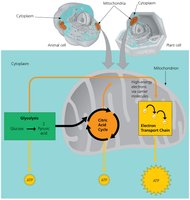
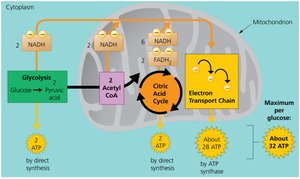
Glycolysis: Splits glucose into two molecules of pyruvic acid in the cytoplasm.
Citric Acid Cycle (Krebs Cycle): Completes the breakdown of glucose to CO2 in mitochondria.
Electron Transport: Electrons from NADH are transferred to oxygen, forming water and generating most ATP.
Glycolysis
During glycolysis, a six-carbon glucose molecule is split into two three-carbon pyruvic acid molecules. This process requires an initial investment of two ATP molecules and produces four ATP molecules, resulting in a net gain of two ATP per glucose. High-energy electrons are transferred to NAD+, forming NADH.
The Link Between Glycolysis and the Citric Acid Cycle
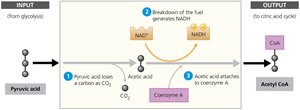
Before entering the citric acid cycle, pyruvic acid is converted to acetyl CoA. Each pyruvic acid loses a carbon as CO2, and the remaining two-carbon molecule (acetic acid) is attached to coenzyme A.
Citric Acid Cycle
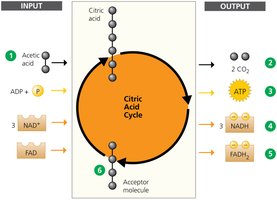
The citric acid cycle dismantles acetic acid molecules to CO2. Acetic acid combines with a four-carbon acceptor to form citric acid. For each acetic acid molecule, two CO2 molecules are released, and energy is harvested in the form of ATP, NADH, and FADH2.
Electron Transport Chain
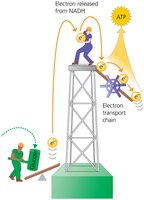
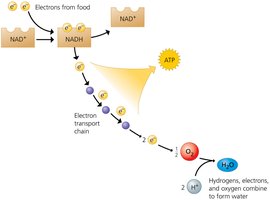
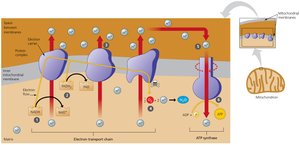
Electrons from NADH and FADH2 are transferred through a series of carrier molecules embedded in the inner mitochondrial membrane. With each transfer, electrons lose energy, which is used to generate ATP. Oxygen acts as the final electron acceptor, forming water.
Mitochondrial Structure and Function
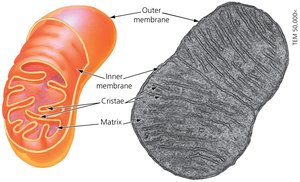
The inner membrane of mitochondria is highly folded, providing a large surface area for electron transport chains. ATP synthase, a protein complex, uses the energy from electron transport to synthesize ATP.
Summary of ATP Yield
Cellular respiration can generate up to 32 ATP molecules per glucose. The process involves direct ATP synthesis during glycolysis and the citric acid cycle, and indirect synthesis via electron transport.
Metabolic Versatility
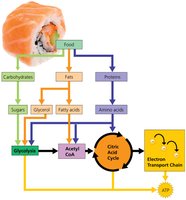
Cellular respiration can utilize carbohydrates, fats, and proteins as fuel. These molecules enter the pathway at different points, contributing to a balanced metabolism.
Fermentation: Anaerobic Harvest of Food Energy
Fermentation in Human Muscle Cells
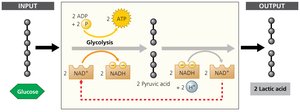
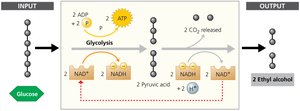
Under anaerobic conditions, glycolysis continues to produce ATP, but NAD+ must be regenerated. In the absence of oxygen, NADH transfers electrons to pyruvic acid, forming lactic acid. This process allows short-term energy production without oxygen.
Muscle Fatigue and Lactic Acid
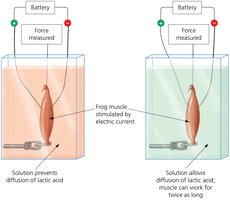
Research by A.V. Hill investigated the role of lactic acid in muscle fatigue. Hill's experiments showed that muscle performance declined when lactic acid could not diffuse away, but improved when it could. However, later evidence suggested other factors may contribute to muscle fatigue, and the exact cause remains debated.
Fermentation in Microorganisms
Types of Fermentation
Yeast and other organisms can survive with or without oxygen. Fermentation produces different waste products, such as ethyl alcohol or lactic acid, depending on the species.
Evolution Connection: The Importance of Oxygen
Glycolysis as a Universal Process
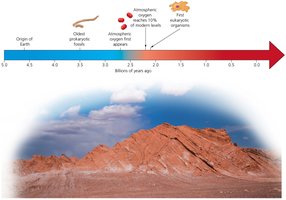
Both aerobic and anaerobic respiration begin with glycolysis, making it a universal energy-harvesting process. Glycolysis likely evolved early in the history of life, before significant oxygen was present in Earth's atmosphere. Its occurrence in almost all organisms and its independence from membrane-bound organelles suggest its ancient origin.
Key Equations
Overall Equation for Cellular Respiration
The overall equation for cellular respiration is:
Summary Table: Stages of Cellular Respiration
Stage | Location | Main Products |
|---|---|---|
Glycolysis | Cytoplasm | 2 ATP, 2 NADH, 2 Pyruvic Acid |
Citric Acid Cycle | Mitochondrial Matrix | 2 ATP, 6 NADH, 2 FADH2, 4 CO2 |
Electron Transport Chain | Inner Mitochondrial Membrane | About 28 ATP, H2O |
Additional info: The notes expand on the original content by providing definitions, context, and examples for each stage of cellular respiration, as well as the evolutionary significance of glycolysis.
