 Back
Cellular Respiration: Pathways for Energy Harvesting
Study Guide - Smart Notes
 Tailored notes based on your materials, expanded with key definitions, examples, and context.
Cellular Respiration: Pathways for Energy Harvesting
Overview: Life Is Work
All living cells require energy to perform essential functions. This energy is obtained from external sources, primarily through the consumption of organic molecules. In ecosystems, energy flows from sunlight to producers (such as plants) and then to consumers (such as animals).
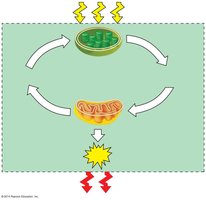
Cellular Respiration: Definition and Equation
Cellular respiration is a catabolic process that includes both aerobic and anaerobic pathways, but typically refers to aerobic respiration. It is the process by which cells extract energy from glucose and other organic molecules. The overall chemical equation for aerobic cellular respiration is:

Glucose is the primary molecule traced in cellular respiration, but fats and proteins can also serve as fuel.
Energy released is used to synthesize ATP, the cell's energy currency.
Redox Reactions: Oxidation and Reduction
Redox Basics
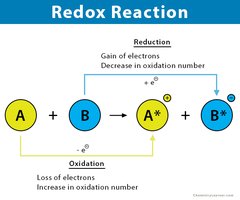
Cellular respiration involves a series of redox reactions (oxidation-reduction reactions), where electrons are transferred from one molecule to another.
Oxidation: Loss of electrons from a substance.
Reduction: Gain of electrons by a substance.
During cellular respiration, glucose is oxidized and oxygen is reduced.
Electron Carriers: NAD+ and the Electron Transport Chain
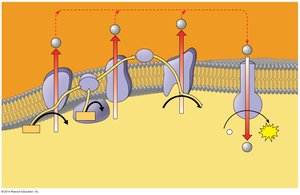
Electrons from organic molecules are first transferred to NAD+, a coenzyme that acts as an oxidizing agent. The reduced form, NADH, stores energy that is later used to synthesize ATP. The electron transport chain (ETC) is a series of proteins that transfer electrons from NADH and FADH2 to oxygen, releasing energy in steps.
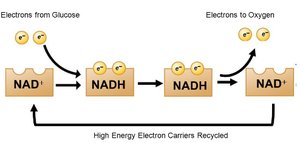
NADH and FADH2 are high-energy electron carriers.
The ETC allows for stepwise energy release, preventing damage from a sudden energy burst.
The Stages of Cellular Respiration
Three Main Stages
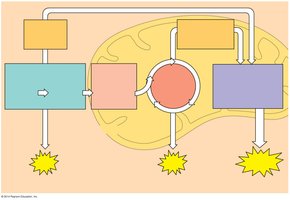
Cellular respiration occurs in three main stages:
Glycolysis: Breaks down glucose into two molecules of pyruvate (in the cytosol).
Pyruvate Oxidation and the Citric Acid Cycle (Krebs Cycle): Completes the breakdown of glucose to CO2 (in the mitochondrion).
Oxidative Phosphorylation: Accounts for most ATP synthesis via the electron transport chain and chemiosmosis (in the mitochondrion).
Glycolysis
Glycolysis ("sugar splitting") occurs in the cytoplasm and does not require oxygen. It consists of two phases:
Energy investment phase: 2 ATP are used to phosphorylate glucose.
Energy payoff phase: 4 ATP and 2 NADH are produced, resulting in a net gain of 2 ATP per glucose molecule.
Glycolysis produces 2 pyruvate, 2 ATP (net), and 2 NADH per glucose.
Pyruvate Oxidation and the Citric Acid Cycle
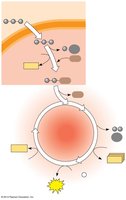
In the presence of oxygen, pyruvate enters the mitochondrion and is converted to acetyl CoA, which enters the citric acid cycle. Each turn of the cycle produces:
1 ATP (by substrate-level phosphorylation)
3 NADH
1 FADH2
2 CO2
Since two pyruvate are produced per glucose, the totals per glucose are: 2 ATP, 6 NADH, 2 FADH2, and 4 CO2.
Oxidative Phosphorylation
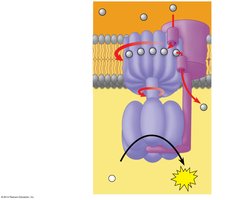
This stage includes the electron transport chain and chemiosmosis. NADH and FADH2 donate electrons to the ETC, which powers ATP synthesis. Most ATP is generated in this stage (up to 28-32 ATP per glucose).
Substrate-level phosphorylation produces a small amount of ATP in glycolysis and the citric acid cycle.
Oxidative phosphorylation produces the majority of ATP.
Fermentation and Anaerobic Respiration
ATP Production Without Oxygen
When oxygen is not available, cells can produce ATP through fermentation or anaerobic respiration. Glycolysis continues, but the electron transport chain does not function without oxygen.
Fermentation: Glycolysis plus reactions that regenerate NAD+ from NADH.
Two common types: Alcohol fermentation and Lactic acid fermentation.
Alcohol Fermentation
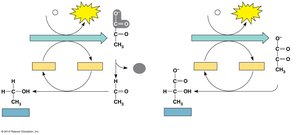
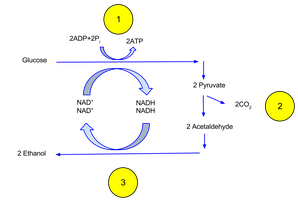
In alcohol fermentation, pyruvate is converted to ethanol in two steps: CO2 is released, and acetaldehyde is reduced to ethanol. This process is used by yeast in brewing, winemaking, and baking.
Lactic Acid Fermentation
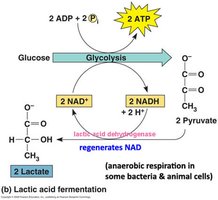
In lactic acid fermentation, pyruvate is reduced directly by NADH to form lactate, with no release of CO2. This process occurs in some bacteria, fungi, and animal muscle cells during intense exercise.
The Versatility of Catabolism
Catabolic Pathways for Different Molecules
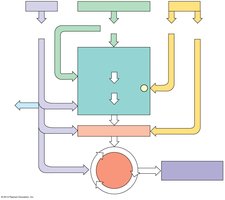
Cellular respiration is not limited to glucose. Other organic molecules, such as proteins and fats, can also be used as fuel:
Proteins are broken down into amino acids, which enter glycolysis or the citric acid cycle after deamination (removal of amino groups).
Fats are digested to glycerol (enters glycolysis) and fatty acids (broken down by beta oxidation to acetyl CoA).
Fats yield more than twice as much ATP per gram as carbohydrates.
Macromolecule | Entry Point in Respiration |
|---|---|
Carbohydrates | Glycolysis (as glucose or other sugars) |
Proteins | Glycolysis or Citric Acid Cycle (as amino acids) |
Fats | Glycolysis (glycerol) or Acetyl CoA (fatty acids) |
Summary Table: ATP Yield from Cellular Respiration
Stage | ATP Produced (per glucose) |
|---|---|
Glycolysis | 2 (net) |
Citric Acid Cycle | 2 |
Oxidative Phosphorylation | ~28 |
Total | ~32 |
Additional info: The actual ATP yield varies depending on the cell type and conditions. Some cells may produce slightly fewer ATP due to variations in the shuttle systems that transport electrons into mitochondria.
