Back
Cellular Respiration: Pathways for Energy Harvesting
Study Guide - Smart Notes
 Tailored notes based on your materials, expanded with key definitions, examples, and context.
Cellular Respiration and Energy Flow
Overview of Cellular Work and Energy Flow
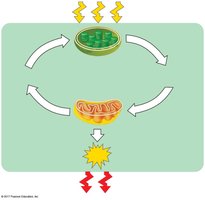
Living cells require energy to perform essential functions such as assembling polymers, transporting substances across membranes, movement, and reproduction. This energy is ultimately derived from the sun and is transferred through ecosystems via photosynthesis and cellular respiration. The chemical elements essential to life are recycled, while energy flows through the system, entering as sunlight and leaving as heat.
Photosynthesis in chloroplasts captures light energy to produce organic molecules and O2.
Cellular respiration in mitochondria breaks down organic molecules, releasing energy to produce ATP, which powers cellular work.,
Catabolic Pathways and ATP Production
Catabolic Pathways and Types of Respiration of
Catabolic pathways release stored energy by breaking down complex molecules. Electron transfer is central to these pathways, especially in cellular respiration. The breakdown of organic molecules is exergonic, releasing energy that is harnessed to produce ATP.
Fermentation: Partial degradation of sugars without O2.
Aerobic respiration: Consumes organic molecules and O2, yielding ATP.
Anaerobic respiration: Similar to aerobic but uses electron acceptors other than O2.
The overall equation for aerobic respiration (using glucose) is:

Redox Reactions in Cellular Respiration
Oxidation and Reduction
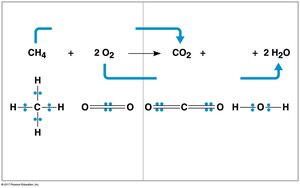
Redox (oxidation-reduction) reactions involve the transfer of electrons between reactants, releasing energy stored in organic molecules. This energy is used to synthesize ATP.
Oxidation: Loss of electrons from a substance.
Reduction: Gain of electrons by a substance (reducing its positive charge).
The electron donor is the reducing agent; the electron acceptor is the oxidizing agent.
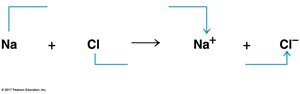
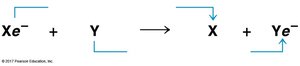
Some redox reactions involve changes in electron sharing in covalent bonds, such as the reaction between methane and O2:
Stepwise Energy Harvest via NAD+ and the Electron Transport Chain
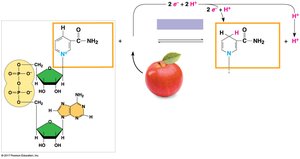
During cellular respiration, electrons from organic compounds are usually first transferred to NAD+, a coenzyme that acts as an oxidizing agent. The reduced form, NADH, stores energy that is later used to synthesize ATP. NADH passes electrons to the electron transport chain, where energy is released in controlled steps to generate ATP.
Stages of Cellular Respiration
Three Main Stages
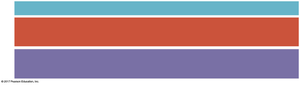
Energy is harvested from glucose in three main stages:
Glycolysis: Breaks down glucose into two molecules of pyruvate (in the cytosol).
Citric Acid Cycle (Krebs Cycle): Completes the breakdown of glucose to CO2 (in the mitochondrial matrix).
Oxidative Phosphorylation: Electron transport and chemiosmosis produce most of the ATP (in the inner mitochondrial membrane).
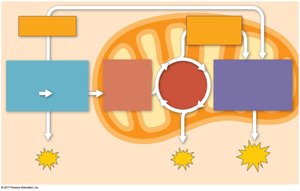
Most ATP is produced by oxidative phosphorylation, powered by redox reactions. A smaller amount is produced by substrate-level phosphorylation during glycolysis and the citric acid cycle.
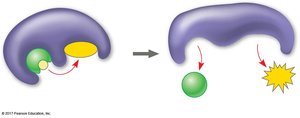
Glycolysis
Glycolysis: Energy Investment and Payoff Phases
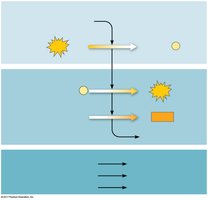
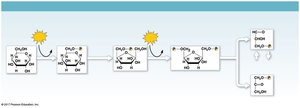
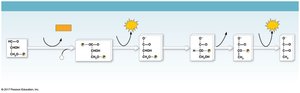
Glycolysis is the process of splitting glucose into two pyruvate molecules. It occurs in the cytoplasm and consists of two phases:
Energy investment phase: 2 ATP are used to phosphorylate glucose and its intermediates.
Energy payoff phase: 4 ATP and 2 NADH are produced, resulting in a net gain of 2 ATP per glucose.
Pyruvate Oxidation and the Citric Acid Cycle
Oxidation of Pyruvate to Acetyl CoA
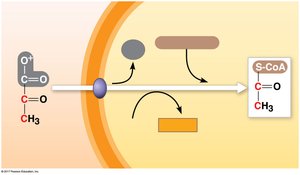
Before entering the citric acid cycle, pyruvate is transported into the mitochondrion and converted to acetyl CoA. This process involves:
Oxidation of pyruvate, releasing CO2
Reduction of NAD+ to NADH
Combination of the remaining two-carbon fragment with coenzyme A to form acetyl CoA
The Citric Acid Cycle (Krebs Cycle)
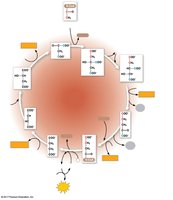
The citric acid cycle completes the breakdown of acetyl CoA to CO2. Each turn of the cycle generates:
1 ATP (or GTP)
3 NADH
1 FADH2
The cycle regenerates oxaloacetate and transfers high-energy electrons to NAD+ and FAD, forming NADH and FADH2.
Oxidative Phosphorylation and Chemiosmosis
Electron Transport Chain
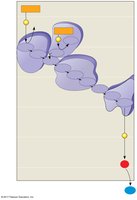
The electron transport chain (ETC) is located in the inner mitochondrial membrane. Electrons from NADH and FADH2 are transferred through a series of protein complexes and electron carriers, ultimately reducing O2 to H2O. The ETC does not produce ATP directly but creates a proton gradient across the membrane.
Chemiosmosis and ATP Synthase
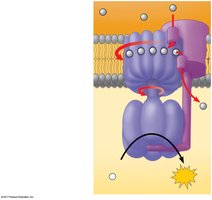
The energy released by the ETC is used to pump protons (H+) into the intermembrane space, creating a proton-motive force. Protons flow back into the mitochondrial matrix through ATP synthase, driving the phosphorylation of ADP to ATP. This process is called chemiosmosis.
Fermentation and Anaerobic Respiration
Fermentation Pathways
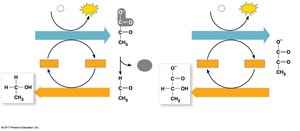
When oxygen is not available, cells can produce ATP through fermentation. Fermentation consists of glycolysis plus reactions that regenerate NAD+ from NADH. Two common types are:
Alcohol fermentation: Pyruvate is converted to ethanol, releasing CO2 and regenerating NAD+.
Lactic acid fermentation: Pyruvate is reduced to lactate, regenerating NAD+ without releasing CO2.
Connections to Other Metabolic Pathways
Catabolic Versatility
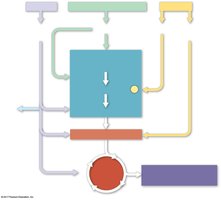
Glycolysis and the citric acid cycle are central hubs for catabolic and anabolic pathways. Carbohydrates, proteins, and fats can all be funneled into cellular respiration at various points. For example, proteins are broken down into amino acids, which enter glycolysis or the citric acid cycle after deamination. Fats are broken down into glycerol and fatty acids, with fatty acids undergoing beta oxidation to form acetyl CoA.
Regulation of Cellular Respiration
Feedback Mechanisms
Cellular respiration is tightly regulated by feedback inhibition. When ATP levels are high, key enzymes such as phosphofructokinase are inhibited, slowing down glycolysis. When ATP is low, these enzymes are activated, increasing the rate of respiration.