 Back
Cellular Respiration: Pathways, Mechanisms, and Metabolic Connections
Study Guide - Smart Notes
 Tailored notes based on your materials, expanded with key definitions, examples, and context.
Cellular Respiration: Overview and Key Concepts
Introduction to Cellular Respiration
Cellular respiration is a fundamental metabolic pathway in living organisms, responsible for harvesting energy from organic molecules and converting it into ATP, the cell’s energy currency. This process is central to the energy and carbon cycles within ecosystems.
Ultimate Source of Energy: Sunlight is the primary energy source for ecosystems. Plants convert sunlight into chemical energy via photosynthesis, producing glucose.
Energy and Carbon Cycling: Energy flows through ecosystems as sunlight, is stored in organic molecules, and is released as heat. Carbon cycles as CO2 is fixed by producers and released by consumers.
Cellular Respiration: The process by which cells extract energy from glucose and other fuels, producing CO2 and H2O as waste products.
Catabolic Pathway: Cellular respiration is a catabolic pathway, brea
king down complex molecules to release energy.
Aerobic vs. Anaerobic: Aerobic processes require oxygen; anaerobic processes do not.
Overall Equation for Cellular Respiration:
Glucose + Oxygen → Carbon dioxide + Water + Energy (ATP)
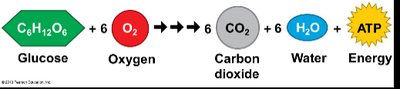
Oxidation and Reduction: Glucose is oxidized (loses electrons), oxygen is reduced (gains electrons).
Redox Reactions in Cellular Respiration
Redox reactions (oxidation-reduction) are central to cellular respiration, involving the transfer of electrons and energy release.
Oxidation: Loss of electrons (or hydrogen) from a molecule.
Reduction: Gain of electrons (or hydrogen) by a molecule.
NAD+ and FAD: Coenzymes that accept electrons during oxidation, becoming NADH and FADH2.
Electron Transport Chain: NADH and FADH2 carry high-energy electrons to the electron transport chain, where ATP is synthesized.
Stages of Cellular Respiration
Cellular respiration consists of three major stages, each contributing to ATP production:
Glycolysis: Occurs in the cytoplasm; breaks down glucose into two pyruvate molecules. Net gain: 2 ATP, 2 NADH.
Citric Acid Cycle (Krebs Cycle): Occurs in the mitochondrial matrix; completes glucose breakdown. Net gain per glucose: 2 ATP, 6 NADH, 2 FADH2, 4 CO2.
Oxidative Phosphorylation: Includes the electron transport chain and chemiosmosis; produces most ATP (up to 28-30 per glucose).
ATP Synthesis:
Substrate-level phosphorylation: Direct transfer of phosphate to ADP during glycolysis and citric acid cycle.
Oxidative phosphorylation: ATP synthesis powered by redox reactions in the electron transport chain.
Glycolysis
Inputs and Outputs of Glycolysis
Glycolysis is the first stage of cellular respiration, occurring in the cytoplasm and does not require oxygen.
Inputs: Glucose, 2 ATP, 2 NAD+
Outputs: 2 Pyruvate, 4 ATP (net gain 2 ATP), 2 NADH
Location: Cytoplasm
Phases of Glycolysis
Energy Investment Phase: 2 ATP are used to activate glucose, which splits into two G3P molecules.
Energy Payoff Phase: G3P is oxidized, producing 4 ATP (via substrate-level phosphorylation) and 2 NADH; results in 2 pyruvate molecules.
Oxygen Requirement: Glycolysis can occur without oxygen.
Pyruvate Oxidation and Citric Acid Cycle
Pyruvate Oxidation
Pyruvate oxidation links glycolysis to the citric acid cycle, occurring in the mitochondrial matrix.
Inputs: 2 Pyruvate, NAD+, Coenzyme A
Outputs: 2 Acetyl-CoA, 2 NADH, 2 CO2
Location: Mitochondrial matrix
ATP Production: No ATP produced directly
Oxygen Requirement: Requires oxygen
Citric Acid Cycle (Krebs Cycle)
The citric acid cycle completes the oxidation of glucose, generating electron carriers and ATP.
Inputs: Acetyl-CoA, oxaloacetate, NAD+, FAD
Outputs per glucose: 4 CO2, 2 ATP, 6 NADH, 2 FADH2
Location: Mitochondrial matrix
Cycle: Oxaloacetate is regenerated, making the process cyclical.
Turns per glucose: 2 (one per pyruvate)
CO2 Production: Pyruvate oxidation and citric acid cycle produce the CO2 exhaled.
Oxidative Phosphorylation
Electron Transport Chain and Chemiosmosis
Oxidative phosphorylation is the final stage, producing most ATP via the electron transport chain and chemiosmosis.
Location: Inner mitochondrial membrane (cristae)
Components: Multiprotein complexes, cytochromes
Process: NADH and FADH2 donate electrons; electrons pass through chain, releasing energy to pump H+ across membrane.
Final Electron Acceptor: Oxygen; forms H2O
ATP Production: Up to 28-30 ATP per glucose via chemiosmosis
Energy Efficiency: About 34% of glucose energy is transferred to ATP; remainder lost as heat.
Chemiosmosis
Definition: The use of a H+ gradient to drive ATP synthesis via ATP synthase.
Mechanism: H+ flows through ATP synthase, catalyzing phosphorylation of ADP to ATP.
Fermentation and Anaerobic Respiration
Fermentation
Fermentation allows cells to produce ATP without oxygen, using glycolysis and reactions that regenerate NAD+.
ATP Production: Only 2 ATP per glucose (via substrate-level phosphorylation)
Types: Alcohol fermentation (produces ethanol and CO2), lactic acid fermentation (produces lactate)
Organisms: Yeast and some bacteria perform alcohol fermentation; fungi, bacteria, and human muscle cells perform lactic acid fermentation.
Obligate Anaerobes: Cannot survive in O2; rely on fermentation or anaerobic respiration.
Facultative Anaerobes: Can use either fermentation or cellular respiration.
Lactic Acid and Muscle Fatigue
Lactic Acid: Produced during strenuous exercise; can be converted to glucose in the liver.
Muscle Fatigue: Recent evidence suggests lactic acid does not cause fatigue; calcium ion leakage may contribute.
Athletic Training: Increases metabolic efficiency and capacity.
Metabolic Pathways and Regulation
Connecting Catabolic and Anabolic Pathways
Glycolysis and the citric acid cycle are central hubs for metabolism, connecting to the breakdown and synthesis of various biomolecules.
Proteins: Digested to amino acids; deaminated and fed into glycolysis or citric acid cycle.
Fats: Digested to glycerol and fatty acids; fatty acids undergo beta oxidation to produce acetyl-CoA, NADH, and FADH2.
ATP Yield: Fats produce more ATP per gram than carbohydrates.
Regulation of Cellular Respiration
Feedback Inhibition: High ATP or citrate levels inhibit glycolysis (phosphofructokinase enzyme).
Metabolic Control: Enzyme activity is regulated at key points in catabolic pathways.
Additional info: The evolutionary significance of glycolysis is highlighted by its presence in ancient prokaryotes, functioning before atmospheric oxygen was abundant. Glycolysis occurs in the cytosol and does not require membrane-bound organelles, making it a universal pathway.
