 Back
Cellular Respiration: Pathways, Mechanisms, and Metabolic Connections
Study Guide - Smart Notes
 Tailored notes based on your materials, expanded with key definitions, examples, and context.
Cellular Respiration
Overview and Importance
Cellular respiration is a fundamental metabolic pathway that enables cells to harvest energy from organic molecules, primarily glucose, to produce ATP. This process is essential for powering cellular activities and maintaining life. Cellular respiration is an aerobic process, meaning it requires oxygen, and it consists of multiple stages that collectively convert glucose into carbon dioxide, water, and energy.gtdh
Ultimate Source of Energy: Sunlight is the primary energy source for ecosystems. Plants convert sunlight into chemical energy via photosynthesis, producing glucose, which is then used by animals and other organisms for cellular respiration.
Energy and Carbon Cycling: Energy flows through ecosystems, entering as sunlight and leaving as heat. Carbon cycles as CO2 is fixed by photosynthesizers and released by consumers during respiration.
Catabolic Pathway: Cellular respiration is a catabolic pathway, breaking down complex molecules to release energy.
Aerobic Process: Requires oxygen to fully oxidize glucose.
Overall Equation: The simplified equation for cellular respiration is:
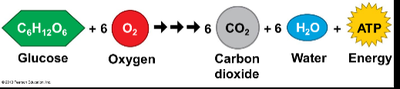
Oxidation and Reduction: In this equation, glucose is oxidized (loses electrons), and oxygen is reduced (gains electrons).
ATP Yield: Up to 32 ATP molecules can be produced per glucose molecule.
Redox Reactions in Cellular Respiration
Redox reactions (oxidation-reduction) are central to cellular respiration, involving the transfer of electrons between molecules. These reactions release energy stored in organic compounds, which is used to synthesize ATP.
Oxidation: Loss of electrons (and hydrogen) from a molecule.
Reduction: Gain of electrons (and hydrogen) by a molecule.
Electron Carriers: NAD+ and FAD are coenzymes that accept electrons during redox reactions, becoming NADH and FADH2.
Stepwise Energy Harvest: Electrons are transferred to NAD+ and FAD, which then carry them to the electron transport chain.
Stages of Cellular Respiration
Major Stages
Cellular respiration consists of three main stages, each with distinct roles in energy extraction:
Glycolysis: Occurs in the cytoplasm; breaks down glucose into two pyruvate molecules. Net gain: 2 ATP (via substrate-level phosphorylation) and 2 NADH.
Citric Acid Cycle (Krebs Cycle): Occurs in the mitochondrial matrix; completes the oxidation of pyruvate to CO2. Net gain per glucose: 2 ATP, 6 NADH, 2 FADH2, 4 CO2.
Oxidative Phosphorylation: Includes the electron transport chain and chemiosmosis; occurs in the inner mitochondrial membrane. Produces most ATP (about 28-30 per glucose).
Glycolysis
Glycolysis is the first stage of cellular respiration, breaking down glucose into pyruvate and generating ATP and NADH.
Location: Cytoplasm
Inputs: Glucose, 2 ATP, 2 NAD+
Outputs: 2 Pyruvate, 4 ATP (net gain 2), 2 NADH
Phases:
Energy Investment: 2 ATP used to activate glucose.
Energy Payoff: 4 ATP produced, 2 NADH generated, pyruvate formed.
Oxygen Requirement: Glycolysis can occur without oxygen.
Pyruvate Oxidation and Citric Acid Cycle
Pyruvate is transported into the mitochondria and converted to acetyl-CoA, which enters the citric acid cycle.
Pyruvate Oxidation: Produces acetyl-CoA, NADH, and CO2.
Citric Acid Cycle: Acetyl-CoA combines with oxaloacetate to form citrate; cycle regenerates oxaloacetate.
ATP Production: 2 ATP per glucose (via substrate-level phosphorylation).
Electron Carriers: Most NADH and FADH2 are produced here.
CO2 Production: Occurs during pyruvate oxidation and citric acid cycle.
Oxidative Phosphorylation
Oxidative phosphorylation is the final stage, where most ATP is produced via the electron transport chain and chemiosmosis.
Electron Transport Chain: Located in the inner mitochondrial membrane; consists of protein complexes (including cytochromes).
Process: NADH and FADH2 donate electrons; electrons move through the chain, releasing energy.
Oxygen: Final electron acceptor; forms water.
Chemiosmosis: Energy from electron transport pumps H+ into the intermembrane space; H+ flows back through ATP synthase, driving ATP production.
ATP Yield: About 28-30 ATP per glucose.
Efficiency: About 34% of glucose energy is transferred to ATP; remainder lost as heat.
Fermentation and Anaerobic Respiration
Fermentation
Fermentation allows cells to produce ATP without oxygen, using glycolysis and reactions that regenerate NAD+.
Types:
Alcohol Fermentation: Pyruvate converted to ethanol; CO2 released.
Lactic Acid Fermentation: Pyruvate reduced to lactate; no CO2 released.
ATP Yield: Only 2 ATP per glucose (from glycolysis).
Obligate Anaerobes: Cannot survive in presence of O2; rely solely on fermentation or anaerobic respiration.
Facultative Anaerobes: Can use either fermentation or cellular respiration.
Fermentation in Muscle Cells
Lactic Acid: Produced during strenuous exercise; can be converted back to glucose in the liver.
Muscle Fatigue: Recent evidence suggests lactic acid does not cause fatigue; calcium ion leakage may contribute.
Training Effects: Increases metabolic efficiency and capacity.
Metabolic Pathways and Regulation
Connections to Other Pathways
Cellular respiration is interconnected with other metabolic pathways, allowing the breakdown and synthesis of various biomolecules.
Catabolic Pathways: Proteins, fats, and carbohydrates can enter cellular respiration at different points.
Beta Oxidation: Fatty acids are broken down to acetyl-CoA, NADH, and FADH2; fats yield more ATP than carbohydrates.
Deamination: Amino acids are deaminated and can enter glycolysis or the citric acid cycle.
Regulation of Cellular Respiration
Feedback Inhibition: High levels of ATP or citrate inhibit glycolysis; respiration speeds up when ATP is low.
Enzyme Regulation: Key enzymes are regulated at strategic points in the pathway.
Key Terms and Concepts
Aerobic/Anaerobic: With/without oxygen.
Redox Reactions: Electron transfer reactions.
NAD+ & NADH: Electron carriers.
FAD & FADH2: Electron carriers.
Substrate-level Phosphorylation: Direct ATP synthesis from a substrate.
Oxidative Phosphorylation: ATP synthesis via electron transport and chemiosmosis.
Electron Transport Chain: Series of protein complexes transferring electrons.
Cytochromes: Proteins in the electron transport chain.
Fermentation: Anaerobic ATP production.
Obligate/Facultative Anaerobes: Organisms' oxygen requirements.
Beta Oxidation: Fatty acid breakdown.
Summary Table: Stages of Cellular Respiration
Stage | Location | Main Inputs | Main Outputs | ATP Produced |
|---|---|---|---|---|
Glycolysis | Cytoplasm | Glucose, NAD+, ATP | Pyruvate, NADH, ATP | 2 |
Pyruvate Oxidation | Mitochondrial Matrix | Pyruvate, NAD+, CoA | Acetyl-CoA, NADH, CO2 | 0 |
Citric Acid Cycle | Mitochondrial Matrix | Acetyl-CoA, NAD+, FAD | CO2, NADH, FADH2, ATP | 2 |
Oxidative Phosphorylation | Inner Mitochondrial Membrane | NADH, FADH2, O2 | ATP, H2O | 28-30 |
Additional info: Table summarizes the main stages, locations, inputs, outputs, and ATP yield of cellular respiration.
