 Back
Cellular Respiration: Pathways, Regulation, and Inhibition
Study Guide - Smart Notes
 Tailored notes based on your materials, expanded with key definitions, examples, and context.
Cellular Respiration and Energy in Living Organisms
Overview of Energy Acquisition
All living organisms require energy to sustain life processes such as growth, movement, and reproduction. This energy is derived from the chemical bonds in organic molecules, primarily glucose. Organisms are classified based on how they obtain energy:
Autotrophs: Organisms (e.g., plants) that produce their own food via photosynthesis, converting sunlight, carbon dioxide, and water into glucose.
Heterotrophs: Organisms (e.g., animals, fungi, most bacteria) that obtain energy by consuming other organisms or organic molecules.
Mixotrophs: Some organisms, such as the Venus flytrap, can both photosynthesize and digest other organisms for nutrients.
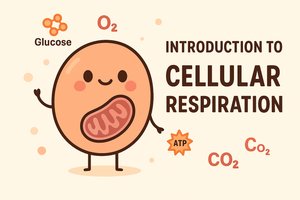
Once glucose is available, cells convert it into ATP through cellular respiration, which consists of three main stages:
Glycolysis
Krebs Cycle (Citric Acid Cycle)
Electron Transport Chain (ETC)
The overall reaction for cellular respiration is:
Oxygen is essential as the final electron acceptor in the ETC, and carbon dioxide is released as a waste product during the Krebs cycle. Only about 40% of glucose's energy is captured as ATP; the rest is lost as heat, helping maintain body temperature.
Stages of Cellular Respiration
Glycolysis
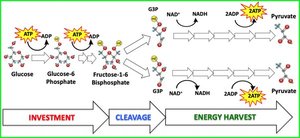
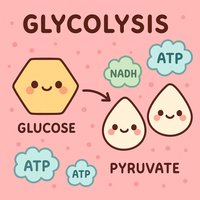
Glycolysis is the first step in cellular respiration, occurring in the cytoplasm. It breaks down one molecule of glucose into two molecules of pyruvate, yielding a net gain of 2 ATP and 2 NADH. Glycolysis consists of 10 enzyme-controlled steps, divided into two phases:
Energy Investment Phase: 2 ATP are used to initiate the process.
Energy Payoff Phase: 4 ATP and 2 NADH are produced, resulting in a net gain of 2 ATP.
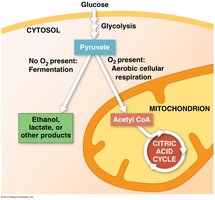
If oxygen is present, pyruvate enters the mitochondria and is converted to acetyl-CoA, which enters the Krebs cycle.
Link Reaction (Pyruvate Oxidation)
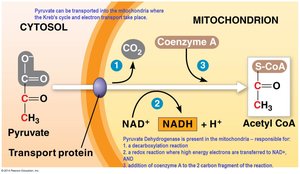
Pyruvate produced from glycolysis is transported into the mitochondrion, where it is oxidized to acetyl-CoA. This process releases CO2 and reduces NAD+ to NADH. Acetyl-CoA then enters the Krebs cycle.
Krebs Cycle (Citric Acid Cycle)
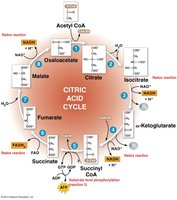
The Krebs cycle, also known as the citric acid cycle or TCA cycle, occurs in the mitochondrial matrix. Acetyl-CoA combines with oxaloacetate to form citrate, and through a series of eight reactions, oxaloacetate is regenerated. The cycle includes four redox reactions (three with NAD+, one with FAD), producing NADH, FADH2, ATP, and releasing CO2.
Location: Mitochondrial matrix
Redox Reactions: 3 with NAD+, 1 with FAD per cycle
Products: NADH, FADH2, ATP, CO2
Electron Transport Chain (ETC)
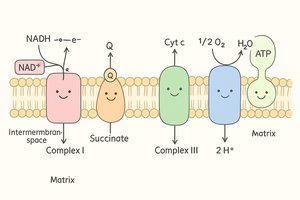
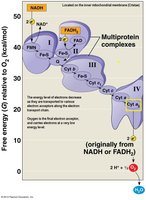
The ETC is located in the inner mitochondrial membrane. It uses electrons from NADH and FADH2 to pump protons into the intermembrane space, creating a proton gradient. Oxygen acts as the final electron acceptor, forming water. The proton gradient drives ATP synthesis via ATP synthase.
Location: Inner mitochondrial membrane
Function: Transfers electrons, pumps protons, synthesizes ATP
Final Electron Acceptor: Oxygen
Mitochondrial Structure and Function
Anatomy of the Mitochondrion
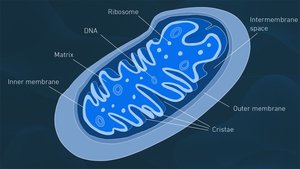
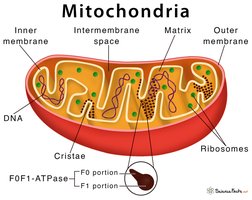
Mitochondria are double-membraned organelles similar in size to bacteria. They contain:
Outer Membrane: More permeable due to porins; contains enzymes for lipid metabolism.
Inner Membrane: Highly folded (cristae), impermeable to protons, contains proteins for transport, electron transfer, and ATP synthesis.
Intermembrane Space: Accumulates H+ ions, creating a proton motive force.
Matrix: Contains enzymes for the Krebs cycle, fatty acid catabolism, and pyruvate oxidation.
Proton Gradient and ATP Synthesis
The ETC pumps protons from the matrix to the intermembrane space, creating an electrochemical gradient. ATP synthase (F0F1 complex) uses this gradient to synthesize ATP. The F0 portion forms a proton channel, and the F1 portion catalyzes ATP formation.
Proton Motive Force: Drives ATP synthesis
ATP Synthase: F0 (channel), F1 (enzyme)
Regulation of Cellular Respiration
Metabolic Regulation
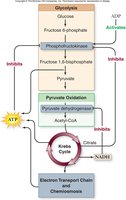
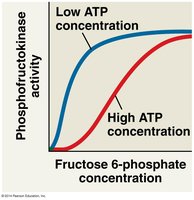
Cellular respiration is tightly regulated to match energy needs. Glycolysis is controlled by the enzyme phosphofructokinase (PFK), which is activated by low ATP and inhibited by high ATP. This ensures glycolysis proceeds only when energy is required.
PFK: Key regulatory enzyme in glycolysis
Activation: Low ATP, high ADP
Inhibition: High ATP
Anaerobic Respiration and Fermentation
Anaerobic Pathways
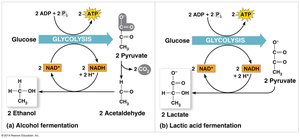
Glycolysis can occur without oxygen, but the Krebs cycle and ETC require oxygen. In the absence of oxygen, cells regenerate NAD+ through fermentation:
Lactic Acid Fermentation: Pyruvate is reduced to lactic acid, regenerating NAD+ (e.g., in muscle cells).
Alcoholic Fermentation: Pyruvate is decarboxylated to acetaldehyde, then reduced to ethanol (e.g., in yeast).
Red blood cells rely solely on glycolysis due to lack of mitochondria. Muscle cells store oxygen as myoglobin and glucose as glycogen.
Inhibitors of Cellular Respiration
Enzyme and Protein Inhibitors
Various substances can inhibit cellular respiration by targeting specific enzymes or proteins:
Fluoride: Inhibits enzymes requiring Mg2+ as a cofactor (e.g., hexokinase, phosphofructokinase).
Azide and Cyanide: Bind to cytochrome a3 in the ETC, preventing electron transfer to oxygen.
Oligomycin: Inhibits ATP synthase by blocking the F0 proton channel, halting ATP production.
Dinitrophenol (DNP) and FCCP: Uncouple oxidative phosphorylation by making the inner membrane leaky to protons, preventing ATP synthesis and releasing energy as heat.

Summary Table: Cellular Respiration Pathways and Inhibitors
Pathway/Component | Location | Key Enzymes/Proteins | Inhibitors | Products |
|---|---|---|---|---|
Glycolysis | Cytoplasm | Hexokinase, Phosphofructokinase | Fluoride | Pyruvate, ATP, NADH |
Pyruvate Oxidation | Mitochondrial Matrix | Pyruvate Dehydrogenase | None listed | Acetyl-CoA, NADH, CO2 |
Krebs Cycle | Mitochondrial Matrix | Citrate Synthase, Isocitrate Dehydrogenase | None listed | NADH, FADH2, ATP, CO2 |
Electron Transport Chain | Inner Mitochondrial Membrane | Cytochrome a3, ATP Synthase | Azide, Cyanide, Oligomycin, DNP, FCCP | ATP, H2O |
Fermentation | Cytoplasm | Lactate Dehydrogenase, Alcohol Dehydrogenase | None listed | Lactic Acid or Ethanol, NAD+ |
