 Back
Cellulases, Cellulose Breakdown, and Biofuel Production
Study Guide - Smart Notes
 Tailored notes based on your materials, expanded with key definitions, examples, and context.
Organisms That Produce Cellulases
Introduction to Cellulases
Cellulases are a family of enzymes that catalyze the hydrolysis of cellulose, a structural polysaccharide found in plant cell walls, into glucose. While humans and most animals do not produce cellulases, many plant-eating animals rely on symbiotic microorganisms to digest cellulose.
Cellulose: A polysaccharide composed of long chains of glucose molecules, forming the main component of plant cell walls.
Cellulases: Enzymes that break down cellulose into glucose, enabling its use as an energy source.
Symbiosis: Termites host the protozoan Trichonympha, which contains the bacterium Rs-D17 that produces cellulases. Ruminants like cows harbor bacteria such as Bacteroides succinogenes for cellulose digestion.
Fungal Decomposers: Fungi such as Aspergillus niger secrete cellulases to digest cellulose in their environment.
Cellulosic Ethanol: A Practical Application for Cellulases
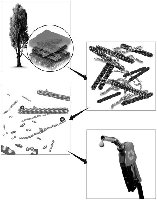
Biofuel Production from Plant Biomass
The biofuel industry utilizes cellulases to convert plant cell wall cellulose into fermentable sugars, which are then transformed into ethanol by microbial fermentation. This ethanol can be used as a renewable fuel source.
Plant Biomass: Primarily composed of cell wall material, with cellulose as the main component.
Cellulose Structure: Long chains of glucose molecules form cellulose microfibrils, stabilized by hydrogen bonds.
Primary vs. Secondary Cell Walls: Primary cell walls are flexible and found in living cells; secondary cell walls are rigid, contain lignin and hemicellulose, and are found in dead, structural cells.
Biofuel Production Steps:
Pretreatment: Removal of lignin and other non-cellulose components.
Enzymatic Hydrolysis: Cellulases break down cellulose into glucose; hemicellulases may also be used.
Microbial Fermentation: Glucose is converted to ethanol.
Types of Cellulases and Their Roles
Enzymatic Breakdown of Cellulose
The conversion of cellulose to glucose involves three main types of cellulase enzymes, each with a specific function in the degradation process.
Endocellulases: Cleave internal bonds within cellulose chains, creating new chain ends.
Exocellulases: Remove cellobiose units from the ends of cellulose chains.
Cellobiases (β-glucosidases): Hydrolyze cellobiose into two glucose molecules, completing the breakdown process.
Structure and Breakdown of Cellobiose
Cellobiose Hydrolysis
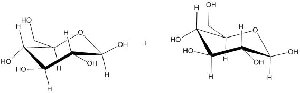
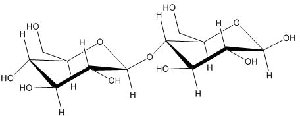
Cellobiose is a disaccharide consisting of two glucose molecules linked by a β(1,4)-glycosidic bond. The enzyme cellobiase catalyzes the hydrolysis of this bond, yielding two glucose molecules.
Cellobiose: The intermediate product of cellulose breakdown, requiring further hydrolysis to release glucose.
Cellobiase: The enzyme responsible for converting cellobiose to glucose, facilitating the final step in cellulose degradation.
Determination of Cellobiase Activity
Colorimetric Assay for Enzyme Activity
Cellobiase activity can be measured using a colorimetric assay with the artificial substrate p-nitrophenyl glucopyranoside. Upon enzymatic cleavage, p-nitrophenol is released, which turns yellow under basic conditions and can be quantified spectrophotometrically at 410 nm.
p-Nitrophenyl Glucopyranoside: An artificial substrate used to detect cellobiase activity.
p-Nitrophenol: Released upon enzymatic cleavage; colorless at acidic pH but turns yellow in basic solution due to formation of the nitrophenolate anion.
Assay Principle: The intensity of the yellow color (absorbance at 410 nm) is proportional to cellobiase activity and glucose production.
Summary Table: Types of Cellulases and Their Functions
Enzyme | Function | Product |
|---|---|---|
Endocellulase | Breaks internal bonds in cellulose chains | Shorter cellulose chains |
Exocellulase | Removes cellobiose units from chain ends | Cellobiose |
Cellobiase (β-glucosidase) | Hydrolyzes cellobiose to glucose | Glucose |
Key Equations
Cellulose Hydrolysis:
Cellobiose Hydrolysis:
Applications and Importance
Biofuel Production: Cellulases enable the conversion of plant biomass into renewable fuels, reducing reliance on fossil fuels.
Ecological Role: Cellulase-producing organisms are essential for the decomposition of plant material and nutrient cycling in ecosystems.
