 Back
Chapter 1: Biology – Exploring Life
Study Guide - Smart Notes
 Tailored notes based on your materials, expanded with key definitions, examples, and context.
Biology: The Scientific Study of Life
Properties of Life
Biology is defined as the scientific study of life. To understand what constitutes life, biologists identify several key properties shared by all living organisms:
Order: Living things exhibit complex but ordered organization.
Reproduction: Organisms reproduce their own kind.
Growth and Development: Inherited information controls the pattern of growth and development.
Energy Processing: Organisms obtain and use energy to power their activities.
Regulation: Internal conditions are regulated to maintain life.
Response to the Environment: Organisms respond to environmental stimuli.
Evolutionary Adaptation: Adaptations evolve over generations, driven by natural selection.
The cell is the structural and functional unit of life, forming the basis for all living organisms.
Biological Diversity and Classification
The Three Domains of Life
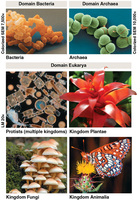
Taxonomists classify living organisms into three major domains based on cell structure and genetic differences:
Domain Bacteria: Composed of prokaryotic cells, these organisms are found in diverse environments.
Domain Archaea: Also prokaryotic, archaea often inhabit extreme environments and differ biochemically from bacteria.
Domain Eukarya: Includes all eukaryotic organisms, which have complex cells with nuclei. This domain is further divided into several kingdoms:
Protists: A diverse group of mostly unicellular organisms.
Kingdom Plantae: Multicellular plants that produce their own food via photosynthesis.
Kingdom Fungi: Organisms that absorb nutrients from their environment.
Kingdom Animalia: Multicellular animals that ingest food.
Levels of Biological Organization
Hierarchy and Emergent Properties
Biologists study life at multiple levels of organization, from molecules to the biosphere. Each level exhibits emergent properties—new characteristics that arise from the arrangement and interaction of parts:
Molecule → Organelle → Cell → Tissue → Organ → Organ System → Organism → Population → Community → Ecosystem → Biosphere
Emergent properties are not present in the individual components but arise from their interactions.
Example: A cell can perform functions that its individual molecules cannot accomplish alone.
The Process of Science
Scientific Inquiry and Experimentation
Science is an evidence-based approach to understanding the natural world. The scientific method involves:
Observation: Gathering information about phenomena.
Hypothesis: Formulating a testable explanation.
Prediction: Making logical predictions based on the hypothesis.
Experimentation: Testing predictions through controlled experiments or further observations.
Analysis: Interpreting data to support or refute the hypothesis.
A scientific theory is a broad explanation supported by a large body of evidence. A hypothesis is a specific, testable statement.
Controlled Experiment: Involves manipulating one variable (independent variable) and measuring its effect on another (dependent variable), while keeping other factors constant. An experimental group is compared to a control group.
Science, Technology, and Society
Interconnections and Impact
Science aims to understand natural phenomena, while technology applies scientific knowledge for practical purposes. Both fields are interdependent:
Technological advances often arise from scientific discoveries.
Scientific research benefits from new technologies.
Collaboration, repetition, and feedback are essential aspects of scientific progress, influenced by exploration, community analysis, and societal needs.
Summary Table: Domains and Kingdoms of Life
Domain | Cell Type | Kingdoms/Groups | Example Organisms |
|---|---|---|---|
Bacteria | Prokaryotic | Bacteria | Escherichia coli |
Archaea | Prokaryotic | Archaea | Halophiles |
Eukarya | Eukaryotic | Protists, Plantae, Fungi, Animalia | Paramecium, Fern, Mushroom, Butterfly |
Key Concepts for Review
Seven properties common to all life
Three domains of life and their characteristics
Levels of biological organization and emergent properties
Difference between hypothesis and scientific theory
Structure of controlled experiments
Relationship between science and technology
