 Back
Chapter 1: Biology – The Study of Life (Mini-Textbook Study Notes)
Study Guide - Smart Notes
 Tailored notes based on your materials, expanded with key definitions, examples, and context.
Biology: The Study of Life
Introduction
Biology is the scientific study of life and living organisms. This chapter introduces the foundational concepts that define life, the scientific method, and the frameworks that structure modern biological science.
What Does It Mean to Say That Something is Alive?
Five Fundamental Characteristics of Life
Cells: All living organisms are composed of one or more membrane-bound cells, which are the basic units of life.
Replication: All organisms are capable of reproduction, ensuring the continuation of their species.
Information: Organisms process hereditary information encoded in genes and respond to environmental information.
Energy: All organisms acquire and use energy to maintain life processes.
Evolution: Populations of organisms evolve over generations; individuals do not evolve, but populations do.
Scientific Theories and Hypotheses
Definitions
Theory: An explanation for a broad class of phenomena, supported by a wide body of evidence. In science, a theory is not a guess but a well-tested and widely accepted explanation.
Hypothesis: A testable statement that explains an observation. Hypotheses can be supported or refuted through experimentation.
Experiment: A controlled method to test the effect of a single variable on a phenomenon.
Prediction: A measurable or observable result expected if a hypothesis is correct.
Examples of Major Biological Theories
Cell Theory: All organisms are made of cells; cells are the basic unit of life.
Chromosome Theory of Inheritance: Hereditary information is transmitted via chromosomes.
Theory of Evolution by Natural Selection: Explains how organisms are related and how they change over time.
Life is Cellular and Replicates through Cell Division
Discovery of Cells
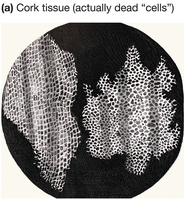
Robert Hooke (1665): Used a 30x microscope to observe cork tissue, naming the compartments "cells."
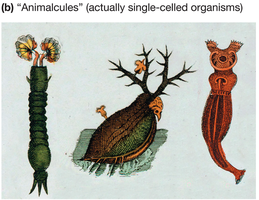
Anton van Leeuwenhoek: Improved magnification to 300x, observing single-celled organisms ("animalcules").
By the 1800s, it was established that all organisms consist of cells.
Cell Theory
All organisms are made up of cells, which are highly organized compartments separated from their environment by a membrane.
Cells are the basic unit of life, whether in single-celled or multicellular organisms.
All cells arise from preexisting cells ("all-cells-from-cells").
Testing Hypotheses: The Scientific Method
Science relies on asking testable questions, forming hypotheses, and conducting experiments to collect data.
Key steps: Observation, Question, Research, Hypothesis, Experiment, Analysis, Conclusion, Replication, and Peer Review.
Hypotheses must be falsifiable; scientists seek to disprove, not prove, hypotheses.
Experimental Design
Include a control group and keep experimental conditions constant.
Repeat tests and use large sample sizes to increase precision and reduce bias.
Precision refers to how well results generalize to the population; bias occurs if the sample is not representative.
Example Experiment: DDT and Eggshell Thickness
Observation: Declining hatchling survival and reduced eggshell thickness in birds.
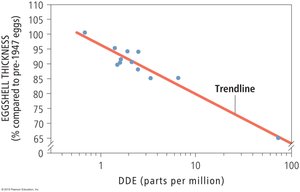
Correlation: High DDT (DDE) residues in parent birds linked to thin eggshells.
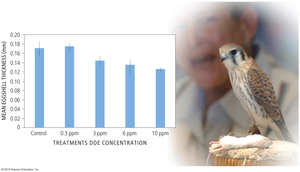
Experiment: Expose American kestrels to varying DDE concentrations and measure eggshell thickness.
Data Interpretation
The treatment variable (DDE concentration) is plotted on the X-axis; the response variable (eggshell thickness) on the Y-axis.
Negative correlation: As DDE increases, eggshell thickness decreases.
Correlation does not imply causation; further testing and replication are required.
Cell Theory vs. Spontaneous Generation
Historical Debate
Cell Theory: Cells arise only from preexisting cells.
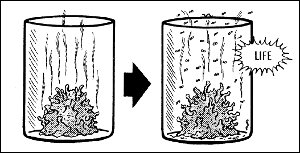
Spontaneous Generation: The belief that life could arise spontaneously from non-living matter.
Louis Pasteur's experiments disproved spontaneous generation, supporting the all-cells-from-cells hypothesis.
Life Processes Information and Requires Energy
Chromosomal Theory of Inheritance
Genes, located on chromosomes, encode hereditary information.
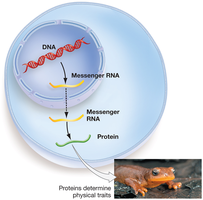
DNA (deoxyribonucleic acid) is the hereditary material; genes are DNA segments coding for cell products.
Humans have about 20,000 genes.
The Central Dogma of Biology
DNA is transcribed into RNA, which is translated into proteins.
Proteins determine an organism's physical traits.
Genetic Variation and Mutation
DNA is copied with high accuracy during replication, but mutations (changes in DNA sequence) can occur.
Mutations lead to heritable variation, which is the basis for the diversity of life.
Energy Acquisition
Plants and some bacteria produce sugars using sunlight (photosynthesis).
Some single-celled organisms use chemical or heat energy from the environment.
Animals and fungi obtain energy by consuming other organisms or organic molecules.
Evolution and Natural Selection
Definition of Evolution
Evolution is the change in characteristics of a population over time.
Populations are groups of individuals of the same species living in the same area.
Darwin and Wallace's Contributions
Species are related by common ancestry.
Species change over generations ("descent with modification").
Natural Selection
Two conditions for natural selection:
Individuals vary in heritable traits.
Certain traits increase reproductive success in a given environment.
Traits that increase fitness (the ability to produce offspring) become more common.
Adaptation is a trait that increases fitness in a particular environment.
Example: Darwin's Finches
Finches with small, pointed beaks had higher fitness when small, soft seeds were abundant.
Beak shape is an adaptation that increased survival and reproduction.
The Tree of Life and Phylogeny
Tree of Life
Depicts evolutionary history and genealogical relationships among species.
Phylogeny is the actual evolutionary relationships among organisms.
Major Domains of Life
Eukarya: Organisms with a nucleus.
Bacteria and Archaea: Prokaryotes, organisms without a nucleus.
Taxonomy and Classification
Taxonomy is the science of naming and classifying organisms.
Each organism is given a unique two-part scientific name (genus and species), e.g., Homo sapiens.
Genus names are capitalized; species names are not; both are italicized.
The Process of Doing Biology: Example – Giraffe Neck Length
Food Competition Hypothesis
Hypothesis: Giraffes evolved long necks to reach food unavailable to other mammals.
Testable predictions: Neck length varies, is heritable, and giraffes feed high in trees.
Observation: Giraffes do not usually feed high in trees; hypothesis rejected based on evidence.
Additional info: These notes provide a comprehensive overview of the foundational concepts in biology, including the characteristics of life, the scientific method, cell theory, genetics, evolution, and taxonomy. They are suitable for exam preparation and as a reference for further study in General Biology.
