 Back
Chapter 1: Biology – The Study of Life (Mini-Textbook Study Notes)
Study Guide - Smart Notes
 Tailored notes based on your materials, expanded with key definitions, examples, and context.
Biology: The Study of Life
Introduction
Biology is the scientific study of life and living organisms. This chapter introduces the foundational concepts that define life, the scientific methods used to study it, and the major theories that form the framework of modern biology.
What Does It Mean to Say That Something is Alive?
Five Fundamental Characteristics of Life
Cells: All living things are composed of one or more membrane-bound cells, which are the basic units of life.
Replication: All organisms have the ability to reproduce, ensuring the continuation of their species.
Information: Living organisms process hereditary information encoded in genes and respond to environmental information.
Energy: All organisms acquire and use energy to maintain their internal order and support life processes.
Evolution: Populations of organisms change over time through evolutionary processes.
Theories in Biology
Definition and Importance
Theory: An explanation for a broad class of phenomena or observations, supported by a large body of evidence. In science, a theory is not a guess but a well-substantiated explanation.
Three Foundational Theories
Cell Theory: All organisms are made of cells, and all cells come from preexisting cells.
Theory of Evolution by Natural Selection: Explains how organisms are related and how they change over time.
Chromosome Theory of Inheritance: Describes how hereditary information is transmitted from one generation to the next.
Life is Cellular and Replicates through Cell Division
Discovery of Cells
Robert Hooke (1665): First observed cells using a microscope (30x magnification).
Anton van Leeuwenhoek: Improved microscope (300x), observed single-celled organisms (“animalcules”).
Cells are highly organized compartments separated from their environment by a membrane. The cell theory states that all organisms are made of cells and all cells come from preexisting cells, challenging the idea of spontaneous generation.
Testing Spontaneous Generation
Louis Pasteur’s Experiment: Demonstrated that cells arise from preexisting cells, not by spontaneous generation.
Life Processes Information and Requires Energy
Genetic Information and the Central Dogma
Chromosome Theory of Inheritance: Genes are located on chromosomes, which are made of DNA.
DNA Structure: Double helix composed of four nucleotides (A, T, C, G). The sequence encodes genetic information.
Central Dogma: Describes the flow of genetic information:
Proteins: Carry out most cellular functions, including catalyzing reactions and providing structure.
Genetic information is passed from cell to cell and from parent to offspring. Mutations in DNA can lead to heritable variation, which is the basis for evolution.
Energy and Metabolism
Organisms require energy for cellular processes, primarily in the form of adenosine triphosphate (ATP).
Organisms acquire energy in diverse ways, such as photosynthesis (plants, some bacteria) or consuming other organisms.
Life Evolves
Evolution and Natural Selection
Evolution: Change in the characteristics of a population over time.
Population: Group of individuals of the same species living in the same area at the same time.
Natural Selection: Process by which individuals with advantageous heritable traits reproduce more successfully, leading to evolutionary change.
Fitness: The ability of an individual to produce surviving offspring.
Adaptation: A trait that increases an individual’s fitness in a particular environment.
Example: Galápagos finches with small, pointed beaks had higher fitness when small, soft seeds were abundant, leading to an increase in this trait in the population.
The Tree of Life Depicts Evolutionary History
Phylogeny and Classification
Tree of Life: A diagram depicting the evolutionary relationships among species, with a single ancestral species at its base.
Phylogeny: The actual genealogical relationships among all organisms.
Genetic data (DNA/RNA sequences) are used to infer evolutionary relationships.
Three major domains of life are recognized: Bacteria, Archaea, and Eukarya. Eukaryotes have a nucleus; prokaryotes (Bacteria and Archaea) do not.
Taxonomy and Nomenclature
Taxonomy: The science of naming and classifying organisms.
Domain: Highest taxonomic rank (Bacteria, Archaea, Eukarya).
Linnaean System: Each species is given a two-part scientific name (genus and species), e.g., Homo sapiens.
Doing Biology: The Scientific Method
Nature of Science
Science involves asking testable questions, formulating hypotheses, and collecting data to support or refute those hypotheses.
Hypothesis: A testable statement explaining an observation.
Experiment: A controlled test to determine the effect of a single variable.
Prediction: A measurable or observable result expected if the hypothesis is correct.
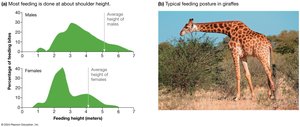
Example: Giraffe Neck Length
Food Competition Hypothesis: Long necks evolved to reach higher food sources. Tested and found not fully supported by data.
Sexual Competition Hypothesis: Long necks evolved because males with longer necks win more fights and father more offspring. Supported by data.
Experimental Design: How Do Ants Navigate?
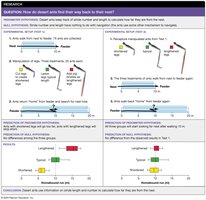
Wittlinger et al. tested the "pedometer hypothesis"—that ants count steps and use stride length to navigate.
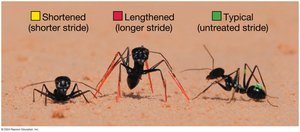
Ants with shortened legs (shorter stride) stopped short of the nest; ants with lengthened legs (longer stride) overshot the nest; control ants returned accurately.
Conclusion: Ants use stride length and step number to calculate distance traveled.
Characteristics of Good Experimental Design
Include a control group to account for other variables.
Keep experimental conditions constant.
Repeat experiments and use large sample sizes for reliability.
Key Terms and Concepts
Cell: Basic unit of life, membrane-bound compartment.
Gene: Segment of DNA that codes for a product.
Mutation: Change in DNA sequence, source of genetic variation.
ATP: Adenosine triphosphate, main energy currency of the cell.
Phylogenetic tree: Diagram showing evolutionary relationships.
Control group: Group in an experiment that does not receive the experimental treatment, used for comparison.
Summary Table: Domains of Life
Domain | Cell Type | Example Organisms |
|---|---|---|
Bacteria | Prokaryotic (no nucleus) | Escherichia coli, Cyanobacteria |
Archaea | Prokaryotic (no nucleus) | Halophiles, Thermophiles |
Eukarya | Eukaryotic (nucleus present) | Plants, Animals, Fungi, Protists |
Additional info: The study of biology is dynamic and relies on rigorous testing of hypotheses, careful experimental design, and the continual refinement of theories as new evidence emerges.
