 Back
Chapter 1: Biology – The Study of Life
Study Guide - Smart Notes
 Tailored notes based on your materials, expanded with key definitions, examples, and context.
Biology: The Study of Life
Major Characteristics of Living Organisms
Biology is the scientific study of life and living organisms. All living things share several fundamental characteristics that distinguish them from non-living matter.
Cellular Organization: All living organisms are composed of one or more cells, which are the basic units of life.
Metabolism: Living things acquire and use energy to maintain internal order and support growth, development, and reproduction.
Homeostasis: Organisms regulate their internal environment to maintain stable, life-supporting conditions.
Growth and Development: Living organisms undergo regulated growth and development, often following specific instructions encoded in their DNA.
Reproduction: All living things have the ability to reproduce, passing genetic information to the next generation.
Response to Stimuli: Organisms can sense and respond to changes in their environment.
Evolutionary Adaptation: Populations of living organisms evolve over generations through changes in genetic composition.
The Scientific Method: Observation, Hypothesis, Prediction, and Test
The scientific method is a systematic approach to understanding the natural world through observation and experimentation.
Observation: Gathering information about phenomena or events.
Hypothesis: A tentative explanation for an observation, which can be tested by experiments or further observations.
Prediction: A logical statement about what will happen if the hypothesis is correct.
Test (Experiment): Conducting experiments or collecting data to determine if the prediction holds true.
Experiments should include:
Treatment: The experimental condition applied to subjects.
Control: A standard for comparison, where the treatment is not applied.
Replication: Repeating the experiment to ensure results are consistent and reliable.
Scientific Theories vs. Hypotheses
A scientific theory is a broad, well-supported explanation for a wide range of phenomena, based on extensive evidence. In contrast, a hypothesis is a specific, testable statement about a single observation or phenomenon.
Theory: Supported by a large body of evidence, explains a wide range of observations, and is widely accepted by the scientific community.
Hypothesis: A proposed explanation for a narrow set of phenomena, subject to testing and falsification.
Major Theories in Biology
Overview of Key Biological Theories
Several foundational theories underpin modern biology. These include the Cell Theory, Chromosomal Theory of Inheritance, and the Theory of Evolution by Natural Selection.
Theory | First Proposed | Major Evidence/Development | Broad Scientific Acceptance | Broad Public/Societal Acceptance |
|---|---|---|---|---|
Cell Theory | 1838–1839 | Schleiden (plants), Schwann (animals) | 1850s–1860s | By late 19th century |
Chromosomal Theory of Inheritance | 1902–1903 | Sutton and Boveri connect Mendelian inheritance to chromosomes | 1910s–1920s | By mid-20th century |
Theory of Evolution by Natural Selection | 1858–1859 | Darwin & Wallace; Darwin's "On the Origin of Species" | 1870s–1900s; 1930s–1940s for modern synthesis | Variable, especially in the U.S. |
Cell Theory
The Cell Theory states that all living organisms are composed of cells, and all cells arise from pre-existing cells. This theory was developed through the work of scientists such as Schleiden, Schwann, and Virchow.
All organisms are made of cells.
The cell is the basic unit of life.
All cells come from pre-existing cells.
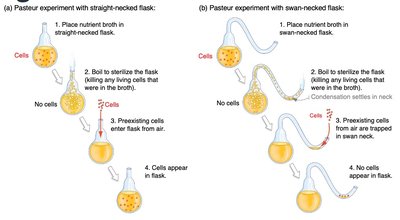
Example: Pasteur's experiment with straight-necked and swan-necked flasks demonstrated that cells do not spontaneously arise, but come from other cells.
Microscopy and the Discovery of Cells
The invention of the microscope allowed scientists to observe cells for the first time. Robert Hooke observed cork tissue and coined the term "cell," while Anton van Leeuwenhoek observed single-celled organisms ("animalcules") in pond water.
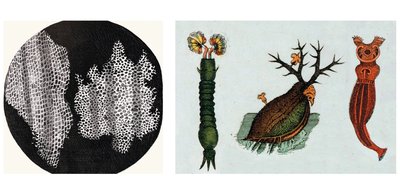
Example: Early microscopic observations revealed the cellular structure of living things and the diversity of microscopic life.
Cell Replication
Cells reproduce by dividing to form new cells, a process essential for growth, development, and maintenance of living organisms. This process is tightly regulated and ensures genetic continuity.
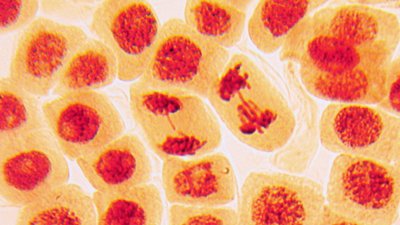
Example: Mitosis is a type of cell division that results in two genetically identical daughter cells.
The Central Dogma of Molecular Biology
Flow of Genetic Information
The Central Dogma describes the flow of genetic information within a biological system: DNA is transcribed into messenger RNA (mRNA), which is then translated into protein. Proteins determine the structure and function of cells and organisms.
DNA → RNA → Protein
Proteins are responsible for most cellular functions and physical traits.
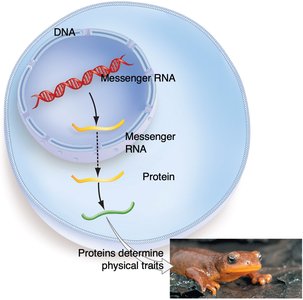
Equation:
Structure of DNA
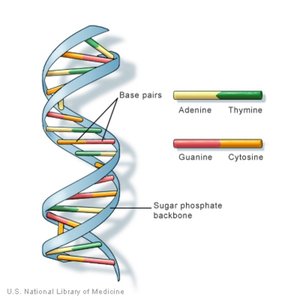
DNA (deoxyribonucleic acid) is the hereditary material in all living organisms. It consists of two strands forming a double helix, with complementary base pairs (adenine-thymine and guanine-cytosine) and a sugar-phosphate backbone.
Base pairs: Adenine (A) pairs with Thymine (T); Guanine (G) pairs with Cytosine (C).
Double helix: The two strands are held together by hydrogen bonds between base pairs.
Theory of Evolution by Natural Selection
Principles of Evolution
The Theory of Evolution by Natural Selection, proposed by Charles Darwin and Alfred Russel Wallace, explains how species change over time. Key principles include:
Common ancestry: All living organisms share a common ancestor.
Variation: Individuals in a population vary in their traits.
Heritability: Some traits are heritable and passed to offspring.
Fitness: Some traits increase an individual's chances of survival and reproduction.
Adaptation: Traits that increase fitness become more common in the population.
Natural selection: The process by which advantageous traits become more common over generations.
Speciation: The formation of new species from ancestral populations.
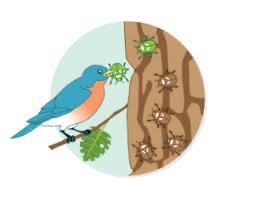
Example: Birds may preferentially eat insects with certain traits, leading to changes in the population over time.
The Tree of Life
Classification of Life
The Tree of Life is a model that illustrates the evolutionary relationships among all living organisms. It is based on genetic and morphological evidence, and divides life into three major domains: Bacteria, Archaea, and Eukarya.
Bacteria: Single-celled prokaryotes with diverse metabolic capabilities.
Archaea: Single-celled prokaryotes distinct from bacteria, often found in extreme environments.
Eukarya: Organisms with complex cells containing a nucleus, including plants, animals, fungi, and protists.
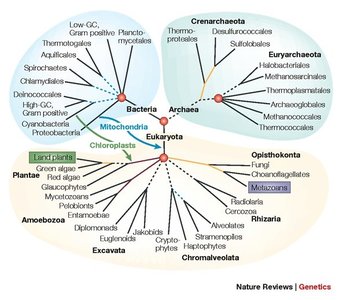
Additional info: Modern classification uses genetic sequencing to determine evolutionary relationships and construct phylogenetic trees.
