 Back
Chapter 1: Biology – The Study of Life (Mini-Textbook Study Notes)
Study Guide - Smart Notes
 Tailored notes based on your materials, expanded with key definitions, examples, and context.
Biology: The Study of Life
What Does It Mean to Say That Something is Alive?
Biologists define life based on a set of shared characteristics that distinguish living organisms from non-living matter. These characteristics form the foundation for understanding biological systems.
Energy: All organisms acquire and use energy to maintain internal order and support life processes.
Cells: All living things are composed of one or more membrane-bound cells, which are the basic units of life.
Replication: Living organisms are capable of reproduction, ensuring the continuation of their species.
Information: Organisms process hereditary information encoded in genes and respond to environmental signals.
Evolution: Populations of organisms change over time through evolutionary processes.
These criteria are essential for distinguishing living entities from non-living matter.
Unifying Theories in Biology
Three major theories provide the framework for modern biology:
Cell Theory
Chromosome Theory of Inheritance
Theory of Evolution by Natural Selection
The Cell Theory
Principles of Cell Theory
The cell theory is a fundamental concept in biology, stating:
All organisms are made up of cells.
All cells come from pre-existing cells.
This theory was developed through observations using microscopes, which revealed the presence of cells in all living organisms.
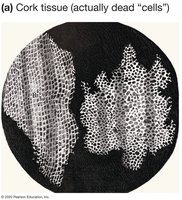
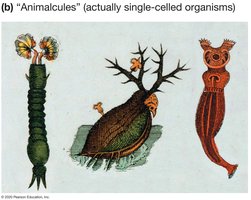
Historical Experiments: Spontaneous Generation vs. All-Cells-From-Cells
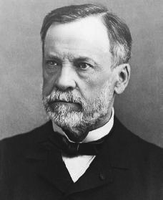
In the 1800s, scientists debated whether life could arise spontaneously (spontaneous generation) or only from pre-existing cells. Louis Pasteur's experiments provided evidence against spontaneous generation.
Spontaneous Generation Hypothesis: Life arises spontaneously under certain conditions.
All-Cells-From-Cells Hypothesis: Cells can only arise from other cells.
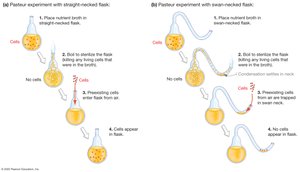
Conclusion: Pasteur's experiments demonstrated that all cells come from pre-existing cells, supporting the cell theory.
Chromosome Theory of Inheritance
Genes, Chromosomes, and DNA
The chromosome theory of inheritance explains how hereditary information is transmitted from one generation to the next:
Genes: Segments of DNA that encode instructions for traits.
Chromosomes: Structures within cells that contain DNA and genes.
DNA (Deoxyribonucleic Acid): The molecule that carries genetic information.
In the early 1900s, Sutton and Boveri observed chromosomes during cell division and proposed that genes are located on chromosomes. By the 1950s, it was established that chromosomes are composed mainly of DNA.
The Structure of DNA
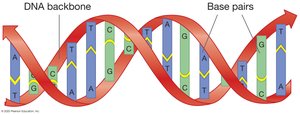
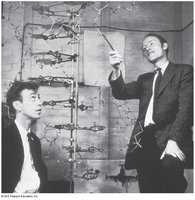
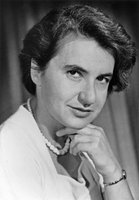
In 1953, James Watson and Francis Crick, with data from Rosalind Franklin, proposed the double-helix structure of DNA. This discovery explained how genetic information is stored and replicated.
The Central Dogma of Molecular Biology
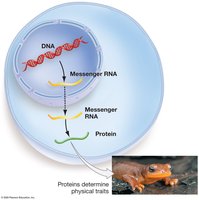
The central dogma describes the flow of genetic information within a biological system:
DNA is transcribed into messenger RNA (mRNA).
mRNA is translated into protein.
Proteins determine the physical traits of organisms.
Changes in DNA (mutations) can lead to different proteins and may alter traits, providing the basis for genetic variation.
The Theory of Evolution by Natural Selection
Principles of Evolution
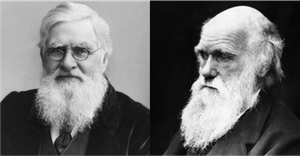
Evolution explains how populations of organisms change over time. Charles Darwin and Alfred Wallace independently proposed that:
Species are related by common ancestry.
Species change over generations through a process called "descent with modification" (evolution).
Natural Selection
Natural selection is the mechanism by which evolution occurs:
Individuals in a population vary in their heritable traits.
Some traits provide a survival or reproductive advantage in a given environment ("fitness").
Individuals with advantageous traits are more likely to survive and reproduce, passing those traits to the next generation.
This process leads to changes in the frequency of traits in a population over time.
The Tree of Life and Evolutionary Relationships
Phylogeny and the Tree of Life
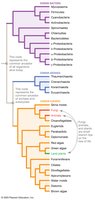
The Tree of Life is a model that depicts the evolutionary history and relationships among all organisms. By comparing DNA sequences, scientists can determine how closely related different species are, constructing a phylogenetic tree.
Summary Table: Unifying Theories in Biology
Theory | Main Principle | Key Contributors |
|---|---|---|
Cell Theory | All organisms are made of cells; all cells come from pre-existing cells | Schleiden, Schwann, Virchow, Pasteur |
Chromosome Theory of Inheritance | Genes are located on chromosomes, which are made of DNA | Sutton, Boveri, Watson, Crick, Franklin |
Theory of Evolution by Natural Selection | Species change over time due to differential survival and reproduction of individuals with advantageous traits | Darwin, Wallace |
Key Terms and Definitions
Cell: The basic structural and functional unit of all living organisms.
Gene: A segment of DNA that encodes information for a specific trait.
Chromosome: A structure composed of DNA and proteins that carries genetic information.
DNA (Deoxyribonucleic Acid): The molecule that stores genetic information in all living organisms.
Evolution: The change in the characteristics of a population over generations.
Natural Selection: The process by which individuals with advantageous traits survive and reproduce more successfully.
Phylogeny: The evolutionary history and relationships among species.
Key Equations
Central Dogma of Molecular Biology:
Additional info: The central dogma summarizes the flow of genetic information from DNA to RNA to protein, which underlies the expression of genetic traits.
